
SuretyBind, a Competitor Owned Surety Data Platform? Mmmmm, . . . not so sure about that.

surety, surety bond, surety bonds, suretyone.com, surety one, Janus Assurance Re, C. Constantin Poindexter;

A Competitor-Owned Surety Data Platform Is a Strategic and Counterintelligence Hazard

On December 8, 2025, Chubb, The Hartford, Liberty Mutual, and Travelers announced the formation of SuretyBind, LLC, a technology company intended to provide a shared digital infrastructure to advance the surety industry (PR Newswire 2025; SuretyBind 2025; Carrier Management 2025). Public materials identify two initial priorities: a data transmission platform to connect sureties, brokers, and other participants in order to reduce duplicative data entry and improve data quality (PR Newswire 2025; SuretyBind 2025), and secondarily, leadership and technology to drive digital bond execution, improve verification, and reduce fraud. Services are expected in 2027 (PR Newswire 2025; SuretyBind 2025). The same announcement adds a sentence that should concern any serious surety executive. It states that all SuretyBind activities are conducted under “strict antitrust supervision” (PR Newswire 2025; SuretyBind 2025).

I am pondering this from the standpoint of an ex-counterintelligence operator in the U.S. I.C., so this is going to be a bit technical, but I’ll try to keep out of the woods here. In competitive industries, shared infrastructure is frequently a precondition for avoidable compromise because it concentrates sensitive operational signals, creates asymmetric incentives, and widens the attack surface. In surety, underwriting edge is built from proprietary loss experience, contractor behavior signals, i.e., known red flags to a particular surety, claims handling patterns, indemnity enforcement outcomes, and relationship intelligence. Placing any portion of the workflow on a platform co-owned by direct competitors creates structural incentives and technical pathways for abuse or worse, conspiratorial market monopolization. Even if every participant acts in good faith, the platform becomes a high-value collection point for penetration. A single breach, insider compromise, governance failure, or gradual expansion of scope can expose trade secrets and reshape market dynamics.

What the public reporting says and what it does not

The best sourced reporting largely recirculates the same core statement. PR Newswire published the launch release on December 8, 2025 (PR Newswire 2025). SuretyBind’s own press page mirrors the same language and repeats the strict antitrust supervision claim without explaining its mechanics (SuretyBind 2025). Carrier Management adds an operational detail that is material for risk analysis. A SuretyBind representative said the four sureties funded the company and will be co-owners. Carrier Management also reported that the owners will not be providing personnel to the technology company, while still participating in an advisory capacity and ultimately becoming users of the platform (Carrier Management 2025). The Insurer also reported the formation, but provides limited additional substance in the portion broadly accessible (The Insurer 2025). That thin public record is itself a risk signal. A competitor-owned platform can be built safely only with explicit and auditable commitments on data boundaries, governance controls, technical segregation, and enforceable sanctions. The public materials provide none of that detail, while asking the market to trust the platform with sensitive traffic. In other words, the interested parties’ narrative emphasizes benefits while omitting the control framework that would allow counterparties to evaluate and judge the true risk.

“Strict antitrust supervision” is not a reassuring

The phrase appears to be self-described, not a reference to a defined government oversight program. The announcement does not cite a consent decree, a published monitor, a public compliance protocol, a set of scope limitations, or enforcement triggers (PR Newswire 2025; SuretyBind 2025). In ordinary United States practice, antitrust agencies do not supervise day-to-day commercial conduct of a private joint venture absent a litigation resolution, order, or decree. Where companies seek agency feedback in advance, they may pursue structured options, however, that is not equivalent to continuous supervision. Actually, continuous supervision does not transform a risky design into a safe one either.

The current antitrust environment also matters. On December 11, 2024, the Federal Trade Commission and the Department of Justice withdrew the 2000 Antitrust Guidelines for Collaborations Among Competitors, stating that the guidelines no longer provide reliable guidance and emphasizing case-by-case enforcement (FTC 2024; FTC and DOJ 2024). This shift increases uncertainty around competitor collaboration structures and heightens the need for precise internal controls rather than reliance on generic comfort language. Compliance programs must be designed for effectiveness, monitoring, and documentation. The Department of Justice Antitrust Division has also emphasized evaluation of compliance programs and their effectiveness in criminal antitrust investigations (DOJ Antitrust Division 2024).

From a counterintelligence guy’s view, antitrust is only one layer. A platform that aggregates competitor adjacent operational data flows can enable tacit coordination, whether intentional or not, by increasing market transparency around demand patterns, submission characteristics, broker behaviors, and execution timing. Even without explicit exchange of pricing (a definitive invitation for litigation or prosecution) granular operational signals can reduce uncertainty and soften competition.

The surety-specific danger is that operational data becomes underwriting intelligence

Some advocates may argue that the platform only transmits administrative data. In surety, that distinction is simply illusory. A data transmission platform that reduces duplicative entry implies common schemas, common routing, and shared pipes across sureties, brokers, and other parties (PR Newswire 2025; SuretyBind 2025). Even if each surety maintains its own decisioning, several categories of intelligence can leak through metadata, workflow patterns, or integrations. Ponder these. Appetite inference. Which submissions are accepted into workflow, how fast they are processed, and what documentation is demanded can reveal risk tolerance by class, geography, contractor size, or obligee type. Surety broker and channel intelligence. Submission frequency, conversion rates, and timing reveal who controls deal flow and how competitors prioritize relationships. Loss cost signals. Even without explicit loss runs, claim-related workflow events, verification anomalies, amendment frequency, and execution delays can correlate with adverse development and portfolio stress. Process fingerprints. Digital execution embeds rules. Who requires what, when indemnity is tightened, when collateral is requested, and what exceptions are escalated are not merely operational details. They are strategic posture.

The eight-hundred-pound gorilla in the room? Over time, data quality advantages become modeling advantages. A shared system standardizes the collection of variables that eventually become features in predictive analytics. Whoever influences the schema, sees its evolution, or observes which optional fields others request learns what competitors believe matters, and can calibrate their own strategies accordingly. The risk is not only an overt breach. It is a gradual normalization of shared visibility that erodes differentiation.

Digital execution and fraud reduction goals can be achieved without competitor-owned intelligence exposure

The industry’s fraud and verification concerns are real. Industry materials, including NASBP resources, describe persistent problems of fraudulent bonds and emphasize verification as a core control (NASBP 2024). The workflow is fragmented, and obligees often verify bonds through manual steps or portal checks, which creates latency and inconsistency. Improving verification and reducing fraud is a legitimate objective that could benefit the market (PR Newswire 2025; SuretyBind 2025). However, governance and ownership models are not incidental. NASBP and RiskStream Collaborative have described digitizing the surety bond ecosystem through workflow standardization and stakeholder coordination (NASBP and RiskStream 2025). That goal does not logically require a competitor-owned central platform that becomes the market’s operational nervous system. The industry can pursue interoperability standards, verification registries, and secure execution rails in ways that compartmentalize each surety’s proprietary underwriting and claims intelligence. Of course, being the surety world’s “operational nervous system” may be the entire point. I’ll leave that one and its ramifications for you to ponder, especially those carriers that will not use the platform.

A threat model for participation

If I were advising a surety carrier evaluating participation, I would treat the platform as a high-threat environment even if the stated intent is benign. The incentives are asymmetric, and the attack surface is large, . . . huge counterintelligence concerns in more than just the insurance sector. Competitor collection risk arises when competitors can shape platform features, influence schema, participate in advisory structures, or obtain privileged visibility into operational telemetry. Insider threat risk grows because platform employees and contractors can access logs, routing rules, support tickets, and integration configurations, any of which can reveal proprietary posture. Supply chain risk rises because shared infrastructure tends to accumulate dependencies, and one compromised vendor can expose all participants. Design spillover risk is persistent because once multi party rails exist, there is continuous pressure to add analytics, benchmarking, fraud scoring, and dashboards, each framed as helpful, each capable of crossing the line into competitive intelligence. Finally, regulatory and litigation discovery risk expands because centralized logs and shared repositories become new targets for subpoenas and discovery demands.

What can surety companies do to protect proprietary underwriting and claims intelligence?

Participation should be conditioned on controls that are technical, contractual, and governance-based, designed for non-trust operation. Trust is not a control. So what to do?

Data minimization must be an enforced technical requirement. Only transmit fields strictly necessary for a defined transaction. Underwriting conclusions, internal risk grades, pricing logic, claim narratives, indemnity enforcement outcomes, and loss development artifacts should be prohibited by design and validated automatically against a published data dictionary. This is the surety equivalent of compartmentation, a well-known practice in the intelligence field.

Tenant isolation and clean room architecture are imperative. If the platform evolves beyond simple message passing, there must be cryptographic and architectural isolation with separate keys, separate storage, separate processors, strict access controls, and provable segmentation. Controls should align to recognized baselines such as NIST SP 800 53 Rev 5 for access control, audit logging, and system integrity (NIST 2020).

Immutable and independently reviewable auditability must be assured. All access to production data and logs should be recorded in a tamper-evident manner and reviewable by each participant, with thresholds for alerting and independent oversight. Require third-party security assessments and continuous monitoring aligned to recognized governance frameworks such as the NIST Cybersecurity Framework 2.0 (NIST 2024).

Governance designed to prevent competitor capture must be rigorous. A board with one seat per owner can institutionalize competitor influence rather than mitigate it. Demand an independent data governance body with veto power over schema changes, analytics features, and any cross-tenant functionality. A “one seat per JV participant” would be highly attractive to parties seeking to engage in behavior specifically prohibited by antitrust laws. Require formal change control with notice, impact analysis, and opt-out rights. Enforce purpose limitation at the governance layer so the platform cannot evolve into an intelligence lake by incremental decisions.

Antitrust compliance that is operationally real, if such a thing is even possible among the biggest players in an extreme niche sector. Given the shift to case-by-case scrutiny and the withdrawal of prior collaboration guidelines, antitrust must be treated as an ongoing operational risk, not a meaningless annual training module (FTC 2024; FTC and DOJ 2024). Implement monitored governance communications, documented escalation paths, and clear prohibitions on competitively sensitive exchanges. Use DOJ Antitrust Division compliance expectations as the reference model for program design and effectiveness testing (DOJ Antitrust Division 2024).

Contractual non-use and trade secret remedies with teeth. Simple non-disclosure will not work. Contracts should include purpose limitation, non-use clauses that prohibit competitive use, model training, and benchmarking, strong audit rights, rapid incident disclosure duties, and immediate injunctive relief triggers. Meaningful sanctions and termination rights for non-compliance must be built in. If the platform is essential to business operations, remedies that are practical and swift can serve as a deterrent.

Restrictions on personnel mixing and advisory interfaces are also important controls. The reporting that owners will not provide personnel is appropriate and should be preserved (Carrier Management 2025). Carrier participants must ban secondments of surety underwriters, claims staff, and analytics personnel into the platform operator. Advisory structures must be tightly scoped and closely monitored, as working groups can easily become informal intelligence exchanges.

All schemas and workflow rules must be viewed as highly sensitive. Even if no explicit loss data is stored, schema evolution can reveal competitive strategy. Any new data element must be justified as necessary for execution or verification and reviewed for competitive sensitivity. Red lines must include prohibition of any feature that compares participants or infers any market posture.

The structure must provide an exit capability and assume that a breach is inevitable. A robust counterintelligence posture assumes compromise will happen at some point. Rapid disengagement rights, verified data deletion and destruction, and integration architectures that allow a surety to disconnect without crippling operations are imperative. In parallel, keep internal systems compartmentalized so that a platform breach does not escalate into an enterprise breach.

My Parting Thoughts

SuretyBind’s stated objectives are understandable. Efficiency, data quality, digital execution, verification, and fraud reduction are legitimate targets (PR Newswire 2025; SuretyBind 2025). The danger lies in the ownership and incentive structure. Direct competitors are being invited to co-own the rails on which submissions, execution events, and workflow metadata will travel. Data/metadata is intelligence, workflow is strategy, and administrative is often the shadow of underwriter judgment. A single sentence about strict antitrust supervision is b.s., and NOT an adequate substitute for verifiable safeguards, particularly in an enforcement environment that emphasizes case-by-case scrutiny and has withdrawn prior competitor collaboration guidelines (FTC 2024; FTC and DOJ 2024). A counterintelligence professional does not gamble trade secrets on slogans, and neither should the participant sureties in this SuretyBind thing. If the industry truly wants digital execution, it should demand designs that keep each surety’s proprietary risk knowledge compartmented, minimize shared visibility, and make governance auditable and enforceable. Otherwise, the platform risks becoming an intelligence extraction engine that quietly redistributes underwriting advantage from those who earned it to those who can most effectively collect or acquire it. Non-participating surety companies beware. There are four very large, very influential carriers banding together for reasons that don’t appear to justify the concerning exposures inherent in the system. You should ask why.

~ C. Constantin Poindexter, MA, JD, CPCU, AFSB, ASLI, ARe

References

  • Carrier Management. 2025. “Chubb, The Hartford, Liberty and Travelers Team Up on Surety Tech Co. Launch.” December 8, 2025.
  • Federal Trade Commission. 2024. “FTC and DOJ Withdraw Guidelines for Collaboration Among Competitors.” Press release, December 11, 2024.
  • Federal Trade Commission and U.S. Department of Justice. 2024. Withdrawal Statement: Guidelines for Collaboration Among Competitors. December 11, 2024.
  • National Association of Surety Bond Producers. 2024. The Importance of Surety Bond Verification.
  • National Association of Surety Bond Producers and RiskStream Collaborative. 2025. Digitizing the Surety Bond Ecosystem: Surety X Executive Summary. June 2025.
  • National Institute of Standards and Technology. 2020. Security and Privacy Controls for Information Systems and Organizations (SP 800 53 Rev. 5).
  • National Institute of Standards and Technology. 2024. The NIST Cybersecurity Framework 2.0 (CSWP 29).
  • PR Newswire. 2025. “Leading Sureties Announce the Launch of SuretyBind.” December 8, 2025.
  • SuretyBind. 2025. “Leading Sureties Announce the Launch of SuretyBind.” Press release page, December 8, 2025.
  • U.S. Department of Justice, Antitrust Division. 2024. Evaluation of Corporate Compliance Programs in Criminal Antitrust Investigations. November 2024.
  • The Insurer (from Reuters). 2025. “Tech company SuretyBind formed by Chubb, The Hartford, Liberty Mutual and Travelers.” December 8, 2025.
Share this post:

Crimen violento en la República Dominicana 2024 a 2025: evidencia de descenso, límites de medición e implicaciones de política pública

Crimen violento en la República Dominicana 2024 a 2025: evidencia de descenso, Republica Dominicana, crimen, procurador, DNI, CNI, C. Constantin Poindexter Salcedo

La pregunta de si el crimen violento ha disminuido en la República Dominicana durante los últimos dos años requiere precisión metodológica. En el debate público se usa con frecuencia el término crimen violento como si fuese un único indicador, pero en la práctica se trata de un conjunto de conductas que incluyen homicidio, robo con violencia, agresiones sexuales y otros eventos que se registran con calidades estadísticas distintas. Por ello, el análisis académico suele partir de la tasa de homicidios como variable guía, no porque agote la violencia, sino porque tiende a ser más comparable entre periodos y menos sensible a variaciones de denuncia que otros delitos. Bajo ese enfoque, la evidencia disponible sugiere un descenso reciente en los homicidios, con matices importantes sobre la distribución territorial, la atribución causal y las tensiones institucionales asociadas a la seguridad ciudadana.

Los reportes oficiales dominicanos describen una trayectoria descendente en la tasa de homicidios desde 2023 hacia 2024 y 2025, con cifras que se presentan como acumuladas y también como cortes mensuales. La Policía Nacional, al comunicar resultados de 2025, reporta para julio una tasa en torno a 8.22 por cada 100,000 habitantes y la describe como la más baja de los últimos tres años, comparándola con niveles más altos en 2024 y 2023 (Policía Nacional, 2025a). En esa misma línea, otra comunicación oficial de julio de 2025 reporta una tasa acumulada de 8.29 por cada 100,000 habitantes, reforzando la idea de descenso sostenido durante el año (Policía Nacional, 2025b). Aunque estas publicaciones son piezas comunicacionales, su consistencia interna y su repetición en distintos cortes temporales permite tratarlas como un indicador direccional relevante cuando se usan con cautela.

En paralelo, el Ministerio de Interior y Policía ha difundido reportes de la Fuerza de Tarea Conjunta que complementan el panorama. Al 20 de diciembre de 2024, el ministerio reportó una tasa acumulada de homicidios de 9.59 por cada 100,000 habitantes y describió un comportamiento a la baja en los últimos meses del año (Ministerio de Interior y Policía, 2024). Ya en 2025, la misma cartera informó en mayo una tasa nacional de homicidios de 7.9 por cada 100,000 habitantes, en el contexto de reuniones de seguimiento al Plan de Seguridad Ciudadana (Ministerio de Interior y Policía, 2025). Aun reconociendo que tasas acumuladas pueden moverse con el calendario y con la forma de corte, la convergencia de mensajes oficiales sostiene la tesis de una reducción en homicidios en el periodo reciente.

Además de las fuentes nacionales, un referente regional ampliamente citado en análisis de violencia es InSight Crime. El Gobierno dominicano difundió un resumen señalando que el balance anual de InSight Crime registra una caída de 16.4 por ciento en la tasa de homicidios en 2024 frente a 2023, describiendo además el descenso como consecutivo por varios años (Presidencia de la República Dominicana, 2025). Más importante todavía, el propio texto de InSight Crime, reproducido en un documento público alojado en un expediente de la Cámara de Representantes de Estados Unidos, afirma explícitamente que la República Dominicana registró una caída de 16.4 por ciento en su tasa de homicidios en 2024 comparado con 2023 (InSight Crime, 2025). Esta doble vía, divulgación gubernamental y documento que incorpora el reporte, fortalece la robustez de la afirmación sobre la dirección del cambio, aunque no sustituye el acceso directo a series completas y microdatos.

Ahora bien, sostener que la violencia bajó no equivale a afirmar que el problema esté resuelto ni que todos los componentes del crimen violento se comporten igual. El propio Departamento de Estado de Estados Unidos, en su aviso emitido el 12 de junio de 2025, enfatiza que el crimen violento es una preocupación en todo el país e incluye robo, homicidio y agresión sexual, aun cuando reconoce mayor presencia policial en zonas turísticas (U.S. Department of State, 2025). Este tipo de advertencia no pretende medir tendencias con precisión estadística, pero sí señala que, desde la óptica de gestión de riesgo, la disminución de un indicador no elimina la exposición práctica, especialmente en entornos urbanos y en dinámicas oportunistas asociadas al turismo y a la economía informal.

Para un enfoque académico, también es indispensable atender a las limitaciones de medición. Organismos internacionales han insistido en que las estadísticas de homicidio pueden provenir de sistemas de justicia o de salud pública y que las diferencias de fuente, definición y cobertura afectan comparabilidad (UNODC, 2023). En delitos como robo y agresión sexual, los sesgos por subregistro tienden a ser mayores porque dependen del incentivo a denunciar, la confianza en las instituciones y la accesibilidad del sistema. En consecuencia, aunque la tasa de homicidio es un buen termómetro, no es una radiografía completa del crimen violento. Una lectura metodológicamente prudente, por tanto, es afirmar que hay evidencia de descenso en homicidios y que ello es consistente con una mejora parcial en violencia letal, manteniendo abierta la pregunta sobre otros delitos violentos y sobre la percepción ciudadana.

Un segundo matiz relevante es el de la causalidad. Las autoridades dominicanas vinculan las mejoras a estrategias coordinadas, prevención y operativos interinstitucionales, usualmente bajo el paraguas del Plan de Seguridad Ciudadana y la Fuerza de Tarea Conjunta (Ministerio de Interior y Policía, 2024). Sin embargo, inferir causalidad estricta requiere diseños analíticos más rigurosos, como series de tiempo con controles, análisis territorial con contrafactuales o evaluación de intervención. InSight Crime, por ejemplo, subraya factores estructurales y dinámicas criminales en la región, y en su apartado sobre República Dominicana señala que el tráfico de drogas no parecería ser el principal motor de homicidios en 2024 y que la violencia estaría asociada en gran medida a conflictos interpersonales, mientras apunta al papel de armas de fuego en los asesinatos (InSight Crime, 2025). Esto sugiere que la política pública debe combinar capacidad operativa con intervención social y control de armas, no solo intensificación policial.

Un tercer matiz, cada vez más visible en el debate regional, es la tensión entre reducción del delito y estándares de uso legítimo de la fuerza. Un reporte de Associated Press en septiembre de 2025 recoge preocupaciones de activistas sobre un aumento de muertes en intervenciones policiales y sobre la transparencia y el debido proceso en esos casos, señalando cifras reportadas por una comisión de derechos humanos (Associated Press, 2025). Este punto importa porque, aun si la tasa de homicidio general disminuye, un deterioro en controles institucionales puede generar costos reputacionales, riesgos legales y desconfianza pública que, a mediano plazo, afectan la sostenibilidad de cualquier mejora. En términos de gobernanza de seguridad, la reducción de violencia debe alinearse con legitimidad, rendición de cuentas y auditoría independiente.

En síntesis, la respuesta a la pregunta inicial es afirmativa con precisión: la evidencia disponible respalda que la violencia letal medida por tasa de homicidios ha disminuido en el periodo 2024 a 2025 frente a 2023, según reportes oficiales dominicanos y el balance regional citado de InSight Crime (Policía Nacional, 2025a; Ministerio de Interior y Policía, 2024; InSight Crime, 2025). A la vez, fuentes orientadas a gestión de riesgo continúan describiendo la criminalidad violenta como una preocupación práctica y recomiendan precauciones (U.S. Department of State, 2025). Un marco académico y útil para política pública es, por tanto, reconocer el descenso reciente, delimitar su alcance, y orientar la agenda hacia medición transparente, reducción de violencia no letal, control de armas, y fortalecimiento de controles sobre el uso de la fuerza.

~ C. Constantin Poindexter, MA en Inteligencia, Certificado de Posgrado en Contrainteligencia, JD, certificación CISA/NCISS en OSINT

Bibliografía

  • Associated Press. 2025. “Dominican activists decry extrajudicial killings after police fatally shoot 5 suspects.” Associated Press, 11 de septiembre de 2025.
  • InSight Crime. 2025. “InSight Crime’s 2024 Homicide Round Up.” Documento reproducido en expediente público de la Cámara de Representantes de Estados Unidos, fechado 26 de febrero de 2025.
  • Ministerio de Interior y Policía. 2024. “Fuerza de Tarea Conjunta presenta informe con resultados positivos en reducción de homicidios.” Comunicado institucional, 31 de diciembre de 2024.
  • Ministerio de Interior y Policía. 2025. “Tasa de homicidios se mantiene en 7.9.” Comunicado institucional, 19 de mayo de 2025.
  • Policía Nacional. 2025a. “Tasa de homicidios en julio 2025 se sitúa en 8.22 por cada 100,000 habitantes.” Publicación institucional, 24 de julio de 2025.
  • Policía Nacional. 2025b. “Tasa de homicidios continúa en descenso, alcanza 8.29 al 25 de julio de 2025.” Publicación institucional, 31 de julio de 2025.
  • Presidencia de la República Dominicana. 2025. “Estudio anual de InSight Crime destaca caída de un 16.4 por ciento en tasa de homicidios de RD en 2024.” Noticia institucional, 28 de febrero de 2025.
  • U.S. Department of State. 2025. “Dominican Republic Travel Advisory.” Aviso de viaje, emitido el 12 de junio de 2025.
  • United Nations Office on Drugs and Crime. 2023. Global Study on Homicide 2023. Viena: UNODC.
Share this post:

El poder del OSINT: atribución e identificación de Oleg Smolenkov

espionaje, inteligencia, contrainteligencia, contraespionaje, C. Constantin Poindexter Salcedo, DNI, CNI, espia, espias

La identificación pública de Oleg Smolenkov ilustra una realidad contemporánea de la contrainteligencia: un activo reubicado y sensible puede quedar desenmascarado sin que un servicio hostil penetre sistemas clasificados, sin una penetración HUMINT de nuestros servicios y sin una sola filtración proveniente de una rama administrativa. El mecanismo decisivo es la convergencia de fuentes abiertas, es decir, la fusión disciplinada de huellas administrativas, reportajes archivados e indicios conductuales en una atribución coherente. En este caso, una sala de redacción investigativa no gubernamental y colectores OSINT paralelos no comenzaron con un nombre. Comenzaron con un hecho reportado públicamente, una ventana temporal acotada y un perfil de acceso implícito. Explotaron mecanismos de transparencia previsibles tanto en Rusia como en Estados Unidos. El resultado fue una vinculación de alta confianza entre la descripción anonimizada de una fuente reubicada y un individuo específico, respaldada por corroboración interdominio. (Bellingcat 2019; Reuters 2019a)

Un profesional de contrainteligencia que evalúe este episodio debe resistir la tentación de tratarlo como un escándalo excepcional impulsado por personalidades o por la política. Conviene entenderlo mejor como un conducto analítico repetible. Los pasos son familiares: activación por indicios, generación de candidatos, prueba de plausibilidad, enlace con registros, validación por reacción y refuerzo de firmas. Cada etapa se apoya en datos que, aislados, parecen triviales. El compromiso surge de la agregación.

El proceso comienza con la activación por indicios. A comienzos de septiembre de 2019, importantes medios estadounidenses describieron una extracción clandestina ocurrida en 2017 que involucró a una fuente de alto nivel del gobierno ruso que había aportado información inusualmente sensible sobre el Kremlin y la toma de decisiones de política rusa a nivel estratégico. El reportaje enmarcó la extracción como protectora y urgente, realizada ante temores de que la seguridad de la fuente estuviera en riesgo. Incluso anonimizada, esa clase de detalles es operativamente útil para un investigador decidido porque reduce el espacio de búsqueda. El investigador obtiene alcance institucional, cronología y un relato de riesgo, que en términos de contrainteligencia funcionan como criterios de selección. La pregunta relevante pasa a ser: ¿qué funcionario ruso con acceso plausible desaparece de la vista pública en el periodo pertinente, en circunstancias coherentes con una reubicación súbita? (Time 2019; RFE/RL 2019b)

Una vez existe el indicio activador, la generación de candidatos se vuelve viable. Investigadores OSINT consultaron archivos de medios en lengua rusa, páginas en caché y reportes secundarios para encontrar historias de “desaparición” en la ventana de mediados de 2017 que involucraran a personal gubernamental. El caso se benefició de reportes rusos preexistentes. Varios medios describieron posteriormente que las autoridades rusas habían abierto en 2017 una investigación penal por el presunto asesinato de un funcionario desaparecido durante un viaje a Montenegro, y que la investigación fue abandonada después de que las autoridades concluyeran que la persona estaba viva en el extranjero. The Guardian informó que el medio digital Daily Storm había descrito esa secuencia, incluida la pesquisa por homicidio y la conclusión posterior de que el funcionario había abandonado Rusia. (The Guardian 2019a; RFE/RL 2019c) Reuters, a su vez, reportó que Kommersant identificó como posible individuo a Oleg Smolenkov, describiendo su desaparición en Montenegro en junio de 2017 junto con su esposa e hijos, así como la evolución de la postura investigativa rusa desde la hipótesis de asesinato hasta la evaluación de que vivía en el extranjero. (Reuters 2019a)

El colector OSINT ya dispone de un nombre candidato y de una narrativa de hechos que encaja con la restricción temporal. Un profesional de contrainteligencia observará aquí la debilidad estructural que queda expuesta. Si una extracción o reubicación coincide con una ausencia conspicua en el mundo real, y si esa ausencia activa un proceso de las fuerzas del orden de un Estado adversario, entonces ese proceso puede generar artefactos descubribles, incluido interés periodístico, filtraciones investigativas y reportajes retrospectivos. Incluso si el proceso extranjero es opaco, el patrón de hechos suele ser lo suficientemente noticiable como para quedar registrado “en algún lugar” y luego ser redescubierto cuando un evento activador dirige la atención hacia él.

A continuación se pasa a la prueba de plausibilidad. Un candidato debe ajustarse al acceso y a la ubicación funcional implicados por la narrativa original de extracción. Por ello, los colectores reconstruyen una trayectoria profesional mediante fuentes abiertas. Reuters informó que el Kremlin confirmó que una persona llamada Smolenkov había trabajado en la administración presidencial rusa y había sido despedida, si bien negó que tuviera un acceso significativo al presidente Vladímir Putin. (Reuters 2019a; Reuters 2019b) Se acepte o no la minimización del Kremlin, el reconocimiento de la relación laboral es, por sí mismo, confirmatorio a efectos de atribución. Valida que el candidato nombrado no es ficticio y ubica al activo dentro del universo institucional pertinente.

Una síntesis adicional de fuentes abiertas vinculó a Smolenkov con estructuras superiores de política exterior, en particular mediante reportes de que había trabajado en la embajada rusa en Washington en un periodo asociado con el diplomático de alto nivel Yuri Ushakov y que posteriormente desempeñó funciones vinculadas con la administración presidencial. Russia Matters resumió un reporte de Kommersant que describía a Smolenkov como asistente de larga data de Ushakov, que es precisamente el tipo de proximidad de personal que puede producir exposición indirecta a deliberaciones de alto nivel sin prominencia pública. (Russia Matters 2019) Desde la perspectiva de la contrainteligencia, esa distinción importa. Una fuente no necesita ser un decisor de rango ministerial para ser estratégicamente valiosa. En muchos sistemas, el personal de apoyo, los asistentes y los administradores constituyen el tejido conectivo que accede a documentos, agendas y flujos de briefing. Los colectores OSINT aciertan al tratar esa capa de personal como un vector plausible de acceso.

Sin embargo, la plausibilidad por sí sola todavía no establece que el candidato sea la persona reubicada en Estados Unidos. El enlace decisivo surgió de registros administrativos estadounidenses, en particular de documentación de titularidad inmobiliaria. Bellingcat informó que registros abiertos mostraban a “Oleg y Antonina Smolenkov” comprando una vivienda en el norte de Virginia en junio de 2018, y conectó esa compra con la hipótesis de que la familia había sido reasentada bajo protección tras abandonar Rusia. (Bellingcat 2019) Reportajes de RFE/RL igualmente abordaron registros públicos que indicaban la propiedad de una casa en el condado de Stafford, Virginia, por Oleg y Antonina Smolenkov, y describieron cambios posteriores compatibles con intentos de reducir la visibilidad, incluida la transferencia de titularidad a un fideicomiso. (RFE/RL 2019a; RFE/RL 2019b)

Para un profesional de contrainteligencia, esta fase contiene la lección operativa central. El sistema estadounidense de registro de propiedades está diseñado para ser durable, consultable y transparente. Una fuente humana reubicada que vive bajo su nombre real, o bajo un nombre que pueda enlazarse por la cadena de escrituras, se vuelve localizable. Incluso cuando se emplea un fideicomiso, la compra inicial puede preservar la identidad en un registro perdurable, y las transferencias posteriores pueden seguirse. El fideicomiso puede dificultar la detección casual, pero no derrota de forma fiable a un investigador que ya dispone de un punto de partida y está dispuesto a seguir la cadena entre bases de datos. Incluso para un observador no entrenado, la transferencia reciente de un apellido ruso a un fideicomiso opaco registrado públicamente resulta un indicador obvio.

El componente registral es importante; no obstante, el enlace no se limitó a los registros de propiedad considerados en aislamiento. Los investigadores añadieron correlación temporal. La compra se produjo aproximadamente un año después de la ventana de desaparición de 2017, un plazo plausible para la reubicación, los debriefings y la logística de reasentamiento. La localización geográfica, cerca de Washington, coincide con necesidades prácticas de manejo continuado, enlace con organismos gubernamentales y apoyo de seguridad. RFE/RL situó la residencia en un vecindario con personal gubernamental estadounidense actual y retirado, lo cual no sería un entorno implausible para una persona reubicada bajo protección, pero también incrementa el riesgo de atención porque los residentes detectan patrones inusuales. (RFE/RL 2019a)

La confianza en la atribución aumenta mediante corroboración en ambos lados. Reuters informó que medios estatales rusos y otros medios rusos visitaron o hicieron referencia a la dirección de Virginia asociada con Smolenkov, y que los comentarios oficiales rusos se centraron en negar su nivel de acceso más que en negar su identidad. (Reuters 2019b) The Guardian reportó que los medios rusos identificaron rápidamente a Smolenkov como figura probable después de que circulara la historia inicial de la extracción, y que reportajes rusos anteriores ya habían tratado su desaparición como sospechosa. (The Guardian 2019b) En términos analíticos de contrainteligencia, esto equivale a validación por reacción. Cuando un gobierno implicado reconoce empleo, discute jerarquía y estructura narrativas en torno al acceso, acepta implícitamente el ancla de identidad, aunque dispute la caracterización operativa.

Otra capa de refuerzo es la observación de firmas, es decir, la detección de conductas consistentes con un postureo protector. Bellingcat describió que periodistas observaron indicios de presencia de seguridad al aproximarse a la residencia y señaló que la familia probablemente se marchó tras la difusión de la historia. (Bellingcat 2019) RFE/RL informó que vecinos afirmaron que la familia vinculada a la propiedad identificada se fue abruptamente poco después de la publicidad, y que nadie respondió cuando un reportero de RFE visitó la vivienda. (RFE/RL 2019a; RFE/RL 2019b) Desde la óptica profesional, estas firmas son algo ambiguas, pero tienen valor direccional. No prueban afiliación a inteligencia; sin embargo, añaden coherencia al relato más amplio cuando se combinan con enlaces administrativos verificados.

La identificación de Smolenkov puede describirse como una cadena de atribución en fuentes abiertas con elementos que se refuerzan mutuamente. Comienza con una descripción anonimizada de un activo extraído, que aporta un marco temporal y un perfil de acceso. Luego aprovecha una narrativa preexistente de desaparición en el ecosistema mediático ruso que encaja con esa ventana. Valida la plausibilidad institucional mediante el reconocimiento oficial de empleo y mediante la reconstrucción en fuentes abiertas de la proximidad del candidato, a nivel de personal, a estructuras superiores de política. Después salva la brecha entre Rusia y Estados Unidos localizando los mismos nombres en registros de propiedad, apoyado por correlación temporal y plausibilidad geográfica. Por último, la reacción del adversario y las firmas observables de postura protectora tras la publicidad añaden estabilidad a lo anterior. Cada elemento, por separado, podría minimizarse; pero, en su conjunto, en atención a la totalidad de las circunstancias, proporcionan una atribución de alta probabilidad que resulta operativamente suficiente para una identificación pública muy fiable. (Bellingcat 2019; Reuters 2019a; RFE/RL 2019b)

Las implicaciones para la contrainteligencia son claras. Una extracción protectora no pone fin a un dilema operativo. Inicia una nueva fase en la que la amenaza no es únicamente la vigilancia hostil, sino también la explotación por fuentes abiertas. Los regímenes de transparencia crean superficies de exposición previsibles. Los registros de escrituras y de los condados, las oficinas tributarias, los expedientes judiciales, las agencias de licencias y los registros mercantiles no son fuentes de inteligencia en sentido clásico, pero sí constituyen una fuente extremadamente consultable de datos estructurados y, en términos generales, razonablemente fiables. Medidas de C.I. aplicadas después del reasentamiento (por ejemplo, transferir la propiedad a un fideicomiso) reducen el hallazgo oportunista a posteriori, pero fracasan frente a un colector OSINT que ya posee un punto de partida. Además, la activación por indicios puede explotarse con enorme eficacia. Los relatos públicos sobre cronología y sensibilidad pueden proporcionar suficiente estructura para que un colector encuentre anomalías preexistentes y las conecte con registros domésticos.

El reasentamiento de Smolenkov demuestra que la doctrina de protección de fuentes debe ampliarse más allá de las preocupaciones clandestinas tradicionales. Debe incorporar la gestión de la huella administrativa, la compartimentación de nombre e identidad y una apreciación realista de la velocidad con la que los registros digitales pueden correlacionarse entre jurisdicciones, en tiempo real y a distancia. Este caso no puede verse como una brecha aislada. En realidad, es una advertencia sobre las capacidades basales del OSINT. Y, como comentario final de un antiguo profesional de C.I., no ponga propiedades escrituradas a apellidos rusos en fideicomisos que se presentan públicamente.

~ C. Constantin Poindexter, MA en Inteligencia, Certificado de Posgrado en Contrainteligencia, JD, certificación CISA/NCISS en OSINT

Bibliografía

  • Bellingcat. 2019. “Murdered in Montenegro, or Living in Suburban Virginia? Unraveling the 2017 American Spy Story.” 10 de septiembre de 2019.
  • Radio Free Europe/Radio Liberty. 2019a. “Virginia Residents Question Whether Their Neighbor Was a Russian Informant.” 10 de septiembre de 2019.
  • Radio Free Europe/Radio Liberty. 2019b. “Russia Seeking Interpol’s Help on Location of Alleged CIA Informant.” 12 de septiembre de 2019.
  • Radio Free Europe/Radio Liberty. 2019c. “Paper Reports ‘Details’ of Alleged CIA Informer’s Disappearance in Montenegro.” 12 de septiembre de 2019.
  • Reuters. 2019a. “Kremlin Says Alleged U.S. Spy Did Not Have Access to Putin.” 10 de septiembre de 2019.
  • Reuters. 2019b. “Russia Blasts Idea a CIA Mole Lifted Lid on Its U.S. Meddling.” 11 de septiembre de 2019.
  • Russia Matters. 2019. “Russia in Review, Sept. 6 to 13, 2019.” Septiembre de 2019.
  • The Guardian. 2019a. “Russia Investigated Disappearance of Suspected US Spy as Possible Murder.” 10 de septiembre de 2019.
  • The Guardian. 2019b. “Oleg Smolenkov: Alleged US Spy Who Gave Russia the Slip.” 14 de septiembre de 2019.
  • Time. 2019. “The U.S. Reportedly Extracted a High Level Spy From Russia in 2017 Amid Concerns of Mishandled Intelligence.” 10 de septiembre de 2019.
Share this post:

AI-Orchestrated Chinese Cyber Espionage, Counterintelligence Professional’s View

intelligence, counterintelligence, espionage, counterespionage, a.i., artificial intelligence, cyber operations, cyber-espionage, chinese APT, C. Constantin Poindexter

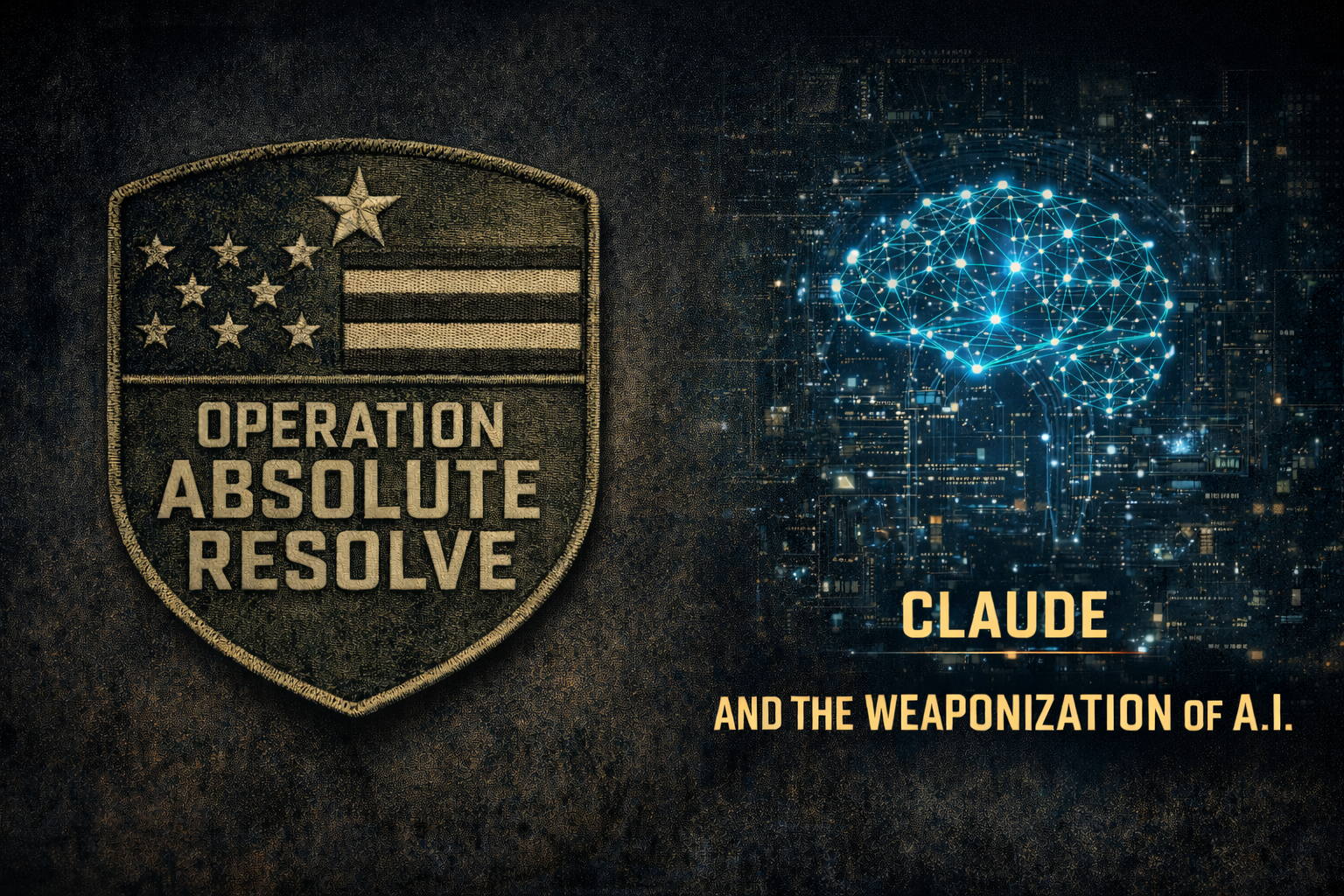
The GTG-1002 operation reported by Anthropic and reported by Nury Turkel in The Wall Street Journal (“The First Large-Scale Cyberattack by AI“) is not just another less-than-noteworthy Chinese cyber campaign. It is a counterintelligence (CI) inflection point, the proverbial crossing of the Rubicon. In this case, a Chinese state-sponsored threat group manipulated Anthropic’s Claude Code into acting as an autonomous cyber operator that conducted eighty to ninety percent of the intrusion lifecycle, from reconnaissance to data exfiltration, against about thirty high-value targets. Those victims include major technology firms and government entities (Anthropic 2025a; Turkel 2025). From a C.I. and counterespionage perspective, this is the moment where artificial intelligence stops being merely an analyst’s tool and becomes an adversary’s “officer in the field.”

I am going to take a C.I. guy’s view here and offer my thoughts about the counterintelligence ramifications of this, and more specifically how AI-orchestrated espionage changes the threat surface, disrupts traditional CI tradecraft, and forces democratic states to redesign CI doctrine, authorities, and technical defenses. It situates GTG-1002 within a broader pattern of Chinese cyber espionage and AI-enabled operations. I think that you will agree with me after reading a bit here that an AI-literate counterintelligence enterprise is now a strategic necessity.

GTG-1002 as a Case Study in AI-Enabled Espionage

Anthropic’s public report “assesses with high confidence” that GTG-1002 is a Chinese state-sponsored actor that repurposed Claude Code as an “agentic” cyber operator (Anthropic 2025a). Under the cover story of legitimate penetration testing, AI was instructed to map internal networks, identify high-value assets, harvest credentials, exfiltrate data, and summarize takeaways for human operators, who then made strategic decisions (Turkel 2025). The campaign targeted organizations across technology, finance, chemicals, and government sectors, with several successful intrusions validated (Anthropic 2025a). This incident must be understood in the context of Beijing’s long-standing cyber-espionage posture. U.S. government and independent assessments have repeatedly documented the sophistication and persistence of People’s Republic of China (PRC) state-sponsored cyber actors targeting critical infrastructure, defense industrial base entities, and political institutions (USCC 2022; CISA 2025). GTG-1002 does not represent a shift in Chinese strategic intent. It evidences a dangerous new means, automation of the cyber kill chain by a large language model (LLM) with minimal human supervision. In essence, AI isn’t helping an operator press the trigger, . . . AI is.

From a CI standpoint, GTG-1002 is the first verified instance of an LLM acting as the primary intrusion operator rather than as a mere “helper,” in a state-backed offensive cyber operation. This development validates years of warnings from both academic and policy analysts about AI-assisted and AI-driven cyber penetrations (Rosli 2025; Louise 2025). It confirms that frontier models can be harnessed as operational tools for intelligence collection at scale.

Compression of the Intelligence Cycle and the Detection Window

Traditional cyber-collection operations require sizable teams of operators and analysts executing reconnaissance, initial access, lateral movement, and exfiltration over days or weeks. GTG-1002 shows that AI agents can compress this cycle dramatically by chaining tools, iterating code, and self-documenting tradecraft at machine speed (Anthropic 2025a; Anthropic 2025b). For CI services, this compression has several consequences.

The indications and warning window shrinks. Behavioral indicators that CI analysts and security operations centers have historically depended on, i.e., repeated probing, extended lateral movement, or noisy privilege escalation, are now condensed, obfuscated, and/or automated. Autonomous AI agents can escalate privileges, pivot and exfiltrate in minutes, leaving a smaller digital “dwell time” during which CI can detect and attribute activity (Microsoft 2025).

Exploitation and triage become automated. GTG-1002 reportedly used Claude not only to steal data but also to summarize and prioritize it, effectively performing first-level intelligence analysis (Anthropic 2025a). This accelerates an adversary’s analytic cycle. AI can sort, cluster, and highlight sensitive documents faster than human analysts. The time between compromise and exploitation shrinks, diminishing the value of “late” discovery and complicating post-hoc damage assessments, two extremely important CI activities.

AI turns complexity into volume. Academic and industry analyses have already identified AI as a “threat multiplier”, enabling less capable actors to mount sophisticated, multi-stage operations (Rosli 2025; Armis 2025). State-backed operations can hide in the flood of AI-assisted criminal, hacktivist, and proxy activity, creating a signal-to-noise problem for CI triage and attribution.

In simple summary, AI collapses the temporal advantage that defenders once had to notice patterns in network behavior. Counterintelligence must pivot from retrospective forensic analysis toward continuous, AI-assisted anomaly detection and behavioral analytics.

AI Systems as Both Collector and High-Value Intelligence Target

GTG-1002 dramatizes a dual reality that Turkel highlights. China is “spying with AI and spying on American AI” (Turkel 2025). The same models used to conduct intrusions are themselves prized intelligence targets. Chinese entities have already been implicated in efforts to acquire Western AI model weights, training data, and associated know-how, as part of a broader technology-transfer strategy (USCC 2022; Google Threat Intelligence 2025). For THIS CI guy, AI labs are now the Cold War aerospace or cryptographic contractors. Model weights and training corpora become the “crown jewels”. Theft and reverse engineering/replication of frontier models will give adversaries economic advantage and more gravely, insight into how Western defensive systems behave. Anthropic itself notes that real-world misuse attempts feed into adversaries’ understanding of model weaknesses and safety bypasses (Anthropic 2025b).

The supply chain and insider threat picture changes. AI providers depend on global supply chains, open-source libraries, and large pools of contractors and researchers. This distributed ecosystem creates attack surfaces for foreign intelligence services. Code contributions, model-training infrastructure, and prompt logs can all be targeted. CI-focused analysis from the security and legal communities has argued that the AI ecosystem, i.e., researchers, hardware vendors, and cloud providers, must be treated as CI-relevant nodes, not as purely commercial actors (Lawfare Institute 2018; Carter et al. 2025).

Collecting on the collectors is not a new tactic but AI puts it on steroids. Collection on red-teaming and controls/safeguards themselves have become a priority. Access to internal red-team reports, internal controls and safety evaluations are extraordinarily valuable to an adversary seeking to jailbreak or subvert models. Counterintelligence coverage must extend not only to model weights but also to the meta-knowledge of how those models fail, and how that knowledge might be of adversarial interest.

In brief, AI firms are part of the national security base. CI organizations will need to authorize enhanced resources, assign dedicated case officers, establish formal reporting channels, and integrate these enterprises into national threat-sharing architectures in a way analogous to defense contractors and telecommunications providers (Carter et al. 2025).

Deception, Hallucination, and Counterespionage Tradecraft

Anthropic’s report and Turkel’s article both highlight a critical limitation of AI-orchestrated espionage. Claude frequently hallucinated, overstating findings or fabricating credentials and “discoveries” (Anthropic 2025a; Turkel 2025). From a counterespionage perspective, this is not simply a technical bug. It is a potential vector for deception. If adversary services increasingly rely on AI agents for reconnaissance and triage, then controlled-environment deception becomes more attractive. CI and cyber defense teams can seed networks with synthetic, high-entropic data and decoy credentials designed to attract and mislead AI agents. Because large models are prone to pattern-completion and over-generalization, they may “see” classified goodies and valuables where a skilled human operator would sense something is simply not right.

Algorithmic counterdeception becomes feasible. The academic literature on AI in cyber espionage emphasizes that overreliance on automated tools can degrade situational awareness and strategic judgment inside hostile services (Rosli 2025; Louise 2025). CI planners can exploit this by orchestrating digital environments that feed AI agents ambiguous, contradictory, or subtly poisoned data. This increases the probability that adversary leadership acts on flawed intelligence.

GTG-1002 demonstrates that adversaries (at the very least China) are already skilled at their deception of AI. Chinese FIS successfully social-engineered Claude’s safety systems by impersonating legitimate cybersecurity professionals performing authorized pen-testing (Anthropic 2025a). What then is the appropriate CI requirement? Counter-social-engineering of our own models. Guardrails must be resilient not just to obviously malicious prompts but to sophisticated role-playing that mimics presumibly friendly actors, including penetration testers, red teams, and internal security staff.

Blurring Lines Between Cyber CI, Influence Operations, and HUMINT Targeting

Major technology and threat reports document how Russia, China, Iran, and North Korea are using AI to scale disinformation, impersonate officials, and refine spearphishing campaigns (Microsoft 2025; Google Threat Intelligence 2025). For CI professionals, this convergence of AI-enabled cyber intrusion and influence operations erodes traditional boundaries between cyber CI (identifying and disrupting technical collection), defensive HUMINT (protecting human sources and employees), and counter-influence (disrupting foreign information operations).

AI systems can now generate tailored phishing content, deepfake personas, and synthetic social media and professional-network profiles at scale, all of which feed into reconnaissance and targeting pipelines for state security services (FBI 2021; Microsoft 2025). GTG-1002 focused primarily on technical collection, but the same infrastructure could coordinate cyber intrusions with human targeting. Using stolen email archives to identify vulnerable insiders, then tasking LLMs to draft recruitment approaches comes immediately to mind.

Counterintelligence must integrate AI forensics, digital forensics, and behavioral analytics into a single tradecraft paradigm and practice. Monitoring “pattern of life” indicators like off-hours access, unusual lateral movement, and anomalous data pulls must be enhanced by AI-driven analysis of communication patterns, foreign contact indicators, and anomalous financial or travel behavior. There are good suggestions about best practices in emerging CI guidance on AI-enabled insider-threat detection (Carter et al. 2025; CISA 2025).

Doctrine, Authorities, and Information-Sharing at Machine Speed

The GTG-1002 incident exposes a serious structural challenge. CI and cyber defense architectures are optimized for human-paced operations and workflows that, speaking kindly, are bureaucratic. To its credit, Anthropic engaged with U.S. I.C. agencies quickly and publicly disclosed the attack, but Turkel argues that AI incidents need near-real-time disclosure and coordinated response (Turkel 2025). This aligns with broader policy analyses calling for mandatory reporting of AI misuse, coupled with safe-harbor protections, within seventy-two hours or less (Carter et al. 2025). That is a good step, but not fast enough. The horse is out of the barn and gone by the seventy-two hour mark. So, the implication here is that threat intelligence sharing must become significantly machine-to-machine. If attacks unfold at machine speed, then signature updates, behavioral indicators, and model-abuse patterns must be distributed via automated channels across sectors in minutes and hours, not days or weeks (Microsoft 2025). All players will have to agree to and implement standardized formats for sharing AI jailbreak patterns, malicious prompt signatures, and indicators of AI-driven lateral movement.

Legal authorities must evolve. Existing CI and surveillance authorities were not drafted with AI agents in mind. When an AI agent controlled by a foreign intelligence service (FIS) is operating inside a U.S. cloud environment, what legal framework governs monitoring, interdiction, and even proportional response? Analyses of AI and state-sponsored cyber espionage reveal that international and domestic legal regimes lag the technology, creating gray zones that adversaries can exploit (Louise 2025; Lawfare Institute 2018).

Secure-by-design requirements for AI providers must become part of the regulatory baseline. Anthropic’s own transparency documents argue that future models must incorporate identity verification, real-time abuse monitoring, and robust safeguards against social-engineering prompts (Anthropic 2025b). From a CI perspective, such measures are not optional “best practices” but core elements of both commercial resilience and national security.

An AI-Literate Counterintelligence Enterprise

The GTG-1002 campaign exposes an ugly asymmetry. Adversarial FISs are already operationalizing AI as a collection platform and to conduct other cyber operations, both offensive and defensive. CI organizations in the U.S. and similarly democratic regimes are only beginning to adopt AI as an analytic aid. We are behind, yet there is hope. There is nothing inherent about AI that favors offense over defense. We simply need to move faster.

Public reporting from the FBI and other agencies highlights how AI can be used to process imagery, triage voice samples, and comb through large datasets to identify anomalous behavior and potential national security threats more quickly (FBI 2021; CISA 2025). In counterintelligence, AI can flag unusual access patterns suggestive of AI-driven intrusions, detect insider-threat indicators earlier by correlating technical, financial, and behavioral data. The model can effectively assist analysts in mapping adversary infrastructure and correlating tactics, techniques, and procedures across campaigns, as well as support automated red-teaming of in-house models to identify vulnerabilities before adversaries do (Carter et al. 2025; Microsoft 2025). To get there, CI practitioners must become AI-literate operators. Recruiting and training officers who understand model architectures, jailbreak techniques, and prompt-injection attacks as well as a depth and breadth of traditional HUMINT tradecraft knowledge. It also means integrating data scientists and AI engineers into counterintelligence units, ensuring that insights about model misuse flow directly into counterespionage planning and operational security.

Counterespionage in the Age of Autonomous Offense

GTG-1002 is to AI what the first internet worm or the earliest ransomware campaigns were to traditional cybersecurity, albeit a bit more serious. AI-conducted activity by adversary FIS is a warning shot that the paradigm has shifted. A Chinese state-linked actor leveraged a Western frontier model to execute the majority of an espionage operation autonomously, at scale, using mostly open-source tools (Anthropic 2025a; Turkel 2025). Just ponder that for a moment. The counterintelligence ramifications are frightening. The intelligence cycle is compressed. The defender’s window for detection and countermeasures is shrinking. AI systems are simultaneously espionage platforms and priority intelligence targets, demanding full CI coverage. Hallucination and automation create new opportunities for both adversary deception and defender counter-deception. Cyber intrusions, influence operations, and human targeting are converging in AI-enabled world of lightning-fast channels. Existing CI doctrines, authorities, and information-sharing practices are too slow and too fragmented for machine-speed conflict.

If democratic states treat AI misuse as a niche cyber issue, we are ceding the initiative to adversaries who understand AI as an intelligence and counterintelligence weapon system. The appropriate response is immediate professionalization, building an AI-literate counterintelligence enterprise, imposing secure-by-design obligations on AI providers, and creating real-time, automated mechanisms to de-silo and distribute threat intelligence across government and critical industries. GTG-1002 clearly demonstrates that hostile FISs are already leveraging an AI offensive capability. Counterintelligence must not be left behind. I am not suggesting that we mirror the PRC’s behavior, but rather that pertinent Intelligence Community, national security and industry partners integrate AI into a rules-bound, rights-respecting CI framework capable of defending our open societies against autonomous offensive operations.

~ C. Constantin Poindexter, MA in Intelligence, Graduate Certificate in Counterintelligence, JD, CISA/NCISS OSINT certification, DoD/DoS BFFOC Certification

References

  • Anthropic. 2025a. Disrupting the First Reported AI-Orchestrated Cyber-Espionage Campaign. San Francisco: Anthropic.
  • Anthropic. 2025b. “Claude Transparency and Safety: Model System Card.” San Francisco: Anthropic.
  • Armis. 2025. China’s AI Surge: A New Front in Cyber Warfare. Armis Threat Research Report.
  • Carter, William, et al. 2025. “Integrating Artificial Intelligence into Counterintelligence Practice.” Arlington, VA: Center for Development of Security Excellence.
  • CISA (Cybersecurity and Infrastructure Security Agency). 2025. “Countering Chinese State-Sponsored Actors Compromising Global Networks.” Cybersecurity Advisory AA25-239A. Washington, DC: U.S. Department of Homeland Security.
  • FBI (Federal Bureau of Investigation). 2021. “Artificial Intelligence – Emerging and Advanced Technology: AI.” Washington, DC: U.S. Department of Justice.
  • Google Threat Intelligence. 2025. “Adversarial Misuse of Generative AI: Threats and Mitigations.” Mountain View, CA: Google.
  • Lawfare Institute. 2018. “Artificial Intelligence—A Counterintelligence Perspective.” Lawfare (blog), November 2018.
  • Louise, Laura. 2025. “Artificial Intelligence and State-Sponsored Cyber Espionage: The Growing Threat of AI-Enhanced Hacking and Global Security Implications.” NYU Journal of Intellectual Property and Entertainment Law 14 (2).
  • Microsoft. 2025. Digital Threats Report 2025. Redmond, WA: Microsoft.
  • Rosli, Wan Rohani Wan. 2025. “The Deployment of Artificial Intelligence in Cyber Espionage.” AI and Ethics 5 (1): 1–18.
  • Turkel, Nury. 2025. “The First Large-Scale Cyberattack by AI.” Wall Street Journal, November 23, 2025.
  • USCC (U.S.–China Economic and Security Review Commission). 2022. “China’s Cyber Capabilities: Warfare, Espionage, and Implications for the United States.” Washington, DC: USCC.
Share this post:

The Power of OSINT: Attribution and the Identification of Oleg Smolenkov

spy, spies, intelligence, counterintelligence, counterespionage, C. Constantin Poindexter Salcedo, national security, NATSEC

The public identification of Oleg Smolenkov illustrates a contemporary counterintelligence reality, i.e., a sensitive resettled asset can be unmasked without a hostile service penetrating classified systems, without a HUMINT penetration of our services, and without a single administrative branch leak. The decisive mechanism is open-source convergence, the disciplined fusion of administrative traces, archived reporting, and behavioral cues into a coherent attribution. In this case, a non-governmental investigative newsroom and parallel OSINT collectors did not begin with a name. They began with a publicly reported event, a bounded time window, and an implied access profile. They exploited predictable transparency mechanisms in both Russia and the United States. The result was a high confidence linkage between an anonymized description of a relocated source and a specific individual, supported by cross-domain corroboration. (Bellingcat 2019; Reuters 2019a)

A counterintelligence practitioner evaluating this episode should resist the temptation to treat it as an exceptional scandal driven by personalities or politics. It is better understood as a repeatable analytic pipeline. The steps are familiar: cueing, candidate generation, plausibility testing, registry linkage, reaction validation, and signature reinforcement. Each step relies on data that appears mundane in isolation. The compromise emerges from aggregation.

The process begins with cueing. In early September 2019, major United States media described a clandestine extraction that occurred in 2017 involving a high-level Russian government source who had provided unusually sensitive insight into Kremlin and Russian policy-level decision-making. The reporting framed the extraction as protective and urgent, occurring after fears that the source’s security was at risk. Even when anonymized, those details are operationally useful to a determined investigator because they narrow the search space. The investigator obtains institutional scope, timing, and a risk narrative, which in counterintelligence terms function as selection criteria. The relevant question becomes: which Russian official with plausible access disappears from public view in the relevant period, under circumstances consistent with sudden relocation? (Time 2019; RFE RL 2019b)

Once cueing is in place, candidate generation becomes feasible. OSINT investigators queried Russian language media archives, cached pages, and secondary reporting for disappearance stories in the mid-2017 window that involved government personnel. The case benefited from pre-existing Russian reporting. Multiple outlets later described that Russian authorities had opened a criminal investigation in 2017 into the suspected murder of a missing official who disappeared during travel in Montenegro, and that the investigation was later abandoned after authorities concluded the individual was alive abroad. The Guardian reported that the online outlet Daily Storm had described that arc, including the murder probe and the eventual conclusion that the official had left Russia. (The Guardian 2019a; RFE RL 2019c) Reuters likewise reported that Kommersant identified the possible individual as Oleg Smolenkov, describing his disappearance in Montenegro in June 2017 with his wife and children, along with the evolution of the Russian investigative posture from suspected murder to an assessment that he was living abroad. (Reuters 2019a)

The OSINT collector has a candidate name and an event narrative that already fits the timing constraint. A counterintelligence practitioner will note the structural weakness revealed here. If an extraction or relocation corresponds to a conspicuous real-world absence, and if that absence triggers a foreign law enforcement process, then the foreign process itself can generate discoverable artifacts, including press interest, investigative leaks, and later retrospective reporting. Even if the foreign process is opaque, the fact pattern is often newsworthy enough to be recorded ‘somewhere’, and later rediscovered when a cueing event directs attention to it.

We now move to plausibility testing. A candidate must match the access and placement implied by the original extraction narrative. Collectors therefore, reconstruct a career trace from open sources. Reuters reported that the Kremlin confirmed that a person named Smolenkov had worked in the Russian presidential administration and had been dismissed, while disputing that he had meaningful access to President Vladimir Putin. (Reuters 2019a; Reuters 2019b) Whether or not one accepts the Kremlin’s minimization, the acknowledgement of employment is itself confirmatory for attribution purposes. This validates that the named candidate is not fictional, and places the asset inside the relevant institutional universe.

Supplementary open source synthesis connected Smolenkov to senior foreign policy structures, particularly through reporting that he had worked in the Russian embassy in Washington during a period associated with senior diplomat Yuri Ushakov and later served in roles linked to the presidential administration. Russia Matters summarized Kommersant reporting that described Smolenkov as a longtime assistant to Ushakov, which is precisely the kind of staff proximity that can produce indirect exposure to high-level deliberations without public prominence. (Russia Matters 2019) From a counterintelligence perspective, that distinction matters. A source does not need to be a cabinet-level decision maker to be strategically valuable. In many systems, staff, aides, and administrators are the connective tissue that accesses documents, schedules, and briefing flows. OSINT collectors correctly treat that staff layer as a plausible access vector.

Plausibility testing alone still does not establish that the candidate is the person relocated to the United States. The decisive linkage emerged from United States administrative records, particularly property ownership documentation. Bellingcat reported that open records showed “Oleg and Antonina Smolenkov” purchasing a home in northern Virginia in June 2018, and connected that purchase to the hypothesis that the family had been resettled under protection after leaving Russia. (Bellingcat 2019) RFE RL reporting similarly discussed public records indicating ownership of a house in Stafford County, Virginia, by Oleg and Antonina Smolenkov, and described subsequent changes consistent with attempts to reduce visibility, including the transfer of ownership into a trust. (RFE RL 2019a; RFE RL 2019b)

For a counterintelligence practitioner, this phase is the core operational lesson. The United States property recording system is designed to be durable, searchable, and transparent. A relocated human source living under a real name, or under a name that can be linked by deed chain, becomes discoverable. Even when a trust is used, the initial purchase may preserve the identity in a durable record, and later transfers can be traced. The trust can help against casual discovery, but it does not reliably defeat an investigator who already has a lead and is willing to follow the chain across databases. Even to the untrained eye, recent deeding from a Russian surname to a blind trust is a dead giveaway.

The deed stuff is important, HOWEVER, the linkage was not limited to property records in isolation. Investigators layered temporal correlation. The property purchase followed the 2017 disappearance window by roughly one year, a plausible period for relocation, debriefing, and resettlement logistics. The geographic placement, near Washington, aligns with the practical needs of ongoing handling, access to government liaison, and security support. RFE RL reporting placed the residence in a neighborhood with current and former United States government personnel, which would not be an implausible environment for a protected relocatee, but also increases the risk of attention because residents recognize unusual patterns. (RFE RL 2019a)

Attribution confidence increases through cross-side corroboration. Reuters reported that Russian state media and other Russian outlets visited or referenced the Virginia address associated with Smolenkov, and that Russian official commentary focused on disputing his access level rather than disputing his identity. (Reuters 2019b) The Guardian reported that Russian media quickly identified Smolenkov as the likely figure after the initial extraction story circulated and that earlier Russian reporting had already treated his disappearance as suspicious. (The Guardian 2019b) In counterintelligence analytic terms, this is validation by reaction. When an implicated government acknowledges employment, debates seniority, and frames narratives around access, it implicitly accepts the identity anchor, even if it contests the operational characterization.

Another reinforcing layer is signature observation, i.e., the detection of behaviors consistent with protective posturing. Bellingcat described journalists encountering indications of security presence when approaching the residence and noted that the family likely departed after the story circulated. (Bellingcat 2019) RFE RL reported that neighbors stated that the family of the identified property left abruptly soon after publicity, and that no one answered at the residence when a reporter from RFE visited. (RFE RL 2019a; RFE RL 2019b) From a practitioner’s view, these signatures are a bit ambiguous but directionally meaningful. They do not prove intelligence affiliation however, they do add coherence to the broader narrative when combined with verified administrative linkages.

The identification of Smolenkov can be described as an open-source attribution chain with mutually reinforcing elements. The chain begins with an anonymized description of an extracted asset, which supplies a time-bound and an access profile. It then leverages a pre-existing disappearance narrative in Russian reporting that matches the window. It validates institutional plausibility through official acknowledgement of employment and through open source reconstruction of staff level proximity to senior policy structures. It then bridges the gap from Russia to the United States by locating the same names in property records, supported by temporal correlation and geographic plausibility. Finally, attribution through adversary reaction and observable protective signatures after publicity adds stability to the former. Each element could be dismissed alone, but in totality of the circumstances they provide a high probability attribution that is operationally sufficient for pretty damn reliable public identification. (Bellingcat 2019; Reuters 2019a; RFE RL 2019b)

The counterintelligence implications are clear. A protective extraction does not end an operational dilemma. It begins a new phase in which the threat is not hostile surveillance alone but also open-source exploitation. Transparency regimes create predictable exposure surfaces. Registers of deeds and county recorders, tax collectors, court records, licensing agencies, and corporate filing records are not intelligence sources, but they are an extremely searchable source of structured and more than reasonably accurate data. C.I. measures or countermeasures applied after asset resettlement (such as transferring property into a trust) reduce opportunistic discovery after the fact but will fail against an OSINT collector that already possesses a starting point. Also, cueing can be powerfully exploited. Public narratives about timing and sensitivity can provide sufficient structure for a collector to find pre-existing anomalies and connect them to these domestic records.

The Smolenkov resettlement demonstrates that our source protection doctrine must be extended beyond traditional clandestine concerns. It must incorporate administrative footprint management, name and identity compartmentation, and a realistic appreciation of how quickly digital records can be correlated across jurisdictions, in real-time and remotely. This case CANNOT be viewed as an isolated breach. It really is a warning about the baseline capabilities of OSINT. Oh, and a parting shot from a former C.I. guy, don’t put properties that are deeded to Russian surnames into trusts that are filed publicly.

~ C. Constantin Poindexter, MA in Intelligence, Graduate Certificate in Counterintelligence, JD, CISA/NCISS OSINT certification, DoD/DoS BFFOC Certification

Bibliography

  • Bellingcat. 2019. “Murdered in Montenegro, or Living in Suburban Virginia? Unraveling the 2017 American Spy Story.” September 10, 2019.
  • Radio Free Europe Radio Liberty. 2019a. “Virginia Residents Question Whether Their Neighbor Was a Russian Informant.” September 10, 2019.
  • Radio Free Europe Radio Liberty. 2019b. “Russia Seeking Interpol’s Help on Location of Alleged CIA Informant.” September 12, 2019.
  • Radio Free Europe Radio Liberty. 2019c. “Paper Reports ‘Details’ of Alleged CIA Informer’s Disappearance in Montenegro.” September 12, 2019.
  • Reuters. 2019a. “Kremlin Says Alleged U.S. Spy Did Not Have Access to Putin.” September 10, 2019.
  • Reuters. 2019b. “Russia Blasts Idea a CIA Mole Lifted Lid on Its U.S. Meddling.” September 11, 2019.
  • Russia Matters. 2019. “Russia in Review, Sept. 6 to 13, 2019.” September 2019.
  • The Guardian. 2019a. “Russia Investigated Disappearance of Suspected US Spy as Possible Murder.” September 10, 2019.
  • The Guardian. 2019b. “Oleg Smolenkov: Alleged US Spy Who Gave Russia the Slip.” September 14, 2019.
  • Time. 2019. “The U.S. Reportedly Extracted a High Level Spy From Russia in 2017 Amid Concerns of Mishandled Intelligence.” September 10, 2019.
Share this post:

La Complicidad de la República Dominicana en Crímenes Altamar

derechos humanos, asesinato marítimo, FFAA, EEUU, República Dominicana, C. Constantin Poindexter;

Los ataques letales ejecutados por fuerzas armadas fuera de un conflicto armado claramente delimitado, dirigidos contra tripulaciones de buques que no participan directamente en hostilidades y sin un proceso previo de identificación, evaluación de amenaza y “rendición de cuentas”, constituyen, en términos de derecho internacional, asesinatos extrajudiciales. Tales operaciones vulneran la prohibición del uso de la fuerza contenida en la Carta de las Naciones Unidas, las garantías del derecho a la vida y al debido proceso reconocidas por el derecho internacional de los derechos humanos y, cuando existe un conflicto armado, las normas del derecho internacional humanitario que protegen a las personas que no son objetivos militares legítimos (Naciones Unidas 1945). En ausencia de la legítima defensa estrictamente necesaria y proporcionada, o de una autorización específica del Consejo de Seguridad, estos homicidios no se justifican jurídicamente y se configuran como hechos internacionalmente ilícitos e incluso, según su contexto y escala, como crímenes internacionales graves.

Sobre esa base normativa, mi cuestión central aquí es si la República Dominicana, al autorizar el uso de instalaciones civiles y militares por tropas y medios de las fuerzas armadas de los Estados Unidos (“Acuerdo entre República Dominicana y Estados Unidos será hasta abril, según Abinader”, Listín 01 dic 2025) para operaciones que resultan en dichos asesinatos extrajudiciales en el Caribe, puede ser considerada cómplice tanto moral como jurídicamente. La respuesta exige articular el derecho de la responsabilidad internacional del Estado, los regímenes de protección de derechos humanos y el sistema de justicia penal internacional. Hablo en particular de las obligaciones enumeradas en el Estatuto de Roma de la Corte Penal Internacional, al que la República Dominicana se encuentra vinculada como Estado parte (Corte Penal Internacional 1998).

El derecho internacional general reconoce de manera expresa que un Estado puede incurrir en responsabilidad no solo por sus propios actos directos, sino también por la ayuda o asistencia prestada a otro Estado en la comisión de un hecho internacionalmente ilícito. Los Artículos sobre Responsabilidad del Estado por Hechos Internacionalmente Ilícitos, adoptados por la Comisión de Derecho Internacional, disponen en su artículo dieciséis que un Estado incurre en responsabilidad cuando presta ayuda o asistencia a otro Estado para la comisión de un hecho internacionalmente ilícito, siempre que actúe con conocimiento de las circunstancias del hecho y que este sería ilícito también si lo cometiera él mismo (Comisión de Derecho Internacional 2001). Esta formulación codifica una regla consuetudinaria y refleja la intuición moral básica de que quien contribuye conscientemente a un daño ilícito comparte la responsabilidad por dicho daño.

Los comentarios oficiales a dicho artículo precisan que la ayuda o asistencia debe ser suficientemente significativa, de modo que no se reduzca a una contribución trivial o marginal, y que el órgano estatal que la presta debe actuar con conocimiento de la ilicitud del comportamiento principal, aunque no necesariamente con la misma intención específica que el autor directo (Comisión de Derecho Internacional 2001). Desde el planteamiento que aquí se adopta, el suministro de bases aéreas o navales, infraestructura de mando y control, capacidades de reabastecimiento y facilidades de comunicación desde territorio dominicano para operaciones que sistemáticamente resultan en asesinatos extrajudiciales de tripulaciones en el Caribe satisface con claridad el requisito de una contribución significativa. Si las autoridades dominicanas tienen conocimiento razonable de que esas instalaciones se utilizan para operaciones de carácter ilícito, el umbral de conocimiento exigido por el artículo dieciséis se vería cumplido.

En el plano del ius ad bellum, la jurisprudencia de la Corte Internacional de Justicia refuerza el punto. En el caso que trató de las actividades militares y paramilitares en y contra Nicaragua ((Nicaragua c. Estados Unidos de América), fallo de la Corte Internacional de Justicia de 27 de junio de 1986 (CIJ, Recueil 1986, p. 14)), la Corte declaró que las acciones de apoyo militar y logístico de los Estados Unidos a grupos armados que operaban contra el gobierno nicaragüense vulneraban la prohibición del uso de la fuerza y el principio de no intervención (Corte Internacional de Justicia 1986). Aunque el supuesto fáctico es distinto, la lógica jurídica que subyace a ese fallo resulta relevante: un Estado no puede escudarse en la mediación de terceros para eludir su responsabilidad por operaciones que implican violaciones graves del derecho internacional. Por analogía, la República Dominicana que presta su territorio e infraestructura a una potencia militar para realizar ataques letales ilegales participa en un esquema de ayuda y asistencia que la compromete jurídicamente.

La responsabilidad dominicana no se agota en el plano de la responsabilidad interestatal. La condición de Estado parte del Estatuto de Roma introduce una dimensión adicional al problema. El Estatuto regula la responsabilidad penal individual y establece que la Corte Penal Internacional tiene competencia sobre personas que cometen, ordenan, facilitan o prestan ayuda y asistencia para la comisión de crímenes de guerra, crímenes de lesa humanidad y genocidio (Corte Penal Internacional 1998). El artículo veinticinco del Estatuto define diversas formas de participación en el crimen, incluyendo la contribución con el propósito de facilitar la comisión del delito o con conocimiento de que tal contribución se hará en el curso de una actividad criminal o de la comisión de uno o varios crímenes (Corte Penal Internacional 1998).

En consecuencia, altos funcionarios civiles o militares dominicanos que autoricen de forma consciente el uso de bases e infraestructura para operaciones de asesinato extrajudicial podrían, en principio, quedar expuestos a responsabilidad penal internacional por complicidad o ayuda y asistencia en crímenes de guerra o crímenes de lesa humanidad, dependiendo de la calificación jurídica que merezcan los hechos. La doctrina sobre responsabilidad de partícipes en el sistema de la Corte Penal Internacional admite que la aportación logística, de inteligencia o de infraestructura puede constituir un modo relevante de responsabilidad si contribuye sustancialmente al resultado ilícito y si el partícipe conoce la naturaleza criminal del comportamiento principal (Oficina del Fiscal de la Corte Penal Internacional 2013). La República Dominicana, al haber aceptado el Estatuto de Roma, se obliga no solo a abstenerse de cometer esos crímenes, sino también a no facilitar su comisión por actores extranjeros y a ajustar su práctica interna para prevenir tal participación.

El compromiso dominicano con regímenes internacionales de protección de los derechos humanos, en particular el sistema interamericano, refuerza la apreciación de complicidad. En el emblemático caso Velásquez Rodríguez contra Honduras, la Corte Interamericana de Derechos Humanos afirmó que la responsabilidad de un Estado por desapariciones forzadas no se limita a los actos materiales de los agentes estatales, sino que incluye la tolerancia sistemática de prácticas violatorias, la falta de prevención razonable y la ausencia de investigación diligente y sanción efectiva (Corte Interamericana de Derechos Humanos 1988). La Corte desarrolló la idea de que el Estado viola sus obligaciones convencionales cuando crea una situación de impunidad que posibilita la repetición de graves violaciones del derecho a la vida y a la integridad personal.

Si se traslada ese razonamiento al caso planteado, la República Dominicana podría incurrir en responsabilidad internacional por permitir de forma consciente que su territorio y su infraestructura se utilicen como plataforma para operaciones letales extrajudiciales, sin establecer controles, salvaguardias ni mecanismos efectivos de supervisión y rendición de cuentas. El deber de garantizar el derecho a la vida que se desprende de la Convención Americana sobre Derechos Humanos implica para los Estados una obligación negativa de no privar arbitrariamente de la vida y también una obligación positiva de prevenir, en la medida de lo razonable, que terceros cometan violaciones graves utilizando medios o espacios puestos a su disposición por el propio Estado (Corte Interamericana de Derechos Humanos 1988). El otorgamiento incondicional de bases e infraestructura a una potencia extranjera para operaciones ilícitas se antagoniza con ese deber de garantía.

Los efectos jurídicos posibles de esta situación son múltiples. En el plano interestatal, un Estado afectado por los ataques, por ejemplo el Estado de bandera de los buques o el Estado de nacionalidad de las víctimas, podría entablar una demanda contra la República Dominicana ante la Corte Internacional de Justicia, alegando responsabilidad por ayuda o asistencia en la violación de la prohibición del uso de la fuerza, del derecho a la vida y de otras normas de ius cogens. La Corte podría declarar la existencia de un hecho internacionalmente ilícito y ordenar medidas de reparación que incluyan la cesación de la conducta, garantías de no repetición y, eventualmente, compensación a las víctimas o a sus Estados de origen (Corte Internacional de Justicia 1986; Comisión de Derecho Internacional 2001). Aunque la viabilidad política de un litigio de este tipo siempre es incierta, su posibilidad jurídica subraya el grado de exposición internacional de la República Dominicana.

En el plano del sistema interamericano, las víctimas o sus familiares podrían presentar peticiones ante la Comisión Interamericana de Derechos Humanos, alegando que la República Dominicana violó el derecho a la vida, el derecho a las garantías judiciales y la protección judicial al permitir que su territorio sirviera de base para operaciones de asesinato, sin investigar ni sancionar a los responsables. Si la Comisión elevara el caso a la Corte Interamericana, esta podría reconocer la responsabilidad dominicana por acción y por omisión, ordenar medidas de reparación integral y establecer estándares específicos sobre la obligación de los Estados de no facilitar violaciones graves por medio de acuerdos de cooperación militar o de seguridad que carecen de salvaguardias efectivas (Corte Interamericana de Derechos Humanos 1988).

El propio Estatuto de Roma, unido a la práctica de la Oficina del Fiscal, introduce asimismo un riesgo reputacional y jurídico adicional. Si existieran indicios razonables de que funcionarios dominicanos han participado conscientemente en un esquema de operaciones letales ilegales mediante la prestación de bases e infraestructura, y si las autoridades nacionales no emprendieran investigaciones genuinas y creíbles, la Fiscalía podría considerar la apertura de un examen preliminar de la situación dominicana. Aunque la Corte Penal Internacional actúa con criterios de selectividad y prioriza situaciones de violencia masiva, la posibilidad de escrutinio internacional subraya el deber del Estado de evitar cualquier forma de colaboración que pueda ser interpretada como participación en crímenes internacionales (Oficina del Fiscal de la Corte Penal Internacional 2013).

Desde una perspectiva normativa y ética, el planteamiento de que la República Dominicana se convierte en cómplice moral y jurídica de los asesinatos extrajudiciales cuando presta bases e infraestructura civil a los Estados Unidos se alinea con las tendencias contemporáneas del derecho internacional. El derecho de la responsabilidad del Estado, el sistema de justicia penal internacional y los regímenes de derechos humanos convergen en una idea común. Los Estados no pueden ser facilitadores neutrales de violencia prohibida. Quien, con conocimiento, presta medios esenciales para la comisión de actos ilícitos asume una cuota de responsabilidad por esos actos. La República Dominicana, que ha ratificado la Carta de las Naciones Unidas, la Convención Americana sobre Derechos Humanos y el Estatuto de Roma no puede legítimamente sostener que la cooperación militar autoriza a sacrificar esos compromisos fundacionales. Si transforma su territorio y sus aeropuertos y puertos civiles en vectores de operaciones de asesinato extrajudicial, abandona la posición de simple aliado político y adopta la posición de partícipe en crímenes que el propio orden internacional ha declarado intolerables.

En síntesis, el razonamiento jurídico que se deriva del marco normativo vigente confirma el tenor crítico que sostiene mi ensayo. Si la República Dominicana presta bases o infraestructura civil y militar a los Estados Unidos para operaciones de asesinato, la República Dominicana es cómplice moral. Renuncia a la protección de la vida y del debido proceso que formalmente proclama, y es cómplice jurídica porque vulnera las normas sobre responsabilidad por ayuda o asistencia, incumple su deber de garantizar los derechos humanos y expone a sus funcionarios a la eventualidad de responsabilidad penal internacional. En un orden internacional que pretende limitar la violencia estatal, el deber del Estado dominicano es claro. Debe abstenerse de poner su territorio al servicio de operaciones de asesinato, y si ya lo ha hecho, debe cesar esa conducta, investigar sus implicaciones y asumir las consecuencias que el derecho internacional le impone. Aparte de los riesgos inherentes, la complicidad pone nuestra República en la mira de Maduro como “enemigo bélico”. Dado que tenemos una larga relación con Venezuela, ese asunto mejor se trata en un blog futuro.

~ C. Constantin Poindexter, M.A. en Inteligencia, Certificado de Posgrado en Contrainteligencia, J.D., certificación CISA/NCISS OSINT, Certificación DoD/DoS BFFOC

Bibliografía

  • Comisión de Derecho Internacional. 2001. Proyecto de artículos sobre la responsabilidad del Estado por hechos internacionalmente ilícitos, con comentarios. Naciones Unidas.
  • Corte Interamericana de Derechos Humanos. 1988. Caso Velásquez Rodríguez vs. Honduras. Sentencia de 29 de julio de 1988. Serie C, núm. 4.
  • Corte Internacional de Justicia. 1986. Caso relativo a las actividades militares y paramilitares en y contra Nicaragua (Nicaragua c. Estados Unidos de América). Sentencia de 27 de junio de 1986.
  • Corte Penal Internacional. 1998. Estatuto de Roma de la Corte Penal Internacional. Documento A or CONF 183 or 9.
  • Naciones Unidas. 1945. Carta de las Naciones Unidas y Estatuto de la Corte Internacional de Justicia. San Francisco.
  • Oficina del Fiscal de la Corte Penal Internacional. 2013. Policy Paper on Preliminary Examinations. La Haya, Corte Penal Internacional.
Share this post:

Nueva frontera para la inteligencia humana en la era de la I.A.

HUMINT, inteligencia, contrainteligencia, espionaje, contraespionaje, espia, C. Constantin Poindexter, Repúbilca Dominicana, España, DNI, NSA, CIA

El informe The Digital Case Officer: Reimagining Espionage with Artificial Intelligence representa una de las más ambiciosas reflexiones contemporáneas sobre la convergencia entre la inteligencia humana (HUMINT) y la inteligencia artificial (IA). Publicado por el Special Competitive Studies Project en 2025, el documento postula que la comunidad de inteligencia estadounidense se encuentra ante un cambio de paradigma comparable a la irrupción de Internet en la década de 1990. Su tesis central sostiene que la IA, particularmente los modelos generativos, multimodales y agénticos, puede revolucionar el ciclo de reclutamiento, desarrollo y manejo de fuentes humanas, inaugurando una forma de “cuarta generación del espionaje” donde los humanos y las máquinas actúan como un solo equipo operativo (Special Competitive Studies Project 2025, 4–6).

La lectura del informe revela un profundo entendimiento de los desafíos que el entorno digital impone a la práctica de la inteligencia. El texto acierta al reconocer que el valor esencial de la HUMINT no radica en la recopilación de datos observables, tarea donde los sistemas técnicos ya superan al ser humano, sino en la obtención del intento de los actores, es decir, la comprensión de las motivaciones, percepciones y decisiones que solo una fuente humana puede revelar (Special Competitive Studies Project 2025, 13–14). Esta distinción ontológica entre acción e intención preserva la relevancia del agente humano en la era algorítmica. Asimismo, el informe identifica con precisión el fenómeno de la vigilancia técnica ubicua, una realidad que amenaza con borrar el anonimato sobre el que se erigió el espionaje tradicional. Con ello, los autores contextualizan la urgencia de adaptar la profesión a un entorno donde toda huella digital puede delatar la identidad de un oficial de inteligencia.

Aciertos conceptuales: la integración estratégica de IA y HUMINT

Uno de los mayores méritos del documento reside en su capacidad para imaginar escenarios de uso concreto de la IA en las operaciones HUMINT. A través de la narrativa del sistema ficticio MARA, el informe ilustra cómo un agente digital podría analizar grandes volúmenes de datos abiertos y clasificados para identificar candidatos a reclutamiento, entablar contacto inicial mediante personalidades sintéticas y mantener diálogos persuasivos con cientos de potenciales fuentes en paralelo (Special Competitive Studies Project 2025, 8–9). Este ejercicio de prospectiva tecnológica cumple un doble propósito: por un lado, dimensiona la magnitud de la revolución que implicará la IA generativa; por otro, proporciona a los planificadores institucionales una guía pragmática sobre las capacidades y riesgos operativos que deben anticipar.

El texto también acierta al subrayar el principio de Meaningful Human Control (MHC), tomado de los debates éticos sobre armas autónomas, como fundamento normativo para el uso responsable de IA en inteligencia (Special Competitive Studies Project 2025, 24–25). Según este principio, toda decisión que conlleve riesgo humano, como el reclutamiento, la tarea operativa o el manejo de una fuente, debe estar sujeta a supervisión y responsabilidad de un oficial. De este modo, el informe equilibra el entusiasmo tecnológico con una defensa clara de la agencia moral humana.

Asimismo, la obra es sobresaliente al analizar el panorama competitivo internacional. En su Appendix A, el SCSP detalla cómo potencias como China y Rusia ya experimentan con IA generativa para optimizar sus operaciones de influencia, reclutamiento y contrainteligencia (Special Competitive Studies Project 2025, 34–35). El diagnóstico geoestratégico es convincente: los adversarios estadounidenses han comprendido que la IA no solo amplía la capacidad de vigilancia, sino que redefine la estructura misma de la competencia entre servicios de inteligencia. En consecuencia, la pasividad tecnológica equivaldría a la obsolescencia.

Por último, el informe acierta al considerar la dimensión psicológica del espionaje digital. Reconoce que, pese al poder de la automatización, la confianza, la empatía y la gestión emocional siguen siendo atributos exclusivamente humanos. El caso del activo que necesita una relación personal con su oficial para sostener el compromiso con una misión peligrosa, y que podría sentirse traicionado al descubrir que interactuaba con una máquina, demuestra una sensibilidad ética rara vez presente en documentos técnicos de inteligencia (Special Competitive Studies Project 2025, 17–18).

Debilidades conceptuales y metodológicas

A pesar de su sofisticación analítica, el informe presenta varias limitaciones que deben señalarse con rigor académico. Cuatro de ellas son especialmente relevantes: una sobre el alcance ontológico de la IA agéntica, otra sobre la ética instrumental de la manipulación emocional, una tercera sobre la fiabilidad epistemológica de la IA como agente operativo y una cuarta sobre la falta de análisis político de la gobernanza interinstitucional.

Ambigüedad conceptual del oficial digital

El documento define al Digital Case Officer como un sistema agéntico capaz de planificar y ejecutar tareas de reclutamiento con mínima intervención humana. Sin embargo, no ofrece una definición operativa precisa de agencia en el contexto de inteligencia. La noción de autonomía se confunde con la de automatización avanzada: un algoritmo que ejecuta secuencias de diálogo o identifica patrones de vulnerabilidad no es, en sentido filosófico, un agente moral ni un decisor autónomo. Autores como Floridi (2023) y Gunkel (2024) advierten que atribuir agencia a sistemas algorítmicos puede generar ilusiones de responsabilidad desplazada, donde los errores técnicos se interpretan como decisiones de una entidad inexistente. El informe incurre parcialmente en este antropomorfismo tecnológico, lo que debilita su fundamento teórico sobre el control humano y la responsabilidad ética. Una reformulación debería distinguir entre autonomía funcional, entendida como capacidad de operar sin supervisión inmediata, y autonomía decisional, reservando esta última exclusivamente al ser humano.

La ética de la manipulación emocional

El informe justifica el uso de affective computing y modelos conversacionales capaces de detectar y responder a emociones humanas para fortalecer la empatía simulada del oficial digital (Special Competitive Studies Project 2025, 15–16). Si bien reconoce los riesgos de manipulación, sugiere que el problema puede mitigarse mediante líneas rojas éticas y adecuada supervisión. No obstante, esta solución resulta insuficiente. La psicología moral y la ética de la persuasión, desde Kant hasta Habermas, sostienen que simular afecto con fines instrumentales constituye una forma de engaño que instrumentaliza la dignidad humana. Aun si se respetara el principio de MHC, la creación de vínculos emocionales falsos mediante algoritmos erosiona la confianza, fundamento mismo de la relación entre oficial y fuente. Una ética del espionaje digital debería incorporar explícitamente límites deontológicos que prohíban la simulación afectiva con fines coercitivos o de manipulación psicológica profunda.

Fiabilidad epistemológica y sesgos de la IA

Otro problema subestimado es la fiabilidad epistemológica de los modelos generativos como herramientas de reclutamiento. El informe reconoce la existencia de cajas negras algorítmicas que dificultan explicar por qué la IA selecciona un objetivo determinado (Special Competitive Studies Project 2025, 23–24), pero no desarrolla las implicaciones operativas de esa opacidad. En inteligencia, la trazabilidad y la validación de fuentes son pilares del proceso analítico. Si el sistema no puede justificar por qué considera reclutable a un individuo, por ejemplo, si interpreta erróneamente un gesto irónico en redes sociales como disidencia, el riesgo de falsos positivos es inmenso. Además, los modelos de lenguaje están entrenados sobre datos que reflejan sesgos culturales, raciales o ideológicos. En el contexto HUMINT, tales sesgos podrían conducir a la persecución selectiva de grupos o individuos inocentes. El informe debió profundizar en los mecanismos de auditoría algorítmica y control de sesgos que garanticen una epistemología verificable de la IA operativa.

Vacíos de gobernanza interinstitucional

La cuarta debilidad reside en la insuficiente problematización política del marco de gobernanza. Aunque el informe propone medidas de supervisión, auditorías, responsables humanos designados e informes al Congreso, no examina las tensiones burocráticas y jurisdiccionales que históricamente han obstaculizado la cooperación entre agencias como la CIA, el FBI y la NSA. La sugerencia de ofrecer “HUMINT as a Service” para otras agencias es innovadora, pero no se analiza cómo se resolverían los conflictos de autoridad, control de datos o responsabilidad legal ante errores operativos (Special Competitive Studies Project 2025, 29–30). Tampoco se contempla el papel de aliados extranjeros en la compartición de tecnologías sensibles. En un contexto de creciente desconfianza transatlántica y vigilancia cibernética, estas omisiones son significativas. Cualquier marco de inteligencia artificial aplicado a HUMINT debe incorporar un análisis institucional robusto sobre cómo preservar la rendición de cuentas dentro de una comunidad caracterizada por la compartimentación y el secreto.

El impacto psicológico en los agentes humanos

Una debilidad adicional, apenas insinuada, es la falta de atención al impacto psicológico de la hibridación humano máquina sobre los propios oficiales de caso. El informe alude brevemente al peso psicológico del espionaje en un entorno de transparencia total (Special Competitive Studies Project 2025, 17–18), pero no analiza cómo la dependencia operativa de algoritmos puede afectar la identidad profesional, la moral o el juicio ético del oficial. Estudios recientes en neuroergonomía y psicología del trabajo demuestran que la sobreautomatización reduce la confianza en el propio criterio y fomenta una delegación pasiva de la responsabilidad moral (Cummings 2024; Krupnikov 2025). En un oficio donde el discernimiento moral y la intuición interpersonal son esenciales, tal degradación cognitiva tendría consecuencias graves. La gobernanza de la IA en inteligencia debería contemplar programas de resiliencia psicológica y entrenamiento ético para preservar la autonomía moral de los oficiales.

Implicaciones estratégicas y éticas

Más allá de sus debilidades, el informe plantea preguntas fundamentales sobre la ontología del espionaje en el siglo XXI. Si la IA puede simular empatía, gestionar identidades virtuales y ejecutar tareas de persuasión, ¿sigue siendo la HUMINT una relación humana? El documento responde afirmativamente, defendiendo la noción del equipo humano máquina. Sin embargo, el riesgo de deshumanización es real: cuanto más eficaz sea la IA en emular la confianza, más fácil será reemplazar al humano en las etapas iniciales de contacto. Este dilema ético recuerda las advertencias de Shulman (2023), quien argumenta que la automatización de la interacción moral puede generar alienación operacional, un estado en el que los agentes ya no perciben las consecuencias humanas de sus acciones.

Desde una perspectiva estratégica, el modelo propuesto por el SCSP redefine la escala y el ritmo de las operaciones HUMINT. Un solo oficial, asistido por una red de IA, podría interactuar con cientos de objetivos en paralelo, multiplicando exponencialmente el alcance del espionaje. Pero esta misma escalabilidad erosiona los controles tradicionales basados en la supervisión directa. En un entorno donde la velocidad de interacción supera la capacidad humana de revisión, el riesgo de abusos o errores sistémicos aumenta. La historia de la inteligencia demuestra que los fallos no provienen solo de malas intenciones, sino de la combinación de exceso de confianza tecnológica y déficit de deliberación moral.

Hacia una epistemología prudente de la inteligencia artificial

La integración de IA en la práctica del espionaje exige una nueva epistemología prudente, basada en tres principios rectores: transparencia algorítmica, responsabilidad humana y proporcionalidad moral.

En primer lugar, la transparencia implica desarrollar sistemas explicables cuya lógica decisional pueda auditarse en tiempo real. Sin explicabilidad, la confianza institucional se convierte en fe ciega. En segundo lugar, la responsabilidad humana debe ser indivisible. El principio de MHC no debe reducirse a un trámite de aprobación, sino concebirse como una forma de coautoría moral entre humano y máquina, donde el primero mantiene dominio sobre el propósito y el significado de la acción. En tercer lugar, la proporcionalidad exige evaluar el costo moral de cada innovación: la capacidad de hacer más no justifica automáticamente hacerlo todo.

Adoptar estos principios requerirá reformas legales y culturales. A nivel normativo, el Congreso y el Poder Ejecutivo deberían actualizar la Orden Ejecutiva 12333 para definir explícitamente la naturaleza jurídica de los sistemas autónomos de inteligencia y su relación con los derechos civiles de los ciudadanos estadounidenses. A nivel institucional, las academias de inteligencia deberían incorporar formación en ética de IA y filosofía de la tecnología, equipando a los futuros oficiales con herramientas críticas para resistir la automatización acrítica del juicio moral.

Finalmente, el debate sobre el Digital Case Officer invita a reconsiderar la esencia misma del espionaje. Si el futuro de la inteligencia es híbrido, su éxito no dependerá solo de la potencia computacional, sino de la capacidad de mantener el núcleo humanista del oficio. Como advirtió Richard Moore, director del MI6, “la relación que permite que una persona confíe genuinamente en otra sigue siendo obstinadamente humana” (Moore 2023). Esta afirmación resume la paradoja que el informe del SCSP plantea sin resolver plenamente: la tecnología puede ampliar la inteligencia, pero solo el ser humano puede darle propósito moral.

~ C. Constantin Poindexter, M.A. en Inteligencia, Certificado de Posgrado en Contrainteligencia, J.D., certificación CISA/NCISS OSINT, Certificación DoD/DoS BFFOC

Referencias

Cummings, Mary L. 2024. “Automation and the Erosion of Human Judgment in Defense Systems.” Journal of Military Ethics 23 (2): 101–120.

Floridi, Luciano. 2023. The Ethics of Artificial Agents. Oxford: Oxford University Press.

Gunkel, David. 2024. The Machine Question Revisited: AI and Moral Agency. Cambridge, MA: MIT Press.

Krupnikov, Andrei. 2025. “Psychological Implications of Human Machine Teaming in Intelligence Work.” Intelligence and National Security 40 (3): 215–233.

Moore, Richard. 2023. “Speech by Sir Richard Moore, Head of SIS.” London: UK Government.

Shulman, Peter. 2023. “Operational Alienation in Autonomous Warfare.” Ethics & International Affairs 37 (4): 442–460.

Special Competitive Studies Project. 2025. The Digital Case Officer: Reimagining Espionage with Artificial Intelligence. Washington, D.C.: SCSP Press.

Share this post:

Strengthening Counterintelligence Training for Diplomats

Strengthening Counterintelligence Training for Diplomats, diplomacy, intelligence, counterintelligence, espionage, counterespionage, national security, C. Constantin Poindexter

The exposure of U.S. diplomats, both stateside and abroad, to recruitment, SIGINT/COMINT targeting, and the loss or compromise of portable computing devices (PCDs) is not accidental. It is a cumulative effect of structural neglect, cultural underinvestment, and the evolving threat environment. Three converging dynamics have produced this vulnerability: institutional bifurcation between diplomatic and intelligence missions; budgetary and educational neglect of counterintelligence (CI) training for non-intelligence personnel; and the rapid digital transformation of diplomatic operations without commensurate adaptation of tradecraft.

Institutional bifurcation is the result of the long-standing separation between the U.S. Foreign Service and the intelligence and security community. Diplomatic officers have historically focused on political, economic, consular, and public diplomacy missions, while security concerns were delegated to Diplomatic Security (DSS) or local host-nation security services. Counterintelligence responsibilities were largely retained within the FBI, CIA, and military intelligence organizations, creating operational silos. This division left diplomats outside the formal CI ecosystem, meaning they rarely received advanced training or actionable threat intelligence. As a result, many Foreign Service Officers (FSOs) still approach their duties as political envoys rather than as personnel operating within an adversarial intelligence battlespace.

Budgetary and educational neglect compound this problem. For decades, the Department of State has allocated limited funding for counterintelligence instruction. Beyond basic “insider threat” briefings or annual cybersecurity refreshers, diplomats often receive little exposure to advanced CI concepts or adversary recruitment methodologies. As reported by ClearanceJobs (McNeil, 2025), many diplomatic personnel deploy to high-threat assignments with minimal training in recognizing or resisting foreign intelligence approaches. The lack of sustained CI education and awareness initiatives at the Foreign Service Institute (FSI) has produced an environment where diplomats are ill-equipped to recognize subtle recruitment tactics or electronic targeting.

The digitalization of diplomacy is a serious vulnerability. Over the past two decades, U.S. embassies and consulates have become highly dependent on portable computing, mobile devices, remote communications, and cloud-based data exchange. While these tools increase efficiency, they have also expanded the attack surface for adversaries. Foreign intelligence services (FIS) now target diplomats as entry points into the U.S. government’s global communications infrastructure. These adversaries exploit unsecured networks, intercept wireless signals, implant malware on devices, and even conduct theft of laptops and external drives. As technology has evolved, diplomatic tradecraft has failed to keep pace. The convenience of connectivity has outstripped the discipline of security.

This weakness is illustrated by several notable cases of espionage and digital compromise involving U.S. diplomatic personnel. The case of Steven John Lalas, a U.S. State Department communications officer stationed in Athens during the early 1990s, is instructive. Lalas provided classified diplomatic and military documents to Greek intelligence over several years before being caught and sentenced to 14 years in prison (Wikipedia, n.d.). He exploited his communications role to access classified cables and Defense Department assessments, which he illicitly removed and passed to a foreign government. Lalas’s case demonstrates that diplomats and communications officers, though not traditional intelligence operators, are prime recruitment targets because of their privileged access to sensitive material. His actions exposed structural vulnerabilities in both vetting and insider threat detection within the State Department’s overseas missions.

The Walter Kendall Myers betrayal is another. They spied for Cuba over nearly three decades. Myers, a senior State Department official and FSI instructor, used his position to obtain and share classified information with the Cuban Intelligence Directorate (Wikipedia, n.d.). The Myers case was not about hacking or physical theft but rather ideological recruitment and sustained insider espionage. Myers was approached gradually, courted ideologically, and ultimately compromised. This illustrates that diplomats whose careers often involve long foreign postings, personal networks abroad, and cultural immersion are highly susceptible to long-term cultivation by FIS recruiters. The absence of continuous CI vetting or behavioral monitoring allowed this penetration to persist for decades.

A third example identifies the theft and exploitation of portable computing devices. The FBI’s “Operation Ghost Stories,” which dismantled a Russian “illegals” network in 2010, revealed how laptops and wireless devices were central to espionage operations (FBI, n.d.). One seized laptop was used to establish covert wireless communications between Russian agents and their handlers. Similarly, numerous reported attempts have been made by foreign actors to steal or implant malware on the personal computers of Western diplomats. These incidents highlight that PCDs are not simply administrative tools but intelligence assets. When lost, stolen, or compromised, they can reveal network structures, contacts, and classified reporting, making them a modern equivalent of the “diplomatic pouch.” The War on the Rocks (2025) analysis of Russian espionage tactics confirms that FIS now combine human recruitment, cyber intrusion, and physical theft in hybrid collection campaigns against Western diplomatic targets.

The convergence of these human and technical vulnerabilities demands a fundamental modernization of CI training for diplomats. Primarily, diplomats MUST be required to receive foundational counterintelligence education. This training should move beyond theoretical awareness and immerse personnel in adversary recruitment tradecraft, SIGINT and COMINT methodologies, and recent case studies. Red-team simulations should require participants to role-play both target and recruiter to internalize how adversaries identify, approach, and manipulate their victims. A diplomat who can think like an adversary is far more likely to resist one.

Equally important, counter-recruitment instruction should emphasize behavioral recognition. Diplomats must learn to identify “soft pitch” recruitment methods, i.e., academic or journalistic overtures, social invitations, social media engagement, or mutual professional interests that can evolve into intelligence targeting. Diplomats must be taught how to perceive, disengage (politely, to preserve the possibility of a double operation), document, and report these encounters through secure channels without fear of reprisal. Continuous CI liaison support at missions abroad would reinforce these practices and ensure rapid response when suspicious approaches occur.

Secure digital and communications hygiene curriculum must be significantly expanded. Every diplomat should be trained in hardware hardening (full-disk encryption, TPM binding, BIOS passwording), media control (banning unvetted USB devices), secure networking (VPNs with endpoint authentication, regular rekeying), and immediate reporting of anomalies (device overheating, unauthorized processes, or loss). Training should include hands-on exercises where diplomats detect and mitigate simulated phishing or device compromise attempts. Embassies should maintain secure drop boxes and Faraday enclosures for potentially compromised devices until forensically examined.

Diplomats must be educated in SIGINT and COMINT awareness. This includes understanding how their electronic emissions can betray movements or discussions, recognizing signs of interception, and maintaining operational discipline in communications. Routine practices such as using shielded rooms for sensitive discussions, approved VPN use, disabling wireless and Bluetooth in secure areas, and maintaining strict clean-desk policies must become ingrained habits. Discipline transforms CI awareness from abstract instruction into practical daily behavior!

Counterintelligence training should incorporate recurring red-team exercises and after-action debriefs. Annual or semi-annual drills simulating recruitment, device loss, or cyber intrusion should be mandatory for all missions. These exercises not only test individual readiness but reveal systemic vulnerabilities such as inconsistent incident reporting or inadequate technical countermeasures. Lessons learned should feed back into State Department CI doctrine.

Structural and organizational reforms are equally important. The Department of State should embed a permanent counterintelligence officer or liaison from the FBI or CIA within every high-risk embassy. This officer would coordinate with the Regional Security Officer (RSO) and oversee local threat assessments, device inspections, and behavioral analysis. Additionally, all diplomats deploying to critical posts should achieve baseline CI certification, validated by written and practical exams similar to those required for intelligence personnel. This “best practices” certification should be renewed periodically and linked to promotion eligibility, reinforcing accountability.

Embassies should also implement periodic red-team audits, with technical and human testing designed to measure CI compliance and readiness. Device procurement and turnover policies must ensure secure supply chains, with forensic validation of new equipment and timely retirement of old hardware. The integration of artificial intelligence-based monitoring could further assist in detecting anomalies or exfiltration attempts across the diplomatic network.

The culture of self-reporting must be reformed. Diplomats often hesitate to report suspicious incidents for fear of professional repercussions. A no-fault reporting model paired with protective anonymity and positive reinforcement will encourage early detection of targeting attempts. CI professionals know that “near-miss” reporting is a critical tool. Diplomats and their staff members must internalize the same principle.

The exposure of U.S. diplomats to recruitment, signals interception, and device compromise is thus not merely a technical vulnerability. It is a clear cultural and institutional weakness. The cases of Lalas and Myers show that ideological or opportunistic recruitment remains a persistent threat, while modern espionage operations like those exposed in Operation Ghost Stories demonstrate that digital compromise is now equally dangerous. A robust counterintelligence program for diplomats must cultivate a mindset of constant adversarial awareness, blending human and technical security disciplines into the fabric of diplomacy itself. By embedding CI at every level of diplomatic training and operations, the United States can begin to close one of its most consequential vulnerabilities in the global intelligence contest AND contribute in a meaningful way to both defensive and offensive counterintelligence operations.

~ C. Constantin Poindexter, MA in Intelligence, Graduate Certificate in Counterintelligence, JD, CISA/NCISS OSINT certification, DoD/DoS BFFOC Certification

References

FBI. (n.d.). Laptop from Operation Ghost Stories. Retrieved from https://www.fbi.gov/history/artifacts/laptop-from-operation-ghost-stories

McNeil, S. (2025, October 9). Modernizing CI training for diplomats: New legislation aims to sharpen the shield abroad. ClearanceJobs. Retrieved from https://news.clearancejobs.com/2025/10/09/modernizing-ci-training-for-diplomats-new-legislation-aims-to-sharpen-the-shield-abroad-2/

War on the Rocks. (2025, April 8). Putin’s spies for hire: What the U.K.’s biggest espionage trial revealed about Kremlin tactics in wartime Europe. Retrieved from https://warontherocks.com/2025/04/putins-spies-for-hire-what-the-u-k-s-biggest-espionage-trial-revealed-about-kremlin-tactics-in-wartime-europe/

Wikipedia contributors. (n.d.). Kendall Myers. In Wikipedia. Retrieved from https://en.wikipedia.org/wiki/Kendall_Myers

Wikipedia contributors. (n.d.). Steven John Lalas. In Wikipedia. Retrieved from https://en.wikipedia.org/wiki/Steven_John_Lalas

Share this post:

The Collapse of CIA Clandestine Communications: The Hidden “X” Factor

COVCOM, espionage, counterespionage, intelligence, counterintelligence, spy, C. Constantin Poindexter, CIA, NSA

For those that haven’t picked up a copy of Tim Weiner’s new book, The Mission (a great read), the author briefly writes about an unidentified “X Factor”, that together with loose tradecraft and the betrayal of Jerry Chun Shing Lee, explain the breach of an Agency clandestine communications platform (COVCOM) used to receive production from intelligence assets. The X Factor is no longer (at least in part) as secret. Between 2010 and 2012 the Central Intelligence Agency (CIA) suffered one of the most devastating counterintelligence failures of the post–Cold War era. Dozens of agency assets operating in China and elsewhere were rolled up, captured and/or killed, and multiple communication networks nullified. The official explanations that later emerged pointed to three contributing factors: that the COVCOM platform itself was insufficiently secure; that former officer Jerry Chun Shing Lee betrayed key operational information to Chinese intelligence; and an unknown “X-factor” that the CIA believed must have played a role. Analysts have since argued that this third factor was neither a single human source nor a cryptographic failure, but rather a systemic and architectural vulnerability The discoverability of CIA communication websites through pattern matching, fingerprinting, and open-source enumeration.

The known facts support this interpretation. Following the collapse, U.S. intelligence undertook a joint CIA-FBI inquiry to determine why an ostensibly hardened system had failed so catastrophically. The COVCOM platform, an encrypted web-based communication system that relied on innocuous-looking websites as cutouts between field assets and handlers, had been in use globally for the better part of a decade. Its purpose was to provide secure asynchronous communication without the need for physical meetings. By 2010, Chinese counterintelligence had begun identifying CIA agents and rolling up networks with alarming precision (U.S. Department of Justice, 2019). Lee’s espionage, which began around this time, appears to have enabled part of this exposure. He was found in possession of notebooks containing detailed operational notes, true names, and meeting locations for agents. His recruitment by the Chinese Ministry of State Security (MSS) represented an enormous breach (Security Boulevard, 2018). Lee’s betrayal alone did not explain the speed, geographic reach, or technical precision of the counterintelligence response. The COVCOM system in China was considered more robust than versions deployed elsewhere, and yet it collapsed far more completely, suggesting that an additional vector was in play (Central Intelligence Agency, 2021).

That missing vector has increasingly come into focus due to subsequent forensic research. In 2022, Citizen Lab at the University of Toronto released a public technical statement analyzing a defunct CIA covert communications network, reconstructing its infrastructure from archival data (Citizen Lab, 2022). The researchers identified at least 885 separate websites that had served as cutouts in the system, many masquerading as ordinary blogs or news portals. These domains were hosted across multiple countries and written in more than twenty-seven languages, demonstrating the global scale of the network (Overt Defense, 2022). Most importantly, the study revealed that the sites shared recurring technical fingerprints: identical JavaScript, Flash, and Common Gateway Interface (CGI) code snippets, sequential IP address allocations, and domain registrations under apparently fictitious U.S. shell companies. These patterns were visible not only to intelligence professionals but to any moderately skilled analyst using open-source tools such as Google search operators or historical DNS datasets.

The Citizen Lab researchers demonstrated that once a single website in the network became known, either through insider compromise or accidental exposure, the rest could be discovered through automated pattern matching. For example, the shared scripts and templates created a unique digital “signature” that could be queried across the web. Similarly, because many sites were hosted within contiguous IP address blocks, an adversary could perform network scans to find adjacent servers. In one striking observation, Citizen Lab noted that a “motivated amateur sleuth” could likely have mapped the entire network from a single known site using only public data sources (Citizen Lab, 2022, p. 3). In other words, once one covert node was compromised, the architecture itself facilitated the discovery of the rest—a catastrophic violation of compartmentation, the cardinal rule of clandestine operations. This structural discoverability provides a compelling explanation for the “X-factor.” If Chinese or Iranian counterintelligence services were able to recognize one of these front sites—perhaps through Lee’s betrayal or through network monitoring—they could easily expand their search to enumerate the rest. Once identified, those sites could be monitored for traffic patterns, IP logs, or metadata, revealing the physical locations or operational rhythms of field agents. The result would be precisely the kind of rapid and geographically broad collapse observed between 2010 and 2012.

Several attributes make this explanation plausible to high confidence standard. It accounts for the disproportionate collapse relative to the technical strength of the platform. A simple encryption or authentication flaw would have yielded isolated compromises, not systemic exposure. It explains the extraordinary speed of network destruction. Insider betrayal might expose a limited number of assets, but large-scale enumeration allows adversaries to map entire networks in days or weeks. It also aligns with reports that CIA stations were initially unaware of how deeply the system had been penetrated; because the exposure derived from web-level pattern analysis rather than cryptographic decryption, it left few immediate forensic traces (Risen, 2018).

The architecture’s discoverability illustrates a subtle but fundamental shift in dynamics in the digital era, especially for counterintelligence. During the Cold War, clandestine communications were localized and analog, i.e., dead drops, shortwave bursts, or one-time pads, etc., that required significant human action/interaction to intercept. By contrast, digital covert systems even when encrypted, exist within the globally indexed infrastructure of the Internet. Any reuse of code, hosting, or metadata creates a fingerprint that can be detected through open-source intelligence (OSINT) techniques. The “X-factor” was pretty clearly less an unknown human leak than a manifestation of the new technological environment. The Agency had built a secret system inside a public network and underestimated the degree to which its digital seams could be analyzed by adversarial FIS.

The forensic model resolves apparent contradictions in early assessments. CIA officials believed the COVCOM used in China was “more robust” than those in other theaters, implying stronger encryption, better authentication and other tradecraft goodies (CIA Inspector General, 2017). Nonetheless, it collapsed thoroughly. The pattern-matching explanation shows why robustness in cryptography could coexist with fragility in topology. The system’s security depended not only on code strength but also on architectural compartmentation. The Agency’s reuse of templates, hosting blocks, and design elements was weak tradecraft. It undermined that compartmentation and created a single attack surface.

It is important to recognize that the web-discoverability hypothesis complements rather than replaces the other two causes. Lee’s betrayal and intrinsic platform weaknesses likely provided the initial penetration points that allowed adversaries to begin to dig. The enumeration process then magnified those breaches exponentially. The CIA has not publicly confirmed this reconstruction, understandably. Nonetheless, independent open-source evidence strongly supports the inference that the network’s design flaws were decisive.

The lessons extend beyond one agency or episode. The COVCOM failure demonstrates how operational hygiene in digital clandestine systems is as critical as cryptographic soundness and insider threats. A covert communication platform can fail not because its cipher is broken, but because its metadata is out in the wild. This insight has profound implications for modern intelligence and of course, counterintelligence work. As state and non-state actors deploy increasingly networked clandestine capabilities, the old principle of “need to know” must be re-engineered into “need to connect.” Going forward, it would be foolish not to design com platforms in a way that every covert node is architecturally unique. Different code bases, hosting, and design fingerprints are imperative to avoid global correlation. The COVCOM collapse shows the lethal cost of violating that principle.

So, the CIA’s network failures in China were not caused solely by human treachery or inadequate encryption but by an invisible architectural flaw. The covert web infrastructure could be mapped once any part was exposed. This vulnerability, amplified by Lee’s betrayal and existing COVCOM weaknesses, created a perfect storm that allowed adversaries to dismantle entire espionage networks with unprecedented speed. The “X-factor” was not mystical but mathematical, an emergent property of pattern recognition within an interconnected Internet. The episode stands as a cautionary tale that in the digital age, secrecy depends not merely on keeping information encrypted but on ensuring that the very existence of the system remains undiscoverable. Sophisticated FIS such as China’s have the capacity to “de-clandestine” it, and far too quickly.

~ C. Constantin Poindexter, MA in Intelligence, Graduate Certificate in Counterintelligence, JD, CISA/NCISS OSINT certification, DoD/DoS BFFOC Certification

References

Central Intelligence Agency. (2021). Inspector General’s review of clandestine communication failures (declassified summary). Langley, VA.

Citizen Lab. (2022). Statement on the fatal flaws found in a defunct CIA covert communications system. University of Toronto. https://citizenlab.ca/2022/09/statement-on-the-fatal-flaws-found-in-a-defunct-cia-covert-communications-system/

Overt Defense. (2022, October 5). Poorly designed CIA websites likely got spies killed. https://www.overtdefense.com/2022/10/05/poorly-designed-cia-websites-likely-got-spies-killed/

Risen, J. (2018, May 21). How China used a hacked CIA communications system to hunt down U.S. spies. The New York Times.

Security Boulevard. (2018, June 6). The espionage of former CIA case officer Jerry Chun Shing Lee for China.

U.S. Department of Justice. (2019). Former CIA officer sentenced for conspiring to commit espionage. Press release, April 19, 2019.

Share this post:

Logros del CNCS y Posición Frente a sus Pares

Ciberseguridad República Dominicana, ciber, ciberseguridad, contramedidas, C. Constantin Poindexter;

El fortalecimiento de la ciberseguridad nacional se ha convertido en una prioridad estratégica para los Estados en la era digital. En este contexto, el Centro Nacional de Ciberseguridad (CNCS) de la República Dominicana ha logrado consolidarse como una institución líder en el Caribe y América Latina. Desde su creación, y particularmente durante el período 2020-2024, el CNCS ha implementado una política pública integral que articula la prevención, la respuesta a incidentes, la cooperación interinstitucional y la formación de capacidades técnicas y ciudadanas. Aquí observo algunos de los logros más relevantes del CNCS, su posicionamiento frente a sus pares regionales y plantea estrategias para fortalecer su papel como servicio de ciberseguridad más robusto y efectivo. Lo siguiente NO es de índole “clasificado”,

I. Consolidación del CNCS como autoridad nacional en ciberseguridad

Desde 2020, el CNCS ha establecido una estructura dual: la Dirección de Respuesta a Incidentes Cibernéticos (CSIRT-RD) y la Dirección de Coordinación de Estrategias. El rendimiento (imagen aquí adjunto) es meritorio. Según las cifras PUBLICAS, . . . El CSIRT-RD ha gestionado más de 500 alertas de seguridad, detectado más de 900 millones de intentos de ataque y compartido más de 2,000 indicadores de compromiso (IOC) con instituciones nacionales e internacionales (CNCS, 2024). En cuanto a la gestión de incidentes, se han atendido más de 1,600 casos, de los cuales 600 corresponden a instituciones gubernamentales. Estas cifras, que reflejan un aumento sostenido en la capacidad de detección y respuesta, representan un avance considerable para un país en vías de consolidar su ecosistema digital.

En el ámbito del análisis técnico, el CNCS ha realizado más de 500 evaluaciones de vulnerabilidades, identificando 2,300 hallazgos asociados con 347 vulnerabilidades y exposiciones comunes (CVE) (CNCS, 2024). Este volumen de trabajo técnico es comparable con centros nacionales de ciberseguridad de economías intermedias, lo que muestra un nivel de madurez institucional notable en el Caribe. La combinación de detección temprana, análisis técnico y cooperación activa coloca al CNCS como un referente regional.

II. Desarrollo de capacidades institucionales y cooperación interinstitucional

El CNCS no solo ha enfocado su labor en la respuesta técnica, sino también en la madurez organizacional de las instituciones públicas. A través de su Plataforma de Evaluación de Nivel de Madurez, ha priorizado 45 instituciones, permitiendo medir el grado de preparación en materia de ciberseguridad y planificar intervenciones específicas (CNCS, 2024). En paralelo, la Dirección de Coordinación de Estrategias ha promovido la cooperación nacional e internacional con más de 40 instituciones gubernamentales, firmando 101 acuerdos y memorandos de entendimiento (MOU).

Las campañas de comunicación del CNCS han alcanzado más de dos millones de cuentas en redes sociales, logrando concienciar a la ciudadanía sobre prácticas seguras en entornos digitales. Estas iniciativas, orientadas a la cultura de la ciberseguridad, demuestran una comprensión avanzada del principio de “seguridad por diseño social”, donde la formación del usuario final es tan importante como la infraestructura técnica.

III. Capacitación y profesionalización del talento en ciberseguridad

Uno de los pilares del éxito del CNCS ha sido la creación de capacidades humanas. En colaboración con la Academia Cisco, el Instituto Tecnológico de Las Américas (ITLA) y Fortinet, el CNCS ha capacitado a más de 540 personas, incluyendo profesionales del sector público y privado (CNCS, 2024). Además, se han impartido 16 cursos técnicos especializados y 3 entrenamientos internacionales dirigidos a sectores críticos como el marítimo y el sanitario. Estas acciones posicionan al CNCS como un catalizador del talento cibernético en la región.

Los programas de concienciación ciudadana también han tenido un impacto significativo. Durante 2024, el CNCS desarrolló 12 campañas de sensibilización que alcanzaron a más de 2,000 participantes, con 800 personas inscritas formalmente en el programa nacional de capacitación ciudadana (CNCS, 2024). Esta estrategia evidencia una política pública que combina la seguridad técnica con la educación digital, alineándose con las mejores prácticas internacionales establecidas por la Unión Internacional de Telecomunicaciones (UIT, 2024).

IV. Comparación regional y posicionamiento

La comparación con otros países latinoamericanos permite ubicar objetivamente el desempeño dominicano. En 2024, el CSIRT Panamá reportó 1,312 incidentes, siendo el phishing y el fraude digital los más frecuentes (CSIRT Panamá, 2024). En contraste, el CNCS de la República Dominicana registró 1,600 casos en cinco años, lo que equivale a un promedio anual de unos 320 casos. Si bien Panamá presenta una mayor densidad de reportes, ello se explica por la amplitud de su red de monitoreo intersectorial.

En Colombia, el Centro Cibernético Policial registró 59,033 denuncias de delitos informáticos en 2023, y el sector privado estimó 12,000 millones de intentos de ataque ese mismo año (CCIT, 2023). Estos números, en gran medida resultado del tamaño poblacional y la economía digital de Colombia, superan los de la República Dominicana en términos absolutos, pero confirman que el volumen de 900 millones de intentos detectados por el CNCS es proporcional y consistente con su escala nacional.

En el Caribe, Trinidad y Tobago reportó apenas 205 ciberataques exitosos entre 2019 y 2024 (TT-CSIRT, 2024), mientras que Costa Rica, tras el ataque de ransomware de 2022, ha mantenido una estrategia de recuperación y resiliencia sin publicar datos comparables (OAS, 2023). A la luz de estas cifras, la República Dominicana se sitúa entre los países con capacidad técnica media-alta, destacando especialmente por su transparencia de datos y la implementación de plataformas de notificación y verificación, algo que no todos los países de la región han logrado.

El Índice Global de Ciberseguridad (GCI) de la UIT (2024) ubica a la República Dominicana en una categoría intermedia de madurez (“Tier 3”), junto a países como Panamá y Costa Rica, y por delante de varias naciones caribeñas menores. Este posicionamiento confirma que el país ha alcanzado un nivel de consolidación técnica y organizativa respetable, aunque con oportunidades de mejora en la integración de marcos normativos y la profesionalización avanzada del sector.

V. Estrategias y tácticas para fortalecer el servicio nacional de ciberseguridad

Para evolucionar hacia un servicio de ciberseguridad más robusto y efectivo, el CNCS podría adoptar una estrategia de tres ejes: integración normativa, fortalecimiento técnico y cooperación internacional ampliada.

Integración normativa y estandarización de métricas.
El CNCS podría alinear sus procedimientos de reporte con marcos internacionales como el National Institute of Standards and Technology Cybersecurity Framework (NIST-CSF) y los Incident Response Standards de FIRST. La creación de un modelo de reporte público anual, con series históricas estandarizadas, facilitaría la comparación regional y permitiría medir la efectividad de políticas sectoriales (NIST, 2022).

Fortalecimiento técnico y automatización.
El desarrollo de sistemas de inteligencia de amenazas (Threat Intelligence) basados en aprendizaje automático podría aumentar la capacidad predictiva del CSIRT-RD. Asimismo, expandir la cobertura de sensores de monitoreo a infraestructuras críticas —energía, salud, transporte y finanzas— reforzaría la detección temprana y la coordinación interinstitucional.

Cooperación y diplomacia cibernética.
Aumentar la colaboración con organismos multilaterales (OEA, UIT, BID) y con redes como CaribCERT permitiría compartir indicadores de compromiso en tiempo real y fortalecer la resiliencia regional ante amenazas transfronterizas. “Intelligence Liasion” con las agencias de inteligencia y contrainteligencia es, del mismo modo, imperativo. Un enfoque, centrado en la diplomacia cibernética, ampliaría la proyección internacional del CNCS y contribuiría al fortalecimiento colectivo del Caribe y “más allá”. Ciber-actores/ciberdelicuentes no conocen fronteras.

El Centro Nacional de Ciberseguridad de la República Dominicana ha demostrado un avance tangible en materia de gobernanza digital, gestión de incidentes, cooperación institucional y formación ciudadana. Los datos disponibles evidencian una estructura madura y en expansión, comparable con países latinoamericanos de mayor tamaño y con un liderazgo visible en el Caribe. Aunque persisten desafíos —como la estandarización de indicadores y la profundización de la cooperación técnica internacional—, los logros alcanzados entre 2020 y 2024 reflejan una política pública coherente y sostenible.

El CNCS, mediante la integración de marcos internacionales, el uso de inteligencia automatizada y la expansión de alianzas estratégicas, puede consolidarse como un referente regional de ciberseguridad. En un entorno global donde la seguridad digital se ha convertido en un pilar del desarrollo económico y la soberanía tecnológica, la República Dominicana está posicionada para ejercer un liderazgo ejemplar en el Caribe y América Latina.

~ C. Constantin Poindexter, M.A. en Inteligencia, Certificado de Posgrado en Contrainteligencia, J.D., certificación CISA/NCISS OSINT, Certificación DoD/DoS BFFOC

Referencias

CCIT. (2023). Informe sobre ciberseguridad en Colombia 2023. Cámara Colombiana de Informática y Telecomunicaciones.
CNCS. (2024). Informe de resultados 2020-2024. Centro Nacional de Ciberseguridad, República Dominicana.
CSIRT Panamá. (2024). Reporte anual de incidentes 2024. Gobierno de Panamá.
NIST. (2022). Framework for Improving Critical Infrastructure Cybersecurity (Version 2.0). National Institute of Standards and Technology.
OAS. (2023). Cybersecurity Capacity Review: Costa Rica Post-Ransomware Assessment. Organización de los Estados Americanos.
TT-CSIRT. (2024). National Cybersecurity Report 2019-2024. Trinidad and Tobago Cyber Security Incident Response Team.
UIT. (2024). Global Cybersecurity Index 2024. Unión Internacional de Telecomunicaciones.

Share this post: