
Espionaje chino en Cuba: la amenaza para la República Dominicana

Instalaciones SIGINT en Cuba Amenazan a la República Dominicana, espionaje, contraespionaje, inteligencia, contrainteligencia, República Dominicana, seguridad nacional dominicana, DNI, J2, FFAA, C. Constantin Poindexter Salcedo

A las puertas de Quisqueya: las estaciones SIGINT cubanas de Bejucal y El Salao y las amenazas a la seguridad nacional de la República Dominicana

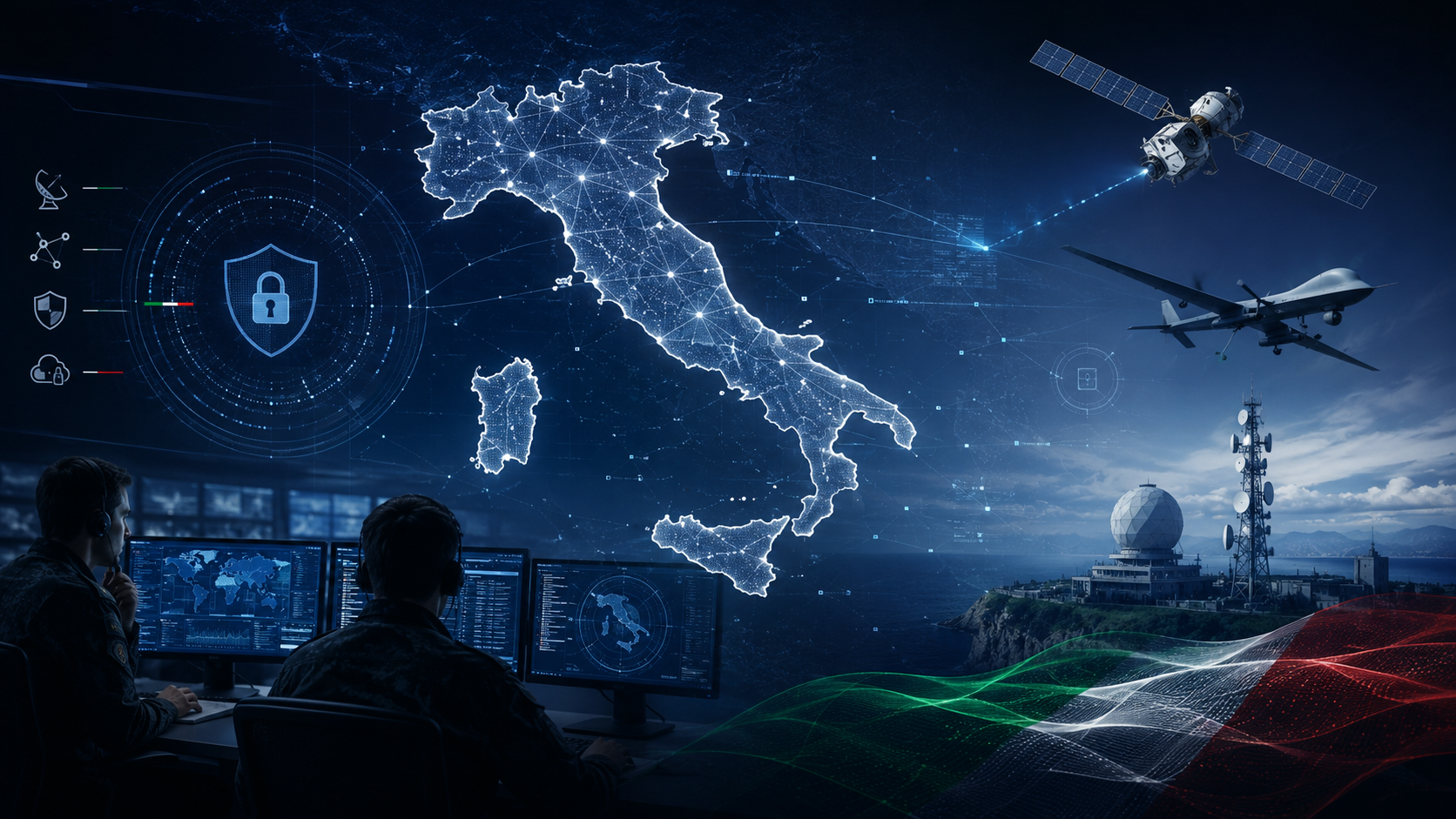
Abstracto: Desde diciembre de 2024, el Center for Strategic and International Studies (CSIS) ha documentado, mediante imágenes satelitales comerciales y análisis de fuentes abiertas, una red de al menos cuatro emplazamientos de inteligencia de señales (SIGINT) en Cuba, entre ellos Bejucal y El Salao, probablemente vinculados a los esfuerzos de recopilación de inteligencia de la República Popular China. Este ensayo sintetiza la evidencia desclasificada y de fuentes abiertas más reciente, incluidas las advertencias de altos funcionarios estadounidenses de 2025 y 2026, y evalúa las amenazas que esta arquitectura representa específicamente para la seguridad nacional de la República Dominicana. Se argumenta que, por su ubicación, sus capacidades de radiogoniometría de alta frecuencia y el contexto de penetración tecnológica china en el hemisferio, estas instalaciones plantean riesgos concretos para las comunicaciones estatales, el dominio marítimo y aéreo, la infraestructura de telecomunicaciones y la posición geoestratégica dominicana, con independencia de que el blanco declarado sea Estados Unidos. El análisis se ofrece con calibración de confianza explícita: el vínculo operativo directo de Beijing con estos sitios sigue siendo una evaluación probable, no un hecho probado públicamente.

Entiéndanse

La geografía rara vez es neutral en materia de seguridad. Durante más de seis décadas, la posición de Cuba (a menos de 150 kilómetros del territorio continental estadounidense y en el corazón del paso entre el Atlántico y el Caribe) la ha convertido en una plataforma privilegiada para la recopilación de inteligencia extranjera dirigida contra Estados Unidos y, por extensión, contra el conjunto del hemisferio (Funaiole et al. 2024). Lo que durante la Guerra Fría fue el complejo soviético de Lourdes hoy se manifiesta en una red modernizada de estaciones de inteligencia de señales que, según la evaluación predominante en Washington, apoyan los esfuerzos de la República Popular China (en adelante, RPC o China).

La literatura estadounidense sobre estas instalaciones se ha centrado, comprensiblemente, en la amenaza al territorio y a las fuerzas de Estados Unidos. Sin embargo, las capacidades técnicas de estos sitios, en particular las matrices de antenas de disposición circular (CDAA, por sus siglas en inglés) destinadas a la radiogoniometría de alta frecuencia, no respetan fronteras nacionales. Su alcance nominal, que diversas fuentes técnicas sitúan entre 3.000 y 8.000 millas náuticas, abarca holgadamente la totalidad del territorio, el espacio aéreo y las aproximaciones marítimas de la República Dominicana (Funaiole et al. 2024; Funaiole et al. 2025). La instalación de El Salao, situada en el extremo oriental de Cuba, es precisamente el punto de la isla más próximo a La Española.

Mi obra aquí persigue tres objetivos. Primero, sintetizar la evidencia de fuentes abiertas e inteligencia recientemente divulgada por la comunidad de inteligencia estadounidense sobre los sitios de Bejucal y El Salao. Segundo, traducir las capacidades técnicas observadas en vectores de amenaza concretos para la seguridad nacional dominicana, un análisis prácticamente ausente del debate público. Tercero, ofertar recomendaciones de política proporcionadas a los recursos y a la posición geoestratégica de un Estado caribeño de tamaño medio. A lo largo del texto mantengo una calibración de confianza explícita, distinguiendo entre lo observado, lo evaluado y lo inferido.

La arquitectura SIGINT cubana y la huella china

En junio de 2023, funcionarios de la administración Biden confirmaron informes de prensa según los cuales China tenía acceso a instalaciones de espionaje en Cuba, y filtraciones posteriores al Wall Street Journal elevaron a cuatro el número de instalaciones de interés, varias de ellas visitadas por técnicos chinos (Funaiole et al. 2024). En diciembre de 2024, el CSIS publicó la evaluación de fuentes abiertas más completa hasta la fecha: de cerca de una docena de emplazamientos cubanos examinados, cuatro presentaban instrumentación SIGINT observable, infraestructura de seguridad física y otras características indicativas de recopilación de inteligencia: Bejucal, El Salao, Wajay y Calabazar (Funaiole et al. 2024).

Bejucal

Situada en las colinas que dominan La Habana, Bejucal es la mayor estación SIGINT activa de Cuba examinada por el CSIS. El sitio adquirió notoriedad durante la Crisis de los Misiles de 1962, cuando albergó armas nucleares soviéticas, y durante décadas ha sido objeto de sospechas de vínculos con la inteligencia china, mencionadas en testimonios ante el Congreso estadounidense, documentos gubernamentales desclasificados y prensa en inglés y español (Funaiole et al. 2024). Las imágenes de marzo de 2024 revelaron entradas a instalaciones subterráneas construidas entre 2010 y 2019 (que fuentes de desertores cubanos asocian al cuartel de la brigada radioelectrónica de la inteligencia militar cubana) así como antenas parabólicas capaces de interceptar comunicaciones satelitales y, potencialmente, de recopilar datos sobre los lanzamientos espaciales estadounidenses desde Florida (Funaiole et al. 2024).

La evolución del sitio ha sido continua. En mayo de 2025, el CSIS documentó la construcción de una nueva CDAA que reemplazaba a una matriz anterior más pequeña (Funaiole et al. 2025). Para junio de 2026, esa matriz aparecía terminada y probablemente operativa: 32 antenas dispuestas en un anillo exterior de 19 y uno interior de 13, la mayor y más capaz observada por el CSIS en Cuba (Powers-Riggs et al. 2026). Según el propio CSIS, Bejucal es probablemente una de las tres instalaciones en Cuba que funcionarios estadounidenses han reconocido recientemente como operadas por China (Powers-Riggs et al. 2026; Diario Las Américas 2026).

El Salao

En el extremo opuesto de la isla, justo al este de Santiago de Cuba y a unos 110 kilómetros (cerca de 70 millas) de la Base Naval estadounidense de Guantánamo, se levanta El Salao, una CDAA cuya existencia no se había reportado hasta que el CSIS la reveló en 2024 (Funaiole et al. 2024; ICBrief 2026). Las obras comenzaron en 2021 y, para 2024, se habían completado el edificio de control central, los cimientos de un anillo interior de 16 antenas y las canalizaciones de servicios. Con un diámetro proyectado de entre 130 y 200 metros, la instalación, una vez operativa, sería capaz de vigilar a la Armada estadounidense y a sus socios en el Caribe e incluso en el Atlántico Sur (Funaiole et al. 2024).

No obstante, el ritmo de El Salao contrasta con el de Bejucal. En 2025 la construcción se había detenido casi por completo, con la vegetación reclamando el terreno nivelado, y las imágenes de mayo de 2026 mostraban pocos cambios sustantivos: sin antenas erigidas y sin indicios claros de operatividad (Funaiole et al. 2025; Powers-Riggs et al. 2026). Aun así, la reciente repavimentación de un camino de acceso reorientado hacia el centro de la matriz sugiere que el sitio no ha sido abandonado. El CSIS evalúa que, de completarse, El Salao complementaría a Bejucal extendiendo la cobertura sobre el sureste del Caribe y permitiendo a ambas instalaciones triangular señales provenientes de toda Centroamérica y la región del Atlántico occidental (Powers-Riggs et al. 2026).

Del legado soviético al abrazo chino

La presencia actual debe leerse a la luz de una continuidad histórica. Tras el cierre del complejo soviético de Lourdes en 2002, hoy reconvertido en la Universidad de Ciencias Informáticas, el vacío fue ocupado progresivamente por China (Funaiole et al. 2024). Desde 2000, según datos de AidData citados por el CSIS, China ha proporcionado a Cuba alrededor de 7.800 millones de dólares en financiamiento para el desarrollo, incluida la modernización del puerto de Santiago de Cuba, y los gigantes tecnológicos Huawei y ZTE —ambos vetados por Washington por riesgos de espionaje— constituyen hoy la columna vertebral de las telecomunicaciones cubanas (Funaiole et al. 2024). La profunda crisis económica cubana, la peor desde la caída de la Unión Soviética, ha estrechado aún más esta dependencia y ha abierto la puerta a la cooperación militar y de inteligencia.

La evidencia más reciente refuerza esta trayectoria. En mayo de 2026, el Wall Street Journal informó, citando a funcionarios familiarizados con evaluaciones de la inteligencia estadounidense, que China y Rusia habían ampliado sus operaciones en Cuba y triplicado aproximadamente el número de personal de inteligencia desde 2023 (Wall Street Journal 2026, según se reporta en Politicalwire 2026 y Cubaheadlines 2026). El secretario de Estado, Marco Rubio, acusó pública y repetidamente a Cuba en abril y junio de 2026 de albergar instalaciones de inteligencia chinas y rusas, advirtiendo que Washington no permitiría que ningún aparato militar o de inteligencia extranjero operara con impunidad a 90 millas de sus costas (Cibercuba 2026a; Cibercuba 2026b). En el mismo periodo, el director de la CIA, John Ratcliffe, viajó a La Habana, y la Ley de Autorización de la Defensa Nacional de diciembre de 2025 ordenó al Pentágono presentar al Congreso, antes de junio de 2026, un informe detallado sobre las capacidades de inteligencia china y rusa en Cuba (ICBrief 2026). Ya en 2024, la Evaluación Anual de Amenazas de la Oficina del Director de Inteligencia Nacional (ODNI) había incluido a Cuba entre los países donde China busca establecer instalaciones militares (ODNI 2024, citado en Funaiole et al. 2024).

Conviene, sin embargo, una nota de cautela analítica que el propio CSIS subraya: en el espacio no clasificado no existe una prueba irrefutable que demuestre el control operativo directo de China sobre estos sitios, y Beijing lo ha negado de manera categórica (Funaiole et al. 2025). La atribución china debe entenderse, por tanto, como una evaluación probable sostenida por la convergencia de testimonios, documentos, declaraciones oficiales y el patrón de inversión, no como un hecho confirmado.

Capacidades técnicas y geometría de la amenaza

Comprender la amenaza para la República Dominicana exige precisar qué hace (y qué no hace) una CDAA. Una matriz de disposición circular se emplea principalmente para la radiogoniometría de alta frecuencia (HFDF): la interceptación y geolocalización del origen de transmisiones de radio entrantes a lo largo de un amplio rango de frecuencias (Funaiole et al. 2024). A diferencia de las antenas parabólicas de Bejucal, orientadas a comunicaciones satelitales, una CDAA determina la dirección y el origen de emisiones en el espectro de alta frecuencia, una técnica que fue pilar del SIGINT durante la Guerra Fría y que, pese a la migración de las comunicaciones militares sensibles hacia la fibra óptica y el satélite, China ha considerado lo bastante valiosa como para replicarla en sus puestos militarizados de los arrecifes Mischief y Subi, en el mar de China Meridional (Funaiole et al. 2024; Fox News 2026).

El punto crítico para el análisis dominicano es distinto. La HFDF no necesita descifrar el contenido de una comunicación para extraer inteligencia de valor. Mediante el análisis de tráfico, es decir, de los metadatos externos de las emisiones: frecuencia, dirección, momento, duración y volumen, una CDAA puede revelar la ubicación y los movimientos de fuerzas militares, navales y aéreas, así como los patrones de actividad de una nación entera (Funaiole et al. 2024). Aunque las comunicaciones modernas estén cifradas, la mera geometría de quién transmite, desde dónde, hacia dónde y con qué cadencia compone un retrato detallado de la actividad operativa. Esta es la razón por la cual una instalación de bajo costo y baja tecnología relativa puede seguir siendo estratégicamente relevante.

A esta lógica técnica se superpone la geografía. El Salao se ubica aproximadamente a 20°00′ N, 75°44′ O, en el extremo oriental de Cuba, separado de La Española únicamente por el Paso de los Vientos y por el territorio de Haití. El territorio dominicano se encuentra a unos pocos cientos de kilómetros al este (del orden de 500 a 650 kilómetros desde Santiago de Cuba hasta Santo Domingo, y menos aún hasta la frontera occidental dominicana), una distancia trivial frente al alcance nominal multimilenario de una matriz HFDF. En términos prácticos, la totalidad de la República Dominicana se sitúa cómodamente dentro de la envolvente de detección de El Salao y, en menor grado por su orientación, de Bejucal (evaluación del autor a partir de Funaiole et al. 2024 y Powers-Riggs et al. 2026). El propio CSIS identifica explícitamente el «Atlántico occidental» y el «sureste del Caribe» —espacios en los que se inscribe el dominio marítimo dominicano— como las zonas que la actuación conjunta de ambas estaciones permitiría triangular (Powers-Riggs et al. 2026).

Vectores de amenaza para la seguridad nacional dominicana

De lo anterior se desprende que, aunque el blanco declarado de estas instalaciones sea Estados Unidos, la República Dominicana queda comprendida en su radio de acción de forma estructural, no incidental. Se identifican seis vectores de amenaza diferenciados, ordenados de lo más directo a lo más sistémico.

Interceptación de comunicaciones estatales y militares

El vector más inmediato es la captación de las emisiones radioeléctricas de las instituciones dominicanas. Las Fuerzas Armadas dominicanas, la Armada, la Fuerza Aérea, el Cuerpo Especializado en Seguridad Fronteriza y la Dirección Nacional de Control de Drogas operan, como cualquier Estado, comunicaciones en HF y VHF, especialmente en los dominios marítimo y aeronáutico, donde la alta frecuencia sigue siendo de uso corriente. Una CDAA en El Salao podría geolocalizar y caracterizar estas emisiones, permitiendo el mapeo de los patrones de despliegue, los ciclos de patrullaje y las rutinas de mando dominicanos sin necesidad de comprometer el cifrado. Para un Estado que no dispone de una arquitectura nacional robusta de seguridad de las comunicaciones (COMSEC), esta vulnerabilidad es significativa y persistente.

Vigilancia del dominio marítimo y aéreo

La República Dominicana es un nodo central de las operaciones de interdicción del narcotráfico en el Caribe y coopera estrechamente con la Fuerza de Tarea Conjunta Interagencial Sur (JIATF-South) y con agencias estadounidenses. La capacidad de una estación adversaria para detectar y geolocalizar el tráfico de comunicaciones asociado a operaciones de interdicción introduce un riesgo de contrainteligencia tangible: la posibilidad de que los patrones operativos sean inferidos y, eventualmente, filtrados a organizaciones criminales transnacionales que mantienen vínculos con regímenes de la región. Más allá del narcotráfico, la vigilancia sistemática del tráfico aéreo y marítimo dominicano (comercial, oficial y militar) erosiona la soberanía informativa del Estado sobre su propio espacio, un perjuicio que existe con independencia de los intereses estadounidenses.

Infraestructura de telecomunicaciones y cables submarinos

La República Dominicana es uno de los principales puntos de amarre de cables submarinos del Caribe. Su territorio acoge sistemas como ARCOS-1, AMX-1 y SAm-1 (seis cables, la mayoría con más de una década de servicio) que enlazan al país con Estados Unidos y Suramérica, y en 2026 se anunció una inversión de unos 500 millones de dólares para triplicar las conexiones directas con territorio estadounidense (Submarine Networks s.f.; DatacenterDynamics 2026). Significativamente, el anillo ARCOS-1 llegó a contemplar un amarre en Cuba, lo que ilustra la interconexión física de la región (Submarine Networks s.f.). Esta centralidad convierte a la República Dominicana en un activo de tránsito de datos cuya integridad interesa a las grandes potencias.

El riesgo se agrava por la penetración de proveedores tecnológicos chinos en la región. Si bien el gobierno de Luis Abinader, tras la visita del secretario Pompeo, declaró que las empresas chinas no operarían en sectores estratégicos como los grandes proyectos portuarios o la futura infraestructura 5G (Ellis 2024), la presencia de equipamiento de origen chino en las redes de telecomunicaciones del país —un patrón común en toda la región— plantea riesgos de cadena de suministro y de interceptación que se entrelazan con la capacidad SIGINT cubana. La combinación de hardware potencialmente comprometido en tierra y de recopilación de señales desde Cuba conforma una amenaza compuesta, no dos amenazas separadas.

El nexo HUMINT–contrainteligencia cubano

La cooperación entre Cuba y China en materia de SIGINT podría no ser sino la punta del iceberg. Los servicios cubanos han construido una de las redes de inteligencia humana (HUMINT) más sofisticadas del hemisferio, históricamente orientada contra Estados Unidos, como ilustran los casos de Ana Montes y del exembajador Manuel Rocha (Funaiole et al. 2024). Cuba ha sido un exportador de capacidades de inteligencia y contrainteligencia a otros regímenes de la región, como demuestra su papel en la edificación del aparato de contrainteligencia militar venezolano (Funaiole et al. 2024). Para la República Dominicana, cuya proximidad geográfica y cultural con Cuba se traduce en densos flujos de personas, esta tradición HUMINT, combinada con una eventual compartición de inteligencia con Beijing, plantea un riesgo de penetración de sus instituciones y de exposición de sus funcionarios que trasciende lo puramente técnico.

Espionaje económico e industrial

La economía dominicana descansa en sectores, q.d., turismo, zonas francas, minería, banca y remesas, altamente sensibles a la interceptación de comunicaciones comerciales. El CSIS ha señalado que, frente a unas comunicaciones militares estadounidenses generalmente cifradas, son las empresas civiles las que resultan más vulnerables al SIGINT (Funaiole et al. 2024). Una economía de servicios y exportación como la dominicana, con actores corporativos de relevancia internacional, ofrece a un adversario un abundante objetivo de inteligencia económica: posiciones negociadoras, datos financieros, propiedad intelectual y planes de inversión. La asimetría comercial con China, cuyas importaciones a la República Dominicana se han multiplicado tras el reconocimiento diplomático de 2018, añade un incentivo estructural para esta forma de recopilación (Ellis 2024).

La República Dominicana como terreno de competencia entre grandes potencias

El vector más sistémico es geopolítico. La intensificación de la presión estadounidense sobre Cuba y Venezuela en 2026 (sanciones, operaciones navales ampliadas en el Caribe e iniciativas como la denominada Operación Southern Spear) ha reconfigurado el Caribe en un teatro de competencia entre grandes potencias (Powers-Riggs et al. 2026; Cibercuba 2026a). La República Dominicana, por su posición, queda en el centro geográfico de esa rivalidad. La continua expansión de las estaciones cubanas, advierte el CSIS, podría convertirse en un punto de fricción a medida que Washington intensifica su campaña de presión, y su estatus podría ser un elemento clave en cualquier negociación futura entre Washington y La Habana (Powers-Riggs et al. 2026). En tal escenario, el territorio, el espacio aéreo y las aguas dominicanas podrían ser objeto de vigilancia incrementada y, en un supuesto de escalada, el país correría el riesgo de verse arrastrado a una dinámica que no ha elegido.

La encrucijada estratégica dominicana

La República Dominicana afronta estas amenazas desde una posición de equilibrio delicado. En mayo de 2018, el gobierno de Danilo Medina rompió relaciones con Taiwán y las estableció con la República Popular China, firmando dieciocho memorandos de entendimiento y acogiendo promesas de inversión en infraestructura, energía y un nuevo puerto en Manzanillo (Ellis 2024; Myers y Barrios 2019). Muchas de aquellas promesas se han materializado solo parcialmente, y el gobierno de Abinader ha adoptado una actitud más cautelosa, vedando a las empresas chinas los sectores estratégicos (Ellis 2024). Aun así, China ha seguido avanzando de forma discreta en cooperación en seguridad y en los sectores digital y eléctrico, y persisten voces que promueven un tratado de libre comercio con Beijing (Ellis 2024).

La tensión es evidente: la República Dominicana mantiene con Estados Unidos su relación de seguridad y comercio más importante, anclada en el DR-CAFTA y en la cooperación antinarcóticos, al tiempo que cultiva vínculos económicos con la potencia cuya arquitectura de inteligencia, asentada en la vecina Cuba, la vigila. Esta dualidad no es sostenible indefinidamente sin una estrategia deliberada. La amenaza SIGINT cubano-china debería incentivar a Santo Domingo a tratar la seguridad de sus comunicaciones y la integridad de su infraestructura crítica no como un favor a Washington, sino como un imperativo de soberanía nacional.

Recomendaciones de política

Las siguientes líneas de acción se proponen proporcionadas a los recursos de un Estado caribeño de tamaño medio y orientadas a reducir la vulnerabilidad sin exigir capacidades de gran potencia.

  • Endurecer la seguridad de las comunicaciones (COMSEC). Priorizar el cifrado de extremo a extremo y la migración de las comunicaciones gubernamentales y militares sensibles desde la radio en HF/VHF hacia canales protegidos por fibra y satélite cifrado, reduciendo la huella radioeléctrica explotable por radiogoniometría.
  • Auditar la cadena de suministro de telecomunicaciones. Realizar un inventario nacional del equipamiento de red de origen chino (Huawei, ZTE y afines) en operadores y en infraestructura crítica, y establecer criterios de seguridad para las adquisiciones futuras, en particular de cara al despliegue de 5G y a la ampliación de los amarres de cable submarino.
  • Proteger los puntos de amarre de cables submarinos. Tratar las estaciones de amarre como infraestructura crítica nacional, con seguridad física y lógica reforzada, dado su valor como nodo de tránsito de datos hacia Estados Unidos y Suramérica.
  • Reforzar la contrainteligencia. Fortalecer las capacidades de contrainteligencia frente a la HUMINT cubana y sus posibles derivaciones hacia terceros, con énfasis en la protección de funcionarios con acceso a información sensible y en la concienciación institucional.
  • Profundizar la cooperación regional en el dominio del espectro y marítimo. Coordinar con Estados Unidos y con socios del Caribe el intercambio de alertas sobre actividad SIGINT adversaria y la conciencia situacional marítima, aprovechando los marcos existentes de cooperación antinarco.
  • Desarrollar conciencia situacional propia mediante fuentes abiertas. Institucionalizar el seguimiento de imágenes satelitales comerciales y análisis de fuentes abiertas, el mismo método empleado por el CSIS, para monitorear de forma autónoma la evolución de El Salao y otras instalaciones de interés, sin dependencia exclusiva de evaluaciones ajenas.
  • Diversificar prudentemente la dependencia tecnológica. Equilibrar los beneficios económicos de la relación con China frente a los riesgos de seguridad, evitando que sectores críticos queden cautivos de proveedores que plantean riesgos de inteligencia.

Reflexión mía

La narrativa pública sobre Bejucal y El Salao ha estado dominada por la relación cubano-estadounidense, y con razón: estas instalaciones miran, en primer término, hacia Florida y hacia los mandos militares del sureste de Estados Unidos. Pero la lente estadounidense oculta una realidad incómoda para Santo Domingo: por su física y su geografía, la radiogoniometría de alta frecuencia desplegada en la Cuba oriental abarca de manera estructural el territorio, el espacio aéreo y las aproximaciones marítimas dominicanas. La amenaza para la República Dominicana no es hipotética ni derivada. Es una consecuencia directa de la ubicación de El Salao, un punto de Cuba peligrosamente cercano a La Española, y de la naturaleza no direccional de las capacidades que allí se han construido.

Mi análisis debe sostenerse, no obstante, sobre una epistemología honesta. El vínculo operativo directo de China con estos sitios sigue siendo una evaluación probable, respaldada por la convergencia de evidencias y por las declaraciones de altos funcionarios estadounidenses en 2025 y 2026, pero no un hecho probado en el espacio no clasificado. La recopilación efectiva de inteligencia contra blancos dominicanos es, asimismo, mi inferencia analítica derivada de la capacidad y la geografía, mi perspectiva como exintegrante de la Comunidad de Inteligencia y una comprensión amplia de la naturaleza de la amenaza china moderna, no una colección documentada. Esta cautela no disminuye la pertinencia de la amenaza. En materia de seguridad nacional, la prudencia exige planificar frente a capacidades demostradas, no solo frente a casos de espionaje confirmados. Tengan clara una cosa. China busca o cooptarnos por su iniciativa Franja y Ruta, o doblegarnos con las maniobras nefastas de la inteligencia china, . . . política del garrote y la zanahoria en plena vista. Para la República Dominicana, la lección es clara. La seguridad de nuestras comunicaciones y la integridad de la infraestructura crítica son, antes que un alineamiento geopolítico, una cuestión de soberanía que el país haría bien en asumir como propia. NO podemos permitir que nos ninguneen del ‘gran juego’ geopolítico internacional. Ya no somos una república bananera.

C. Constantin Poindexter, MA en Inteligencia, Certificado de Posgrado en Contrainteligencia, JD, certificación OSINT CISA/NCISS, Certificación BFFOC del DoD/DoS

Bibliografía

  • Cibercuba. 2026a. «Marco Rubio acusa a Cuba de albergar inteligencia china y rusa y lanza una advertencia desde Washington». 28 de abril. https://en.cibercuba.com/noticias/2026-04-28-u1-e129488-s27061-nid327480.
  • Cibercuba. 2026b. «Marco Rubio: Cuba sigue albergando instalaciones de inteligencia de China y Rusia». 2 de junio. https://en.cibercuba.com/noticias/2026-06-02-u1-e207888-s27061-nid330997.
  • Cubaheadlines. 2026. «U.S. Sounds Alarm: Rising Russian and Chinese Espionage in Cuba». 22 de mayo. https://www.cubaheadlines.com/articles/330073.
  • DatacenterDynamics. 2026. «Google invests $500 million in Dominican Republic connectivity hub». https://www.datacenterdynamics.com/en/news/google-invests-500-million-in-its-digital-port-in-the-dominican-republic/.
  • Diario Las Américas. 2026. «Detectan nueva actividad en posibles instalaciones de inteligencia de China en Cuba». 20 de junio. https://www.diariolasamericas.com/eeuu/detectan-nueva-actividad-posibles-instalaciones-inteligencia-china-cuba-n5397507.
  • Ellis, R. Evan. 2024. «The Evolution of Chinese Engagement with the Dominican Republic». Center for Strategic and International Studies, 25 de septiembre. https://www.csis.org/analysis/evolution-chinese-engagement-dominican-republic.
  • Fox News. 2026. «China-linked spy site expansion in Cuba raises alarms near key US military bases». https://www.foxnews.com/politics/china-linked-spy-site-expansion-cuba-raises-alarms-near-key-us-military-bases.
  • Funaiole, Matthew P., Aidan Powers-Riggs, Brian Hart, Henry Ziemer, Joseph S. Bermudez Jr., Ryan C. Berg y Christopher Hernandez-Roy. 2024. China’s Intelligence Footprint in Cuba: New Evidence and Implications for U.S. Security. Center for Strategic and International Studies, 6 de diciembre. https://www.csis.org/analysis/chinas-intelligence-footprint-cuba-new-evidence-and-implications-us-security.
  • Funaiole, Matthew P., Brian Hart, Aidan Powers-Riggs y Joseph S. Bermudez Jr. 2025. «At the Doorstep: A Snapshot of New Activity at Cuban Spy Sites». Hidden Reach, Center for Strategic and International Studies, 6 de mayo. https://features.csis.org/hiddenreach/snapshots/cuba-china-cdaa-base/.
  • ICBrief. 2026. «WSJ Reports China and Russia Tripled Intelligence Personnel in Cuba With SIGINT Facilities Targeting US Military Bases». 24 de mayo. https://icbrief.org/s/6f3b2835/.
  • Myers, Margaret, y Ricardo Barrios. 2019. «Is the Dominican Republic’s Pivot to China Paying Off?» Inter-American Dialogue. https://thedialogue.org/analysis/is-the-dominican-republics-pivot-to-china-paying-off.
  • Office of the Director of National Intelligence (ODNI). 2024. Annual Threat Assessment of the U.S. Intelligence Community. Washington, D.C.: ODNI. https://www.odni.gov/files/ODNI/documents/assessments/ATA-2024-Unclassified-Report.pdf.
  • Politicalwire. 2026. «U.S. Warns of Russian and Chinese Spying in Cuba». 22 de mayo. https://politicalwire.com/2026/05/22/u-s-warns-of-russian-and-chinese-spying-in-cuba/.
  • Powers-Riggs, Aidan, Matthew P. Funaiole, Brian Hart y Joseph S. Bermudez Jr. 2026. «New Activity at Possible Chinese Intelligence Facilities in Cuba». Center for Strategic and International Studies, 18 de junio. https://www.csis.org/analysis/new-activity-possible-chinese-intelligence-facilities-cuba.
  • Submarine Networks. s.f. «ARCOS-1». https://www.submarinenetworks.com/en/systems/brazil-us/arcos-1.
  • Wall Street Journal. 2026. «U.S. Warns of Growing Russian and Chinese Spying in Cuba». Mayo. (Citado a través de Politicalwire 2026 y Cubaheadlines 2026.)
Share this post:

The Gabbard–Butler Matter as Counterintelligence Disaster, a Controller in the Blind Spot

Tulsi Gabbard, ODNI, DNI, espionage, counterespionage, intelligence, counterintelligence, CIA, NSA, C. Constantin Poindexter

There is nothing pretty at all about this Tulsi Gabbard insanity. The documented relationship between former Director of National Intelligence Tulsi Gabbard and Chris Butler, founder of the Science of Identity Foundation (SIF), constitutes a counterintelligence failure of f* first order. Drawing on the Washington Post investigation by Jon Swaine (2026) and the broader scholarly and governmental literature on high-control groups, I assess that the preponderance of indicators points to a ranking member of the Intelligence Community who was, at minimum, subject to sustained, concealed, and operationally structured external direction by a fringe cult of personality. I situate the issue within the established framework of undue influence and the agent-of-influence problem, and I argue, with some comparison to six historical cases (the Unification Church, the Church of Scientology, Aum Shinrikyo, the Rajneeshpuram commune, the Peoples Temple, and NXIVM), that the United States possesses ample precedent for treating charismatic-leader organizations as national security threats rather than as private spiritual matters. The distinguishing and aggravating feature of the present case is the controller’s tradecraft of concealment, which mirrors the operational security of a hostile clandestine service and may well have defeated, for more than a decade, the vetting mechanisms that should have DQ’d this crazy lady.

My thesis stated plainly

A counterintelligence operator does not require proof of espionage to break the glass. The discipline is preventive and structural. It concerns itself with vulnerabilities, channels, and concealment long before it concerns itself with the transfer of any specific secret. By that standard, the facts now in the public record describe a disaster. A person who rose to the statutory apex of the United States Intelligence Community, with derivative access to the most sensitive compartmented information the government produces, appears to have operated for much of her political career under the directive influence of an unaccountable external oddball, through a channel deliberately engineered to evade discovery, while publicly denying the relationship that the now publicly aired documentary record describes (Swaine 2026). That sentence, if its components hold, is a textbook description of the precondition for compromise. I am not stating that Tulsi Gabbard was a foreign agent. I don’t subscribe to bullshit conspiracy theories and I am not C.I.-spooky enough to see an enemy behind every corner, however, the architecture of her influence relationship is indistinguishable, in its mechanics and its concealment, from the architecture a hostile service would build. This architecture was permitted to reach the top of the I.C. either undetected or, detected and ignored. I am not going to address Gabbard’s bullshit support of dictators and despots, as that is outside of my purpose here, however, my thoughts about what Swaine has reported may leave you wondering about her positions on Syria, Russia and other U.S. adversaries.

The evidentiary record

The factual spine of my assessment is the year-long investigation by Washington Post reporter Jon Swaine, who obtained more than twenty-five thousand pages of emails, memos, and related messages, including hundreds of confidential memos spanning the years 2011 to 2017, most of them coinciding with Gabbard’s first two congressional terms (Swaine 2026). The material was furnished by Rebecca Saltzburg, a former SIF member who had worked on digital strategy for several of Gabbard’s congressional campaigns. According to the reporting, the memos issued from email addresses on the Nine Isles domain, identified as reserved for the office of Chris Butler, and contained directives on legislation Gabbard should introduce, policy positions she should adopt, and the manner in which she should conduct herself on television (Swaine 2026).

Two features of the record deserve emphasis at the outset. The parallelism between directive and action. The Post documented instances in which a memo preceded a corresponding public act within days, a 2014 memo pressing for legislation to penalize countries whose citizens had joined the Islamic State was followed by a Gabbard statement the next day and a bill within the week (Swaine 2026). Second, attribution methodology. Because the memos were authored anonymously, Swaine resorted to stylometric analysis (the statistical study of authorial fingerprints in word choice and usage) comparing the memos against Butler’s archive of recorded lectures as well as the writing of two other candidate authors. Nonstandard usages such as “duplistic” and “judgmentalism” recurred across the memos and Butler’s lectures, and a first-person reference to a Hawaiian adolescence fit Butler rather than his deputy Sunil Khemaney, who had claimed authorship (Swaine 2026). Stylometry as a forensic instrument is not novel. It is the same family of methods that Mosteller and Wallace (1964) used to resolve the disputed authorship of The Federalist. Its probative weight here is considerable precisely because the controller took pains to remain anonymous.

For the integrity of the assessment, there are some limits to put on the record. The documents cover 2011 to 2017 and therefore cannot establish whether the directive relationship continued into Gabbard’s later terms or into her tenure as Director of National Intelligence (Swaine 2026). The provenance is a single defector with a possible motive, and Gabbard’s office has characterized the reporting as flowing from a failed extortion attempt and as an instance of anti-Hindu bigotry (Swaine 2026). I treat these caveats seriously a bit later. They constrain the claim. They do not dissolve it.

The analytical framework: influence, control, and the agent of influence

Counterintelligence distinguishes among three phenomena that the non-CI folk tend to collapse: ordinary influence, coercive control, and espionage. Political actors are influenced by mentors, donors, and constituencies as a matter of course, which is unremarkable. Espionage, the witting transfer of protected information to an adversary, is a discrete crime for which the public record here offers no evidence. The category that matters for this case is the middle one, and it has a specific name in the literature of hostile intelligence, “the agent of influence”, an individual who advances another principal’s objectives within a target government, whether wittingly or not, often through a relationship the target population does not perceive (Andrew and Mitrokhin 1999).

The agent-of-influence problem is dangerous in proportion to two variables: the access of the individual and the concealment of the channel. The personnel security system encodes precisely this logic. The National Security Adjudicative Guidelines promulgated under Security Executive Agent Directive 4 treat foreign and external influence (Guideline B), personal conduct involving concealment (Guideline E), and susceptibility to manipulation, coercion, or duress as core disqualifying conditions for access to classified information (ODNI 2017). A relationship that an applicant conceals, and especially one she has publicly denied, is doubly disqualifying: it establishes both the undue-influence vulnerability and the demonstrated willingness to deceive about it.

The clinical literature on high-control groups supplies the mechanism by which such a relationship can produce a level of direction far exceeding ordinary mentorship. Lifton’s (1961) study of thought reform identified milieu control, the demand for purity, the cult of confession, and the doctrine of “sacred science” as instruments of totalist control; Singer (1995) catalogued the systematic conditions under which adult autonomy is overridden within such groups; and Hassan (1988) formalized the analysis as the BITE model, the coordinated control of Behavior, Information, Thought, and Emotion. The salient point for counterintelligence is that a person conditioned within such a system from childhood does not present the profile the vetting system is designed to detect. There is no recruitment event, no foreign handler meeting, no financial inducement to find. The control predates adult life. This is the deepest reason the present case is not merely serious but novel. I’ll return to it a bit later.

The Unification Church: cult as influence vehicle with an intelligence nexus

The closest precedent in American constitutional history for treating a charismatic-leader organization as a counterintelligence matter is the investigation of the Unification Church conducted by the Subcommittee on International Organizations of the House Committee on International Relations, chaired by Representative Donald Fraser. The Fraser Committee found that the Moon organization and its many religious and secular fronts constituted “essentially one international organization” over which Sun Myung Moon exercised substantial control in pursuit of political objectives (U.S. House 1978). It further found active cooperation between the Korean Central Intelligence Agency and Moon-related entities, that some church members worked as volunteers in congressional offices, and that the apparatus operated as an instrument of a foreign government’s influence campaign on American politics (U.S. House 1978; Boettcher 1980).

The structural analogy to SIF is exact at the level that matters: a single charismatic principal exercising centralized control over a transnational network of nominally independent entities, deploying that network toward political ends, and placing adherents inside the offices of elected officials. The Japanese variant of the same organization later achieved the same penetration of the Liberal Democratic Party, again by placing followers as legislative secretaries and by delivering bloc votes (Nippon.com 2026). The Fraser precedent establishes the principle I am invoking: when a cult of personality reaches into the staffing and policy of a government, the United States Congress has already determined, on the record, that the appropriate frame is counterintelligence, not comparative religion. The defensive rhetoric is also precedent-setting. Moon’s deputy Bo Hi Pak met the subcommittee’s questions by denouncing the chairman as “an instrument of the Devil” rather than by answering them (U.S. House 1978). The contemporary invocation of bigotry to foreclose inquiry into SIF occupies the same rhetorical position.

The Church of Scientology: tradecraft and the vetting failure

If the Unification Church supplies the template for influence, the Church of Scientology’s Operation Snow White supplies the template for tradecraft and for the failure of government to detect it. Between 1973 and 1977, the Church’s Guardian’s Office mounted what federal prosecutors and the sentencing court described as the single largest infiltration of the United States government by a private entity, placing operatives with forged credentials inside the Internal Revenue Service, the Department of Justice, the Drug Enforcement Administration, the Coast Guard intelligence service, and a United States Attorney’s office, among more than one hundred agencies (Urban 2011). Eleven senior officials, including Mary Sue Hubbard, were convicted of conspiracy, burglary of government offices, and theft of government property (Urban 2011).

There are two direct lessons here. The first is the insulation of the principal. L. Ron Hubbard was named an unindicted co-conspirator because the prosecution concluded that all direct communication ran through his wife rather than through him, leaving insufficient evidence to convict the man at the center (Urban 2011). The Guardian’s Office had, in other words, engineered deniability for its leader as a structural feature. The second lesson concerns the failure mode of vetting. Operatives bearing false identification sat inside sensitive federal offices for years before discovery. Snow White demonstrates that a closed, disciplined group will develop and deploy clandestine tradecraft comparable to a state intelligence service, and that the credentialing and personnel systems of the United States government are not intrinsically resistant to it. The relevance to a controller who refused to commit his directives to any medium attributable to himself, and who routed them through anonymized intermediaries, requires no elaboration.

Aum Shinrikyo: penetration of the security services and the radar-screen problem

The case of Aum Shinrikyo is instructive at the upper bound of the threat model and, more pointedly, on the question of detection. The 1995 staff study of the Senate Permanent Subcommittee on Investigations found that the cult had recruited scientists and technical experts to pursue chemical, biological, and nuclear weapons, had deployed sarin and VX, and, decisively for my argument, had “successfully infiltrated various levels of the Japanese government and industry including elements of its law enforcement and military” (U.S. Senate 1995). Members within the Japan Defense Forces passed the group advance warning of a planned police raid (U.S. Senate 1995). This is cult penetration of the cleared security establishment, documented by a committee of the United States Senate.

The study’s conclusion on detection is the sentence every counterintelligence operator should keep in mind. Despite the cult’s overt and far-flung activities, “not a single U.S. enforcement or intelligence agency perceived them as dangerous, much less a threat to national security,” prior to the Tokyo subway attack. In the words of one officer, “they simply were not on anybody’s radar screen” (U.S. Senate 1995). The institutional pathology Aum exposed was a fixation on official state proliferation that rendered a non-state, ideologically motivated actor effectively invisible to the apparatus. The Gabbard–Butler matter exposes the analogous blind spot, i.e., a vetting system oriented toward foreign handlers and financial inducements is structurally weak. It is poorly equipped to perceive a domestic cult of personality as a control threat, even when that cult exhibits the operational characteristics of one.

Rajneeshpuram and the Peoples Temple: the manipulation of democratic processes and the violence end-state

Two other cases bracket the behavioral repertoire of high-control groups in their relation to the state. The first is the Rajneeshpuram commune, whose leadership in 1984 deliberately contaminated salad bars at ten restaurants in The Dalles, Oregon, with Salmonella Typhimurium, sickening at least seven hundred fifty-one people, in a trial run intended to incapacitate the voting population and swing a county election (Török et al. 1997; Carus 2001). It remains the largest bioterrorist attack in United States history, and its target was the integrity of an American election. The relevance to the present case is the SIF apparatus’s documented operation of a network of inauthentic social media accounts, bearing false names and misappropriated avatar images, to defend and amplify Gabbard during her congressional years (Swaine 2026). The manipulation of democratic processes is squarely within the repertoire of such groups, and the inauthentic-account operation should be read in that light rather than as an isolated public relations excess.

The Peoples Temple case marks the terminal point of unchecked charismatic control over a population. In 1978, the Temple’s response to congressional oversight was the murder of Representative Leo Ryan on a Guyanese airstrip, followed by the deaths of more than nine hundred members (U.S. House 1979; Reiterman and Jacobs 1982). I am not citing Jonestown to suggest violence is imminent in the present matter. I am doing so in order to fix the outer boundary of what total psychological control of a population by a charismatic leader has produced in living American memory, a lesson that the federal government paid with the life of a sitting member of Congress. Underestimating such a group is an invitation to disaster.

NXIVM: the modern coercive-control and political-cultivation template

The most recent adjudicated precedent is NXIVM, whose leader Keith Raniere was convicted in 2019 in the Eastern District of New York on racketeering, sex trafficking, and related counts (U.S. DOJ 2019). NXIVM is the contemporary demonstration of three mechanisms relevant here. It combined coercive control with the systematic collection of “collateral,” compromising material held over members to ensure compliance, which is to say it manufactured the very blackmail vulnerability that counterintelligence fears. It deployed substantial private wealth and data operations toward the cultivation of political figures, including efforts directed at political circles abroad. And it demonstrated that a coercive-control organization will direct its capabilities toward access and influence as a matter of design. NXIVM establishes, in a federal record of conviction rather than mere allegation, that the threat model I am describing is not historical exotica but a live and recent feature of the American landscape.

Butler’s “tradecraft”: the concealment that converts influence into a counterintelligence problem

Everything above is prologue to the feature that, in my assessment, elevates the Gabbard–Butler matter from a troubling association to a counterintelligence nightmare, the controller’s tradecraft of concealment. Ordinary spiritual mentorship is conducted openly. What the record describes is the opposite, a sustained effort to exercise direction while defeating attribution.

Look at these elements in combination. Butler, by the account of the defector who produced the documents, does not use a computer. He delivered his directives verbally to secretaries who transcribed them, and the resulting memos were authored anonymously. The anonymity was described as intentional, designed to mask his identity if the documents ever surfaced (Swaine 2026). This is not the behavior of a teacher. It is the behavior of a principal practicing source protection. The use of human intermediaries to avoid committing direction to any attributable medium is a countersurveillance red alert, the functional equivalent of the cut-out in classical tradecraft. It succeeded to the point that a deputy could later step forward to claim authorship and thereby absorb attribution on the controller’s behalf (Swaine 2026). That the claim was defeated only by stylometric analysis demonstrates how close the concealment came to working.

Consider the management of disclosure as a deliberate question. The record includes an internal discussion in March 2015 about whether Gabbard should publicly admit she was Butler’s disciple (Swaine 2026). The relationship was CLEARLY understood, by the apparatus itself, as something to be managed and selectively concealed. This is corroborated by Gabbard’s own public conduct, which oscillated between private acknowledgment and public denial. In 2015 she acknowledged Butler as her guru at an ISKCON anniversary event and described him as her “beloved grandfather” and “spiritual master” (Science of Identity Foundation, in Wikipedia 2026; Sanneh 2017), yet in 2019, when asked directly whether Butler had been her political mentor, she answered, “No, no, not at all” (Bhasha Times 2026). When the New York magazine journalist Kerry Howley submitted questions about Butler, SIF, and related matters, Gabbard’s reply declined even to mention them (Civil Beat 2019). Concealment that is selective, deliberate, and sustained across years is not the signature of an innocent association. It is the signature of a relationship the parties knew would draw a shitstorm in the daylight.

The counterintelligence significance is structural. Butler’s intentions are irrelevant. A controlling node that is hidden is an unmonitored channel into the principal. An unmonitored channel into a cleared person is an attack surface available to any third party that discovers it. No one has to suspect that Butler is a foreign agent in order to recognize the peril. If a hostile service were to identify that a single organization could shape the conduct of a top U.S. I.C. official, the rational operational play would be to penetrate or pressure that organization. That would be my move, and there is precedent reaching all the way back to the Greeks of antiquity. The concealed controller is a vulnerability but more tragically, a force multiplier for any adversary sophisticated enough to notice him (and there was ample circumstantial evidence to do so). This is the precise logic the Fraser Committee applied to the KCIA’s exploitation of the Moon organization (U.S. House 1978), and it applies here with equal force.

Is there a Counterargument?

Intellectual honesty requires that the strongest objections be stated and answered. The first objection is religious, i.e., that a Hindu public figure’s deference to a guru is ordinary within a guru-shishya tradition of hundreds of millions of adherents. To pathologize it is bigotry (Shukla 2021). I am FINE with the premise and reject its bullshit application. The objection would be decisive if SIF were a mainstream Vaishnava lineage and if the relationship were open. It is neither. SIF is a breakaway personality cult that numerous former members describe as demanding absolute fealty and treating its founder as akin to a deity (Sanneh 2017; Swaine 2026), and the relationship at issue was concealed and publicly denied. As the Hindu American Foundation’s own propaganda puts it, a guru in the mainstream tradition “is a guide, not a master, and certainly not a controller” (Shukla 2021). This is specifically the distinction I am drawing here. The bigotry objection protects open spiritual practice. It does not protect a concealed directive channel. Conflating the two is itself a category error that the controller’s defenders have incentive to encourage.

The second objection is evidentiary, that the documents derive from a single defector with a financial motive, and that Gabbard’s office attributes the matter to a failed extortion attempt (Swaine 2026). The source’s motive is a legitimate. I am giving Gabbard the discount, but three factors raise the record WAY above bare single-source allegation. The volume is extraordinary, more than twenty-five thousand pages. The internal corroboration is strong in the documented sequence of directives followed by public acts. The independent stylometric attribution, defeating an affirmative false claim of authorship by the deputy, is the kind of forensic confirmation that fabrication does not readily survive (Swaine 2026; Mosteller and Wallace 1964). A disgruntled volunteer can lie. She can’t easily manufacture a decade of timestamped parallelism and a consistent authorial fingerprint matched to a separate lecture archive.

A third objection may be the most important and the most honest, that influence is not espionage, and that the documentary window closes in 2017, before Gabbard held national security office (Swaine 2026). Ok, fine. I have been careful not to allege a classified breach. My thesis here does not require one. The counterintelligence disaster is the demonstrated existence of a concealed, directive, deniable channel of external control over a person who subsequently received the highest access in the government, coupled with a vetting apparatus that failed to surface or act on a relationship documented across more than two dozen of her congressional decisions. The 2017 evidentiary boundary is itself part of the indictment, not a mitigation, because the proper governmental response to an unresolved control relationship is to establish whether it continued, and the public record gives no indication that this was ever done before her confirmation.

My Parting Thoughts

My call? With the caveats stated, the Gabbard–Butler matter satisfies the criteria for a counterintelligence disaster. The indicators are not ambiguous in their structure even where they remain contested in their details, i.e., a charismatic controller exercising directive influence over a principal’s legislation and public conduct; a channel built for deniability and protected by recognizable countersurveillance practice; a pattern of deliberate, selective concealment culminating in flat public denial; and a personnel security system that allowed the entire arrangement to reach the summit of the I.C. undetected or at the very least unappreciated. Both scenarios are equally galling because the sneakiness, denials and obfuscation should have been a glass-breaking moment.

The historical cases I have collected here establish that none of this is unprecedented in its parts. The Unification Church shows the cult as a foreign-exploited influence vehicle. Scientology shows the tradecraft and the vetting failure. Aum shows the penetration of cleared services and the radar-screen blindness. Rajneeshpuram shows a willingness to subvert democratic processes. The Peoples Temple shows the price already paid in a congressman’s life, and NXIVM shows the coercive-control and political-cultivation template alive in the present. What is unprecedented is the convergence of these elements in a single individual who held the office of Director of National Intelligence.

The appropriate response is an immediate retrospective damage assessment of the relevant tenure, an audit of the vetting file to determine whether this relationship was surfaced and overridden or simply missed, an inquiry into whether the directive relationship persisted past 2017, and an assessment of whether the controlling organization was itself ever a target of foreign penetration: these are the minimum measures the matter demands. A counterintelligence mechanism that declines to ask these questions because the controller wears the costume of a religion will have learned nothing from the cases above, each of which was, in its time, dismissed as somebody else’s eccentricity, . . . until it was not.

C. Constantin Poindexter, MA in Intelligence, Graduate Certificate in Counterintelligence, JD, CISA/NCISS OSINT certification, DoD/DoS BFFOC Certification

Bibliography

  • Andrew, Christopher, and Vasili Mitrokhin. 1999. The Sword and the Shield: The Mitrokhin Archive and the Secret History of the KGB. New York: Basic Books.
  • Bhasha Times. 2026. “Documents Reveal How Guru Shaped Tulsi Gabbard’s Political Career.” June. https://www.bhashatimes.com/en/world/documents-reveal-guru-influence-tulsi-gabbard.
  • Boettcher, Robert, with Gordon L. Freedman. 1980. Gifts of Deceit: Sun Myung Moon, Tongsun Park, and the Korean Scandal. New York: Holt, Rinehart and Winston.
  • Carus, W. Seth. 2001. Bioterrorism and Biocrimes: The Illicit Use of Biological Agents Since 1900. Washington, DC: Center for Counterproliferation Research, National Defense University.
  • Honolulu Civil Beat. 2019. “NY Magazine Looks at Gabbard’s Science of Identity Foundation Background.” June. https://civilbeat.org/beat/ny-magazine-looks-at-gabbards-science-of-identity-foundation-background/.
  • Hassan, Steven. 1988. Combating Cult Mind Control. Rochester, VT: Park Street Press.
  • Lifton, Robert Jay. 1961. Thought Reform and the Psychology of Totalism: A Study of “Brainwashing” in China. New York: Norton.
  • Lifton, Robert Jay. 1999. Destroying the World to Save It: Aum Shinrikyo, Apocalyptic Violence, and the New Global Terrorism. New York: Metropolitan Books.
  • Mosteller, Frederick, and David L. Wallace. 1964. Inference and Disputed Authorship: The Federalist. Reading, MA: Addison-Wesley.
  • Nippon.com. 2026. “An Unholy Alliance: How the Unification Church Penetrated Japan’s Ruling Liberal Democratic Party.” January. https://www.nippon.com/en/japan-topics/c12101/.
  • Office of the Director of National Intelligence (ODNI). 2017. Security Executive Agent Directive 4: National Security Adjudicative Guidelines. Washington, DC: ODNI.
  • Reiterman, Tim, and John Jacobs. 1982. Raven: The Untold Story of the Rev. Jim Jones and His People. New York: Dutton.
  • Sanneh, Kelefa. 2017. “What Does Tulsi Gabbard Believe?” The New Yorker, November 6.
  • Shukla, Aseem. 2021. “When the New Yorker Otherized Tulsi Gabbard’s Faith.” Hindu American Foundation. https://www.hinduamerican.org/blog/when-the-new-yorker-otherized-tulsi-gabbards-faith/.
  • Singer, Margaret Thaler. 1995. Cults in Our Midst: The Hidden Menace in Our Everyday Lives. San Francisco: Jossey-Bass.
  • Swaine, Jon. 2026. “Tulsi Gabbard, Her Guru and the Mysterious Messages That Helped Shape Her Political Career.” The Washington Post, June 21. https://www.washingtonpost.com/investigations/2026/06/21/tulsi-gabbard-her-guru-mysterious-messages-that-helped-shape-her-political-career/.
  • Török, Thomas J., Robert V. Tauxe, Robert P. Wise, John R. Livengood, Robert Sokolow, Steven Mauvais, Kristin A. Birkness, Michael R. Skeels, John M. Horan, and Laurence R. Foster. 1997. “A Large Community Outbreak of Salmonellosis Caused by Intentional Contamination of Restaurant Salad Bars.” JAMA 278 (5): 389–395.
  • Urban, Hugh B. 2011. The Church of Scientology: A History of a New Religion. Princeton, NJ: Princeton University Press.
  • U.S. Department of Justice (U.S. DOJ). 2019. “NXIVM Leader Keith Raniere Convicted of Racketeering and Other Crimes.” Press release, Eastern District of New York, June 19.
  • U.S. House of Representatives. 1978. Investigation of Korean-American Relations: Report of the Subcommittee on International Organizations of the Committee on International Relations. 95th Cong., 2nd sess. Washington, DC: Government Printing Office.
  • U.S. House of Representatives. 1979. The Assassination of Representative Leo J. Ryan and the Jonestown, Guyana Tragedy: Report of a Staff Investigative Group to the Committee on Foreign Affairs. 96th Cong., 1st sess. Washington, DC: Government Printing Office.
  • U.S. Senate. 1995. Global Proliferation of Weapons of Mass Destruction: A Case Study on the Aum Shinrikyo. Staff Statement, Permanent Subcommittee on Investigations, Committee on Governmental Affairs. October 31. Washington, DC: Government Printing Office.
  • Wikipedia. 2026. “Science of Identity Foundation.” Accessed June. https://en.wikipedia.org/wiki/Science_of_Identity_Foundation.
Share this post:

Señales de Advertencia del Agente Doble: Una Guía de Contrainteligencia

agente doble, inteligencia, contrainteligencia, espionaje, contraespionaje, espía, C. Constantin Poindexter Salcedo, seguridad nacional, DNI, CNI, CIA, DIA

Leyendo el señuelo (dangle): guía de campo del profesional sobre la fuente controlada y la reforma de la validación de activos. Un ensayo en la voz de un antiguo tipo de la CI.

Lo más difícil en la HUMINT no es reclutar una fuente. Es saber si la fuente que reclutaste te pertenece a ti. La reciente reconstrucción de fuente abierta (“OSINT”) que hizo Alexander Orleans del caso GTPROLOGUE (el despacho que el KGB hizo en 1987 del oficial de planta Aleksandr “Sasha” Zhomov contra la Estación de Moscú de la CIA) es la mejor anatomía pública en años de cómo un servicio hostil construye, en la frase de Churchill, una escolta de mentiras alrededor de una sola verdad operativa (Orleans 2025). A Zhomov lo corrieron durante aproximadamente tres años antes de que la CIA concluyera que había estado controlado desde el primer contacto. Lo instructivo del caso no es que engañaran a la CIA. Eso le pasa hasta a los mejores servicios. Es que el caso levantó casi todas y cada una de las banderas de advertencia clásicas. Las banderas se vieron, se debatieron, y el caso sobrevivió (Orleans 2025; Bearden y Risen 2003).

He compilado aquí un catálogo de trabajo de esas banderas y de otras tomadas de una literatura un poco más amplia, cada una anclada a un caso real, seguido de las mejoras que el mecanismo de contrainteligencia debería institucionalizar. He tratado de mantenerme tan cerca de la tradecraft real como lo permite el registro abierto. Nada de esto requiere acceso clasificado para entenderse. La verdad dolorosa es que los indicadores son bien conocidos y lo han sido por lo menos desde el tratamiento fundacional que F. M. Begoum le dio al agente doble en 1962 en Studies in Intelligence (Begoum 1962). Por desgracia, los seguimos reaprendiendo.

Los Indicadores

Producción desproporcionada al acceso. El indicio más duradero es una fuente que se sienta sobre una montaña de secretos y te entrega gravilla. Zhomov era un oficial de planta del Primer Departamento que supervisaba la vigilancia del jefe de estación de Moscú, y sin embargo afirmaba tener apenas un “acceso periférico o infrecuente” al mismísimo material que su puesto debía hacerle rutinario (Orleans 2025; Grimes y Vertefeuille 2012). Los soviéticos tenían una razón estructural para esto: la doctrina estricta prohibía liberar alimentación genuina de alto grado, y los oficiales temían un ajuste de cuentas estilo Stalin por divulgar de más, así que sus señuelos venían entrenados para alegar acceso escaso (Diamond 2008; Earley 1997). Cuando los reportes de una fuente quedan consistente y convenientemente por debajo del techo que su ubicación implica, pregúntate a quién beneficia el racionamiento.

La fuente controla el plan de comunicaciones y el tempo. El control es la capacidad del servicio que corre el caso de iniciar, alterar o detener el comportamiento del agente (Begoum 1962). Zhomov llegó con un plan de comunicaciones impersonal completamente formado —buzones de cartas a través del carro sin seguro de Downing, contacto a discreción de Zhomov, sin reuniones cara a cara prolongadas— que ponía cada palanca en manos del KGB e incluso restringía los movimientos físicos de sus manejadores de la CIA (Orleans 2025; Bearden y Risen 2003). Compárese con el estándar de oro del arreglo opuesto: el Comité XX británico en la Segunda Guerra Mundial, que poseía física y comunicacionalmente a cada agente alemán en el Reino Unido y por tanto podía alimentar a Berlín con confianza (Masterman 1972). Cuando el agente dicta la arquitectura del contacto, no lo estás corriendo a él. Él te está corriendo a ti.

Motivación delgada, genérica o sin respaldo. El espionaje contra el propio servicio es un acto psicológico profundo. Un activo o fuente creíble puede narrar de forma convincente por qué cruzó esa línea, y la historia se sostiene bajo verificación colateral. Zhomov ofreció el cliché de un sistema que se agriaba y un matrimonio en quiebra (y el interrogatorio independiente del desertor Sergey Papushin lo contradijo de plano, describiendo a Zhomov como felizmente casado y devoto de su hija) (Orleans 2025; Grimes y Vertefeuille 2012). Un motivo que no sobrevive a una segunda fuente no es un motivo; es una leyenda de cobertura.

La llegada “demasiado buena para ser cierta”. Los servicios hostiles leen tus brechas de recolección y las llenan a pedido. Zhomov apareció precisamente cuando la CIA estaba desesperada por explicar las catastróficas pérdidas de activos de 1985–86, con exactamente el acceso para “explicarlas” (Orleans 2025). “Demasiado bueno” y “cierto” no son mutuamente excluyentes. Los voluntarios espontáneos (walk-ins) genuinos sí ocurren en el peor momento posible; sin embargo, una oportunidad tan perfectamente a tono debería elevar la carga de la prueba, no bajarla (Johnson 2009). El desastre cubano es el monumento aleccionador aquí. Cuando el mayor Florentino Aspillaga Lombard desertó en Viena en junio de 1987, reveló que esencialmente cada cubano que la CIA creía haber reclutado desde principios de los años sesenta había sido un agente doble corrido por La Habana, que había mercadeado deliberadamente a sus oficiales como latinos aficionados para operar por debajo del radar (Latell 2012). Décadas de “éxitos” eran un solo engaño paciente.

Ninguna urgencia genuina por la exfiltración. Un hombre que dice que se quiere salir, y que está guardando su mejor material para su interrogatorio en suelo seguro, eventualmente debería preguntar: “¿Cuándo me voy?”. Zhomov nunca pidió un cronograma. Cuando finalmente le ofrecieron una ruta de exfiltración en 1990, la repudió por ser demasiado riesgosa y se fundió de vuelta en su equipo de vigilancia (Orleans 2025; Bearden y Risen 2003). El supuesto desertor que nunca quiere desertar está hablando mierda, no empacando su maleta de fuga.

Bona fides autovalidantes y alimentación que nunca hiere de verdad al servicio matriz. Una fuente controlada construye credibilidad con material que parece costoso pero no lo es. Zhomov entregó un padrón preciso de las pérdidas de 1985–86, dañino a primera vista, pero lo envolvió dentro de la falsa narrativa del SCD “cabrón e infalible” de que las pérdidas se debían a una tradecraft soviética brillante y no a un topo (Orleans 2025). La alimentación validaba el canal mientras protegía el secreto que el canal existía para proteger: Aldrich Ames. Escudriña si las “joyas de la corona” de tu fuente realmente le costaron algo a su servicio, o si cada divulgación adelanta calladamente los intereses de su servicio. Para ponerlo en lenguaje de riesgo: si no representa un peligro para el servicio matriz, no vale nada.

Errores de tradecraft de la oposición incompatibles con la competencia que reclama. Los reportes de Zhomov predecían una ola de señuelos del KGB. La CIA entonces vio al KGB correrlos tan chapuceramente que dos quedaron descaradamente expuestos como provocaciones. La Estación de Moscú racionalizó el desliz como descuido soviético endémico, sin notar nunca que la tradecraft descuidada era lógicamente irreconciliable con el SCD omnisciente del que Zhomov alardeaba (Orleans 2025). Un servicio no puede ser simultáneamente infalible y chapucero. Cuando el cuadro que pinta tu activo contradice el comportamiento que observas, créele a tus ojos.

La ventaja de jugar “en casa” en el área denegada. El entorno es en sí mismo un indicador porque moldea cuáles otros indicadores puedes siquiera poner a prueba. Todo el caso Zhomov se desenvolvió dentro de Moscú, donde el KGB controlaba la calle, impedía interrogatorios largos y podía rechazar cualquier reunión bajo el argumento incontestable de que no podía evadir a sus propios equipos de vigilancia (Orleans 2025). El resumen franco de Paul Redmond sobre la validación en área denegada —pocas o ninguna fuente colateral, fuerte dependencia del valor del material y de cómo empezó el caso, etc.— describe un problema que la oposición diseña deliberadamente (Redmond 2010). Un caso nacido y criado enteramente en terreno del adversario ha tenido sus opciones de validación estranguladas al nacer.

Resistencia a las pruebas operativas, y su jodido inverso que da miedo. Zhomov respondía las preguntas duras de verificación con respuestas que sus propios oficiales de contrainteligencia hallaban vagas o improbables, y se desviaba con la promesa de contarlo todo después de la extracción (Orleans 2025; Grimes y Vertefeuille 2012). La renuencia a ser puesto a prueba —la evasión del polígrafo, de las tareas provocadoras, de la “lista de compras” diseñada para atraparlo— es en sí misma reveladora e instructiva. Este indicador trae una advertencia que el caso GTPROLOGUE no provee, y que la profesión debe internalizar. La paranoia también quema a las fuentes reales. El manejo prolongado y brutal del desertor soviético Yuri Nosenko como presunta provocación, y la sospecha que casi le cuesta a la CIA al genuinamente invaluable general del GRU Dmitri Polyakov, son la patología igual y opuesta de la credulidad que protegió a Zhomov (Bagley 2007; Wise 1992). La validación es duda calibrada, no un reflejo en ninguna de las dos direcciones.

“El hambre”, y los incentivos que la alimentan. Orleans nombra al culpable silencioso: el apetito del oficial de caso por un golpe espectacular, la reticencia institucional a presionar una fuente deslumbrante lo bastante duro como para perderla (Orleans 2025). Redmond fue más franco, atribuyendo los fracasos de validación posteriores a Angleton en parte a oficiales que no creían que sus propios casos pudieran ser fabricados, “particularmente cuando había ascensos de por medio” (Redmond 2010). La catástrofe cubana hizo metástasis exactamente en este suelo: una voluntad organizacional de creer en reclutamientos que halagaban a los reclutadores (Latell 2012). La bandera más cara es la que elegimos no ver porque verla nos cuesta un logro de carrera.

Lo Que la Función de Contrainteligencia Debería Implementar

Los indicadores son necesarios pero no suficientes; una agencia que meramente los enumera será engañada igual, porque el caso Zhomov prueba que las banderas pueden estar ondeando y la operación aún sobrevivir. Las reformas de abajo se tratan de forzar a los indicadores a morder.

Institucionalizar la revalidación continua. La respuesta de la CIA a las quemas de los años ochenta fue el Sistema de Validación de Agentes, desarrollado a partir de 1987 e introducido formalmente al Directorio de Operaciones en 1991 (Mahle 2004; Olson 2019). El principio es sólido y debería ser doctrina en toda la comunidad: las bona fides establecidas una vez no quedan establecidas para siempre. Un activo debe ser recalificado en un calendario recurrente contra los seis métodos clásicos de validación: corroboración por otras fuentes, tareas específicas y pruebas operativas, recolección sobre el activo, polígrafo, penetración de su servicio matriz y vigilancia sobre él. Nada puede asumirse acerca de lo que le ha pasado a una fuente desde la última vez que se probó a sí misma (Orleans 2025; Olson 2019).

Separar al validador del manejador. El oficial que reclutó una fuente y el oficial que la certifica no deberían ser la misma persona, e idealmente no la misma cadena de mando. El hambre es un conflicto de interés; la estructura debe neutralizarlo dándole a una célula de contrainteligencia independiente la autoridad permanente de impugnar cualquier caso, con protección para el analista que disienta. El registro de GTPROLOGUE muestra que el sistema funcionaba a medias. Gerber y Redmond se mantuvieron escépticos y el equipo de contrainteligencia siguió planteando preocupaciones, pero esas preocupaciones fueron repetidamente subordinadas al deseo de no “hacerlo enojar” (Orleans 2025). La disidencia que puede ser anulada por los dueños del caso es un feo adorno de pared.

Tratar “controlado” como una hipótesis permanente por refutar. La disciplina de Richard Heuer del Análisis de Hipótesis en Competencia pertenece al centro de la validación. Enumera las hipótesis (de buena fe, fabricador, controlado), y pesa cada dato por su valor diagnóstico, qué tan bien discrimina entre ellas en lugar de qué tan bien encaja con la respuesta que quieres (Heuer 1999). La mayoría de las “bona fides” de Zhomov eran consistentes tanto con un voluntario genuino como con un señuelo. Tenían un valor diagnóstico casi nulo, y sin embargo se trataron como confirmación. Un activo que sobrevive un esfuerzo deliberado por probar que es hostil vale muchísimo más que uno del que simplemente nunca se dudó en serio.

Privilegiar la penetración de la oposición como el único validador decisivo. Esta es la lección escrita con sangre a lo largo de todos estos casos. A Zhomov lo desenmascaró un desertor, Papushin (Orleans 2025). El engaño cubano lo desenmascaró un desertor, Aspillaga (Latell 2012). Al propio Ames finalmente lo acorralaron con la ayuda de fuentes dentro del FIS ruso. La producción propia de una fuente literalmente nunca resuelve sus bona fides. El interior del servicio del adversario sí. Esto es precisamente por lo que Olson clasifica “Sé Ofensivo” como el primero de sus Diez Mandamientos de la Contrainteligencia. El reclutamiento de penetraciones y el manejo agresivo de agentes dobles no es un lujo sino el motor de la validación misma (Olson 2019).

Diseñar los incentivos contra “el hambre”. Este es, por supuesto, el argumento de calidad sobre cantidad. Si el ascenso premia el volumen de reclutamiento, los oficiales reclutarán, defenderán e inflarán. La contramedida correctiva es una cultura de evaluación de daños en la que sacar a la luz un fabricador o un caso controlado se trate como un éxito profesional y no como una “F”, y en la que el dinero pagado a una fuente se entienda como una inversión operativa, no como un costo hundido que hay que justificar (Orleans 2025).

Mis Reflexiones Finales

Zhomov fue, como concede Orleans, un trabajo sólido. Cada elemento, desde el escenario hasta la alimentación hasta el plan de comunicaciones, fue diseñado para tomar y retener la iniciativa (Orleans 2025). El caso también confirma, sin embargo, una máxima tan vieja como Begoum. La producción por sí sola nunca establece las bona fides, y ninguna métrica individual debería jamás eximir a una fuente del escrutinio continuo, y menos que nada una penetración potencial, que es la cosa más peligrosa de todas si resulta que pertenece al otro bando (Begoum 1962; Orleans 2025). La disciplina no es paranoia, que destruyó los años de Nosenko y casi la vida de Polyakov; ni es el hambre, que le entregó a La Habana un cuarto de siglo de victorias fantasma. Es la disposición a seguir poniendo a prueba a una fuente en la que quieres desesperadamente creer, y a tomar en serio al colega de la mesa que no deja de hacer la pregunta incómoda.

Todo pasa una vez por primera vez, incluido un oficial de planta lanzado como señuelo por un servicio que “nunca” lanzaría un oficial de planta como señuelo. El oficial de contrainteligencia que olvida esa oración está en algún lugar, ya siendo corrido.

~ C. Constantin Poindexter, MA en Inteligencia, Certificado de Posgrado en Contrainteligencia, JD, certificación OSINT CISA/NCISS, Certificación BFFOC del DoD/DoS

Bibliografía

  • Bagley, Tennent H. 2007. Spy Wars: Moles, Mysteries, and Deadly Games. New Haven, CT: Yale University Press.
  • Bearden, Milt, y James Risen. 2003. The Main Enemy: The Inside Story of the CIA’s Final Showdown with the KGB. New York: Random House.
  • Begoum, F. M. 1962. “Observations on the Double Agent.” Studies in Intelligence 6, no. 1: 57–72.
  • Diamond, John. 2008. The CIA and the Culture of Failure: U.S. Intelligence from the End of the Cold War to the Invasion of Iraq. Stanford, CA: Stanford Security Studies.
  • Earley, Pete. 1997. Confessions of a Spy: The Real Story of Aldrich Ames. New York: G. P. Putnam’s Sons.
  • Grimes, Sandra, y Jeanne Vertefeuille. 2012. Circle of Treason: A CIA Account of Traitor Aldrich Ames and the Men He Betrayed. Annapolis, MD: Naval Institute Press.
  • Heuer, Richards J., Jr. 1999. Psychology of Intelligence Analysis. Washington, DC: Center for the Study of Intelligence, Central Intelligence Agency.
  • Johnson, William R. 2009. Thwarting Enemies at Home and Abroad: How to Be a Counterintelligence Officer. Washington, DC: Georgetown University Press.
  • Latell, Brian. 2012. Castro’s Secrets: Cuban Intelligence, the CIA, and the Assassination of John F. Kennedy. New York: Palgrave Macmillan.
  • Mahle, Melissa Boyle. 2004. Denial and Deception: An Insider’s View of the CIA. New York: Nation Books.
  • Masterman, J. C. 1972. The Double-Cross System in the War of 1939 to 1945. New Haven, CT: Yale University Press.
  • Olson, James M. 2019. To Catch a Spy: The Art of Counterintelligence. Washington, DC: Georgetown University Press.
  • Orleans, Alexander. 2025. “Beautiful in Another Context: A Counterintelligence Assessment of GTPROLOGUE.” Studies in Intelligence 69, no. 2 (Extracts, June).
  • Redmond, Paul J. 2010. “The Challenges of Counterintelligence.” En The Oxford Handbook of National Security Intelligence, editado por Loch K. Johnson, 537–54. New York: Oxford University Press.
  • Wise, David. 1992. Molehunt: The Secret Search for Traitors That Shattered the CIA. New York: Random House.
Share this post:

Double Agent Warning Signs: A Counterintelligence Guide

Double Agent Warning Signs: A Counterintelligence Guide, Reading the Dangle: A Practitioner's Field Guide to the Controlled Source and the Reform of Asset Validation. An essay in the voice of a former C.I. guy, intelligence, counterintelligence, espionage, counterespionage, spy, C. Constantin Poindexter, CIA, DIA, NSA, Intelligence Community

Reading the Dangle: A Practitioner’s Field Guide to the Controlled Source and the Reform of Asset Validation. An essay in the voice of a former C.I. guy.

The hardest thing in human intelligence is not recruiting a source. It is knowing whether the source you have recruited belongs to you. Alexander Orleans’s recent open-source reconstruction of the GTPROLOGUE case (the KGB’s 1987 dispatch of staff officer Aleksandr “Sasha” Zhomov against the CIA’s Moscow Station) is the best publicly released anatomy in years of how a hostile service builds, in Churchill’s phrase, a bodyguard of lies around a single operational truth (Orleans 2025). Zhomov was run for roughly three years before the CIA concluded he had been controlled from the first contact. What makes the case instructive is not that the CIA was fooled. That happens to the very best services. It is that the case threw up nearly every classic warning flag. The flags were seen, debated, and the case survived (Orleans 2025; Bearden and Risen 2003).

I am have compiled here a working catalogue of those flags and others drawn from a bit wider literature, each anchored to a real case, followed by the improvements that the counterintelligence mechanism should institutionalize. I have tried to stay as close to actual tradecraft as the open record allows. None of this requires classified access to understand. The painful truth is that the indicators are well known and have been since at least F. M. Begoum’s foundational 1962 Studies in Intelligence treatment of the double agent (Begoum 1962). We keep relearning them, unfortunately.

The Indicators

Production disproportionate to access. The most durable tell is a source who sits on a mountain of secrets but hands you gravel. Zhomov was a First Department staff officer supervising surveillance of the Moscow chief of station, yet he claimed only “peripheral or infrequent access” to the very material his posting should have made routine (Orleans 2025; Grimes and Vertefeuille 2012). The Soviets had a structural reason for this: strict doctrine forbade releasing genuine high-grade feed, and officers feared a Stalin-style reckoning for over-disclosure, so their dangles were trained to plead thin access (Diamond 2008; Earley 1997). When a source’s reporting is consistently and conveniently below the ceiling his placement implies, ask who benefits from the rationing.

The source controls the communications plan and the tempo. Control is the running service’s capacity to start, alter, or stop the agent’s behavior (Begoum 1962). Zhomov arrived with a fully formed, impersonal commo plan, i.e., letter drops through Downing’s unlocked car, contact at Zhomov’s discretion, no extended face-to-face meetings, that placed every lever in KGB hands and even constrained the physical movements of his CIA handlers (Orleans 2025; Bearden and Risen 2003). Compare the gold standard of the opposite arrangement: the British XX Committee in the Second World War, which physically and communicationally owned every German agent in the United Kingdom and therefore could feed Berlin with confidence (Masterman 1972). When the agent dictates the architecture of contact, you are not running him. He is running you.

Motivation that is thin, generic, or unbackstopped. Espionage against one’s own service is a profound psychological act. A credible asset or source can convincingly narrate why he crossed that line, and the story holds up under collateral. Zhomov offered the boilerplate of a souring system and a failing marriage (and the independent debriefing of defector Sergey Papushin flatly contradicted it) describing Zhomov as happily married and devoted to his daughter (Orleans 2025; Grimes and Vertefeuille 2012). A motive that cannot survive a second source is not a motive; it is a legend.

The “too good to be true” arrival. Hostile services read your collection gaps and fill them on cue. Zhomov surfaced precisely when CIA was desperate to explain the catastrophic 1985–86 asset losses, with exactly the access to “explain” them (Orleans 2025). “Too good” and “true” are not mutually exclusive. Genuine walk-ins do occur at the worst possible moment, however, topicality this perfect should raise the burden of proof, not lower it (Johnson 2009). The Cuban debacle is the cautionary monument here. When Major Florentino Aspillaga Lombard defected in Vienna in June 1987, he revealed that essentially every Cuban national CIA believed it had recruited since the early 1960s had been a double agent run by Havana, which had deliberately marketed its officers as Latino amateurs to operate under the radar (Latell 2012). Decades of “successes” were a single, patient deception.

No genuine urgency about exfiltration. A man who says he wants out, and that he is hoarding his best material for his debriefing on safe ground should eventually ask, “When do I leave?” Zhomov never requested a timeline. When he was finally offered an exfiltration route in 1990, he repudiated it as too risky and melted back into his surveillance team (Orleans 2025; Bearden and Risen 2003). The professed defector who never wants to defect is bullshitting, not packing a bug-out bag.

Self-validating bona fides and feed that never truly wounds the parent service. A controlled source builds credibility with material that looks costly but is not. Zhomov handed over an accurate roster of the 1985–86 losses, damaging on its face but wrapped it inside the false “badass infallible SCD” narrative that the losses were due to brilliant Soviet tradecraft rather than a mole (Orleans 2025). The feed validated the channel while protecting the secret the channel existed to protect, Aldrich Ames. Scrutinize whether your source’s “crown jewels” actually cost his service anything, or whether each disclosure quietly advances his service’s interests. To put it into risk language, if it doesn’t represent a peril to the parent service, it’s worthless.

Opposition tradecraft errors inconsistent with claimed competence. Zhomov’s reporting foretold a wave of KGB dangles. The CIA then watched the KGB run them so sloppily that two were blatantly exposed as provocations. Moscow Station rationalized the lapse as endemic Soviet carelessness, never noticing that careless tradecraft was logically irreconcilable with the omniscient SCD Zhomov was boasting (Orleans 2025). A service cannot be simultaneously infallible and sloppy. When the picture that your asset paints contradicts the behavior you observe, believe your eyes.

The denied-area home-field advantage. The environment is itself an indicator because it shapes which other indicators you can even test. The entire Zhomov case unfolded inside Moscow, where the KGB controlled the street, precluded long debriefings, and could refuse any meeting on the unanswerable grounds that he could not evade his own surveillance teams (Orleans 2025). Paul Redmond’s candid summary of denied-area validation, i.e., few or no collateral sources, heavy reliance on the value of the take and on how the case began, etc., describes a problem the opposition deliberately engineers (Redmond 2010). A case born and raised entirely on the adversary’s turf has had its validation options strangled at birth.

Resistance to operational testing, and its scary f* inverse. Zhomov met hard vetting questions with answers his own counterintelligence officers found vague or improbable, and deflected with the promise to tell all after extraction (Orleans 2025; Grimes and Vertefeuille 2012). Reluctance to be tested, i.e., evasion of the polygraph, of provocative taskings, of the “shopping list” designed to catch him out, is itself prescient and instructive. This indicator carries a warning that the GTPROLOGUE case does not supply, and which the profession must internalize. Paranoia burns real sources too. The protracted, brutal handling of Soviet defector Yuri Nosenko as a presumed provocation, and the suspicion that nearly cost CIA the genuinely priceless GRU general Dmitri Polyakov, are the equal-and-opposite pathology of the credulity that protected Zhomov (Bagley 2007; Wise 1992). Validation is calibrated doubt, not a reflex in either direction.

“The hunger,” and the incentives that feed it. Orleans names the quiet culprit, the case officer’s appetite for a spectacular coup, the institutional reluctance to push a glittering source hard enough to lose him (Orleans 2025). Redmond was blunter, attributing post-Angleton validation failures partly to officers who would not believe their own cases could be fabricated, “particularly when promotions were involved” (Redmond 2010). The Cuban catastrophe metastasized in exactly this soil, an organizational will to believe in recruitments that flattered the recruiters (Latell 2012). The most expensive flag is the one we choose not to see because seeing it costs us a career achievement.

What the Counterintelligence Function Should Implement

The indicators are necessary but not sufficient; an agency that merely lists them will still be deceived, because Zhomov’s case proves the flags can be flying and the operation still survive. The reforms below are about forcing the indicators to bite.

Institutionalize continuous revalidation. CIA’s response to the burnings of the 1980s was the Agent Validation System, developed beginning in 1987 and formally introduced to the Directorate of Operations in 1991 (Mahle 2004; Olson 2019). The principle is sound and should be doctrine across the community: bona fides established once are not established forever. An asset must be re-graded on a recurring schedule against all six classical validation methods, i.e., corroboration by other sources, specific taskings and operational testing, collection on the asset, polygraph, penetration of his parent service, and surveillance of him. Nothing can be assumed about what has happened to a source since he last proved himself (Orleans 2025; Olson 2019).

Separate the validator from the handler. The officer who recruited a source and the officer who certifies him should not be the same person, and ideally not the same chain of command. The hunger is a conflict of interest; structure must neutralize it by giving an independent counterintelligence cell standing authority to challenge any case, with protection for the analyst who dissents. The GTPROLOGUE record shows the system was half-working. Gerber and Redmond stayed skeptical and the counterintelligence staff kept raising concerns, but those concerns were repeatedly subordinated to the desire not to “make him mad” (Orleans 2025). Dissent that can be overruled by the case’s owners is ugly wall art.

Treat “controlled” as a standing hypothesis to be disproven. Richard Heuer’s discipline of Analysis of Competing Hypotheses belongs at the center of validation. Enumerate the hypotheses (bona fide, fabricator, controlled), and weigh each datum by its diagnostic value, how well it discriminates between them rather than by how well it fits the answer you want (Heuer 1999). Most of Zhomov’s “bona fides” were consistent with both a genuine volunteer and a dangle. They had near-zero diagnostic value, yet they were treated as confirmation. An asset who survives a deliberate effort to prove him hostile is worth far more than one who was merely never seriously doubted.

Privilege penetration of the opposition as the only decisive validator. This is the lesson written in blood across all these cases. Zhomov was unmasked by a defector, Papushin (Orleans 2025). The Cuban deception was unmasked by a defector, Aspillaga (Latell 2012). Ames himself was ultimately run to ground with the help of sources inside Russian FIS. A source’s own production literally never resolves his bona fides. The inside of the adversary’s service does. This is precisely why Olson ranks “Be Offensive” first among his Ten Commandments of Counterintelligence. The recruitment of penetrations and the aggressive running of double agents is not a luxury but the engine of validation itself (Olson 2019).

Design incentives against ‘the hunger’. This is, of course, the quality over quantity argument. If promotion rewards recruitment volume, officers will recruit, defend, and inflate. The corrective countermeasure is a damage-assessment culture in which surfacing a fabricator or a controlled case is treated as a professional success rather than an “F”, and in which money paid to a source is understood as an operational investment, not a sunk cost that must be justified (Orleans 2025).

My parting thoughts

Zhomov was, as Orleans concedes, solid work. Each element, from setting to feed to commo plan, was engineered to seize and hold the initiative (Orleans 2025). The case also confirms, however, a maxim as old as Begoum. Production alone never establishes bona fides, and no single metric should ever excuse a source from continued scrutiny, least of all a potential penetration, who is the most dangerous thing of all if he turns out to belong to the other side (Begoum 1962; Orleans 2025). The discipline is not paranoia, which destroyed Nosenko’s years and nearly Polyakov’s life; nor is it the hunger, which delivered Havana a quarter-century of phantom victories. It is the willingness to keep testing a source you want desperately to believe in, and to take seriously the colleague at the table who will not stop asking the uncomfortable question.

Everything happens once for the first time, including a staff officer dangled by a service that “would never” dangle a staff officer. The counterintelligence officer who forgets that sentence is somewhere, already being run.

C. Constantin Poindexter, MA in Intelligence, Graduate Certificate in Counterintelligence, JD, CISA/NCISS OSINT certification, DoD/DoS BFFOC Certification

Bibliography

  • Bagley, Tennent H. 2007. Spy Wars: Moles, Mysteries, and Deadly Games. New Haven, CT: Yale University Press.
  • Bearden, Milt, and James Risen. 2003. The Main Enemy: The Inside Story of the CIA’s Final Showdown with the KGB. New York: Random House.
  • Begoum, F. M. 1962. “Observations on the Double Agent.” Studies in Intelligence 6, no. 1: 57–72.
  • Diamond, John. 2008. The CIA and the Culture of Failure: U.S. Intelligence from the End of the Cold War to the Invasion of Iraq. Stanford, CA: Stanford Security Studies.
  • Earley, Pete. 1997. Confessions of a Spy: The Real Story of Aldrich Ames. New York: G. P. Putnam’s Sons.
  • Grimes, Sandra, and Jeanne Vertefeuille. 2012. Circle of Treason: A CIA Account of Traitor Aldrich Ames and the Men He Betrayed. Annapolis, MD: Naval Institute Press.
  • Heuer, Richards J., Jr. 1999. Psychology of Intelligence Analysis. Washington, DC: Center for the Study of Intelligence, Central Intelligence Agency.
  • Johnson, William R. 2009. Thwarting Enemies at Home and Abroad: How to Be a Counterintelligence Officer. Washington, DC: Georgetown University Press.
  • Latell, Brian. 2012. Castro’s Secrets: Cuban Intelligence, the CIA, and the Assassination of John F. Kennedy. New York: Palgrave Macmillan.
  • Mahle, Melissa Boyle. 2004. Denial and Deception: An Insider’s View of the CIA. New York: Nation Books.
  • Masterman, J. C. 1972. The Double-Cross System in the War of 1939 to 1945. New Haven, CT: Yale University Press.
  • Olson, James M. 2019. To Catch a Spy: The Art of Counterintelligence. Washington, DC: Georgetown University Press.
  • Orleans, Alexander. 2025. “Beautiful in Another Context: A Counterintelligence Assessment of GTPROLOGUE.” Studies in Intelligence 69, no. 2 (Extracts, June).
  • Redmond, Paul J. 2010. “The Challenges of Counterintelligence.” In The Oxford Handbook of National Security Intelligence, edited by Loch K. Johnson, 537–54. New York: Oxford University Press.
  • Wise, David. 1992. Molehunt: The Secret Search for Traitors That Shattered the CIA. New York: Random House.
Share this post:

¿Necesita la República Dominicana una Agencia de Contrainteligencia?

contrainteligencia, agencia de contrainteligencia, República Dominicana, Dirección Nacional de Inteligencia, DNI, Sistema Nacional de Inteligencia, Ley 1-26, seguridad nacional, reforma de inteligencia, control democrático de inteligencia, C. Constantin Poindexter Salcedo

El caso por fortalecer el Sistema Nacional de Inteligencia en lugar de crear un nuevo organismo.

La República Dominicana no necesita crear una agencia de contrainteligencia independiente. Lo que necesita es fortalecer y profesionalizar la función de contrainteligencia dentro del Sistema Nacional de Inteligencia que acaba de reformar mediante la Ley Orgánica 1-26 de 2026, bajo la coordinación de la Dirección Nacional de Inteligencia y con controles democráticos verificables. La contrainteligencia ya es un mandato legal vigente: el reto del país es de capacidad y de control, no de arquitectura institucional.

La pregunta sobre si la República Dominicana requiere una agencia de contrainteligencia suele plantearse como si existiera un vacío que llenar. No lo hay. Antes de decidir si conviene crear un organismo nuevo, hace falta reconocer un hecho que reordena por completo el debate. La contrainteligencia dominicana ya posee base legal, mandato expreso y un coordinador formal. La discusión pertinente no es entonces si el Estado debe hacer contrainteligencia, porque la ley ya lo obliga, sino cómo organizar mejor esa función. Y allí la respuesta más prudente apunta a la consolidación, no a la proliferación de agencias.

Punto de partida: la contrainteligencia ya es un mandato legal vigente

La arquitectura de seguridad dominicana acaba de atravesar su transformación más profunda en décadas. Con la promulgación de la Ley Orgánica 1-26, publicada en la Gaceta Oficial núm. 11227 del 13 de enero de 2026, el país sustituyó el antiguo Departamento Nacional de Investigaciones por una Dirección Nacional de Inteligencia (DNI) reestructurada, ahora dependiente del presidente de la República y dotada de autonomía presupuestaria (Congreso Nacional 2026). La norma define a la DNI como órgano rector del Sistema Nacional de Inteligencia (SNI) y le atribuye expresamente la misión de realizar y coordinar actividades de inteligencia y contrainteligencia relacionadas con la seguridad nacional que ejecuten los organismos militares, policiales y financieros del Estado (Congreso Nacional 2026).

Esa redacción no es nueva en su espíritu. Ya la Ley 1-24 de 2024, antecedente directo de la reforma, había creado el SNI y enmarcado la inteligencia y la contrainteligencia como funciones coordinadas del Estado (Congreso Nacional 2024). El sentido de toda la reforma fue precisamente integrar: durante décadas los cuerpos de seguridad dominicanos operaron de manera fragmentada, generando duplicidad de esfuerzos y vacíos de información, y la creación formal del SNI buscó corregir esa dispersión (Redacción Acento 2024). En consecuencia, levantar ahora una agencia de contrainteligencia separada implicaría reintroducir, por la puerta trasera, la fragmentación que el legislador acababa de combatir.

El entorno de amenazas: por qué la contrainteligencia importa, y mucho

Sostener que no conviene una agencia nueva no equivale a minimizar la amenaza. Al contrario: el perfil de riesgo dominicano es exigente y justifica una capacidad de contrainteligencia robusta. El primer vector es el narcotráfico. El Departamento de Estado de los Estados Unidos clasifica a la República Dominicana como país de tránsito primario de la cocaína que cruza el Caribe rumbo a Norteamérica y Europa, y la Determinación Presidencial estadounidense para el año fiscal 2025 la mantiene en la lista de principales países de tránsito de drogas (U.S. Department of State 2025) (The White House 2024).

Lo relevante para la contrainteligencia no es el volumen del flujo, sino el mecanismo que lo sostiene. Las investigaciones de campo muestran que el contrabando por contenedores en puertos como Caucedo depende casi siempre de la complicidad de empleados portuarios: clonar los sellos de seguridad de un contenedor exige acceso a documentación de embarque y a la carga misma, algo imposible sin un infiltrado interno (InSight Crime 2024). El mismo Departamento de Estado vincula las limitaciones del país a la corrupción endémica y a las restricciones de capacidad institucional (U.S. Department of State 2025). La penetración y la corrupción de funcionarios de seguridad por parte de organizaciones criminales transnacionales es, por definición, el terreno propio de la contrainteligencia: proteger las instituciones del Estado frente a su captura desde dentro.

El segundo vector es el espionaje, estatal y económico. Tras el cambio de reconocimiento diplomático de Taiwán a la República Popular China en 2018, la República Dominicana quedó expuesta a una relación asimétrica con una potencia que despliega capacidades de influencia e inteligencia. La ambigüedad del gobierno dominicano respecto del papel de Huawei en su red 5G ilustra esa vulnerabilidad, sobre todo en infraestructura crítica de telecomunicaciones (Ellis 2022). A ello se suman la frontera con Haití, foco de inestabilidad y de actores que operan a través de ese flanco, y la dimensión cibernética, que la propia Ley 1-26 incorpora al asignar a la DNI tareas de seguridad de las infraestructuras críticas (Congreso Nacional 2026). La conclusión provisional es clara: el país necesita contrainteligencia de verdad. La discusión es sobre el envase, no sobre el contenido.

El argumento contrario: la tentación de una agencia especializada

Existe un razonamiento serio a favor de crear un organismo dedicado, y conviene exponerlo con honestidad. La contrainteligencia es una disciplina distinta de la inteligencia positiva. Mientras esta recolecta y analiza información sobre amenazas externas, aquella se ocupa del contraespionaje, de la amenaza interna, de la protección de secretos de Estado y de la depuración de personal. Cuando ambas conviven bajo el mismo techo, la experiencia comparada sugiere que la contrainteligencia suele quedar subordinada a las prioridades de recolección y se atrofia. Una entidad con mandato propio acumularía experticia especializada y reduciría el conflicto de interés que surge cuando quien recolecta es también quien se vigila a sí mismo. En la literatura clásica de reforma de inteligencia este principio de separación entre el cazador y el guardabosque es un argumento recurrente a favor de la diferenciación funcional (Bruneau y Boraz 2007).

El argumento tiene mérito. Pero confunde dos cosas distintas: la necesidad de especialización con la necesidad de un organismo separado. Se puede lograr lo primero sin incurrir en los costos de lo segundo. Y para un Estado de los recursos y la trayectoria institucional de la República Dominicana, los costos de lo segundo son considerables.

Capacidad y diseño: por qué la consolidación supera la creación de un nuevo organismo

El primer costo es presupuestario y de talento humano. Construir una agencia desde cero exige una nómina propia, una cadena de mando autónoma, instalaciones, sistemas y, sobre todo, personal formado en una disciplina escasa en el mercado regional. Para un país de capacidad institucional limitada, el retorno de invertir en una nueva burocracia es previsiblemente inferior al de reforzar la capacidad de contrainteligencia dentro del sistema que acaba de crearse, dotándolo de cuadros, tecnología y procedimientos. Somos un país pequeño con presupuesto limitado. Aunque un mecanismo de contrainteligencia independiente sería la utopía, vivimos en un mundo real.

El segundo costo es de coherencia. La experiencia latinoamericana de reforma de inteligencia ofrece un punto de comparación útil. Brasil, al reconstruir su sistema tras el régimen militar, optó por priorizar el análisis y la contrainteligencia de alcance doméstico privilegiando instituciones civiles, con una estructura distribuida entre múltiples organismos coordinados centralmente por la Agencia Brasileña de Inteligencia (ABIN) (Bruneau y Matei 2010). El rasgo dominante de esa reforma fue estructural y de coordinación, no la multiplicación de agencias autónomas (Cepik 2007). La lección para Santo Domingo es directa. La coordinación de una estructura distribuida, que es exactamente lo que el SNI dominicano pretende ser, resuelve mejor el problema de la dispersión que la creación de un nuevo actor que reclame su propia parcela de poder.

El riesgo decisivo: control democrático y el legado autoritario

El argumento más fuerte contra una agencia de contrainteligencia independiente no es presupuestario ni organizativo, sino político. De todas las funciones de inteligencia, la contrainteligencia es la más propensa a desbordarse hacia la vigilancia interna de la prensa, la oposición y la sociedad civil. Quien tiene el mandato de detectar la penetración del Estado posee también, casi por la misma vía, las herramientas para espiar a los ciudadanos. Concentrar ese poder en un organismo secreto, separado y con cadena de mando propia es precisamente la receta que la historia dominicana enseña a temer.

La memoria institucional pesa. El aparato de inteligencia dominicano nació como instrumento de represión durante la dictadura de Trujillo y se prolongó en las redes de vigilancia de las décadas posteriores, una herencia que la literatura sobre culturas de inteligencia en América Latina y el Caribe documenta como un lastre que las reformas democráticas aún no terminan de superar (Matei, Halladay y Estévez 2022). Esa preocupación no es solo histórica. Durante el trámite legislativo de la reforma, la Sociedad Dominicana de Diarios advirtió que ciertos artículos de ambigua redacción, en particular la obligación de toda persona e institución de entregar información a la DNI, podían representar un riesgo para la libertad de prensa y la privacidad (Redacción Acento 2024).

La literatura comparada confirma el peligro. En las democracias nuevas, los organismos de inteligencia tienden a resistir el control externo, amparados en el secreto de su oficio y en la falta de expertise de los supervisores políticos, y esa resistencia puede obedecer al deseo de perpetuar prácticas abusivas en nombre de la eficacia (Bruneau y Matei 2010). El propio caso brasileño, pese a su reforma modélica, mostró señales de que su agencia coordinadora reincidía en la lógica de policía política (Cepik 2007). Si un sistema reformado y centralizado ya enfrenta esa tentación, una agencia de contrainteligencia autónoma, con menos contrapesos y mayor opacidad, la multiplicaría.

El verdadero riesgo no es que la República Dominicana carezca de contrainteligencia, sino que construya un instrumento que termine protegiendo al gobierno de turno más que al Estado.

Recomendaciones: especializar dentro del sistema, no fuera de él

De lo anterior se desprende una vía intermedia que captura los beneficios de la especialización sin asumir los riesgos de la fragmentación y la concentración de poder. En primer lugar, la contrainteligencia debe alojarse como una dirección o subdirección especializada dentro de la DNI, con mandato, doctrina y personal propios, pero subordinada a la coordinación única del Sistema Nacional de Inteligencia. La especialización se logra por diseño funcional, no por separación institucional.

En segundo lugar, esa unidad debe concentrarse en tres prioridades verificables: el blindaje de las instituciones del Estado frente a la penetración del narcotráfico y el crimen organizado; el contraespionaje frente a actores estatales con presencia creciente en el país; y la protección de la infraestructura crítica y de los secretos del Estado, incluida la dimensión cibernética. La seguridad del personal y la verificación de antecedentes, que el reglamento de la Ley 1-26 ya contempla, son piezas centrales de esa función.

En tercer lugar, y de manera no negociable, la capacidad de contrainteligencia debe quedar enmarcada en controles democráticos reales: supervisión judicial de las medidas intrusivas, control parlamentario efectivo, un inspector general con dientes, límites explícitos a la vigilancia doméstica y plazos razonables de reserva de la información. La eficacia y el control democrático no son objetivos en tensión, sino las dos caras de un servicio de inteligencia maduro (Bruneau y Boraz 2007). Un servicio sin control pierde legitimidad y, con ella, la cooperación ciudadana de la que depende su eficacia.

Mis pensamientos finales

La República Dominicana enfrenta amenazas que hacen de la contrainteligencia una necesidad estratégica, no un lujo. Pero la respuesta institucionalmente (y presupuestaria) correcta a esa necesidad no es un nuevo organismo con letrero propio, sino una capacidad de contrainteligencia seria, profesionalizada y bien acotada, alojada dentro de la arquitectura que la Ley 1-26 acaba de levantar. Opino que crear una agencia separada deshacería el esfuerzo de consolidación que inspiró la reforma, gravaría a un Estado de recursos limitados con una burocracia adicional y, sobre todo, concentraría en un cuerpo opaco el tipo de poder que la propia historia dominicana enseña a vigilar. Fortalecer el Sistema Nacional de Inteligencia, y dentro de él la función de contrainteligencia, es la opción que mejor sirve a la vez a la seguridad nacional y a la democracia que esa seguridad debe proteger.

C. Constantin Poindexter Salcedo, Maestría en Inteligencia, Certificado de Posgrado en Contrainteligencia, J.D., certificación CISA/NCISS OSINT, Certificación U.S. DoD/DoS BFFOC, Dipl. Diplomacia Global, Dipl. Derechos Humanos por USIDHR, Dipl. Negociación Diplomática por Harvard

Bibliografía

  • Bruneau, Thomas C., y Steven C. Boraz, eds. 2007. Reforming Intelligence: Obstacles to Democratic Control and Effectiveness. Austin: University of Texas Press.
  • Bruneau, Thomas C., y Florina Cristiana Matei. 2010. «Intelligence in the Developing Democracies: The Quest for Transparency and Effectiveness». En The Oxford Handbook of National Security Intelligence, editado por Loch K. Johnson, 757 a 773. Oxford: Oxford University Press.
  • Cepik, Marco. 2007. «Structural Change and Democratic Control of Intelligence in Brazil». En Reforming Intelligence: Obstacles to Democratic Control and Effectiveness, editado por Thomas C. Bruneau y Steven C. Boraz. Austin: University of Texas Press.
  • Congreso Nacional de la República Dominicana. 2024. Ley núm. 1-24 que crea la Dirección Nacional de Inteligencia (DNI) y regula el Sistema Nacional de Inteligencia. Gaceta Oficial. Santo Domingo.
  • Congreso Nacional de la República Dominicana. 2026. Ley Orgánica núm. 1-26 que crea la Dirección Nacional de Inteligencia (DNI) y regula el Sistema Nacional de Inteligencia. Gaceta Oficial núm. 11227, 13 de enero. Santo Domingo.
  • Ellis, R. Evan. 2022. «Chinese Engagement with the Dominican Republic: An Update». Análisis sobre relaciones China a América Latina. revanellis.com.
  • InSight Crime. 2024. «The Dominican Republic: The Caribbean’s Cocaine Hub». Investigación de InSight Crime.
  • Matei, Florina Cristiana, Carolyn Halladay y Andrés de Castro Estévez, eds. 2022. The Handbook of Latin American and Caribbean Intelligence Cultures. Lanham: Rowman & Littlefield.
  • Redacción Acento. 2024. «Ejecutivo promulga la ley que crea la Dirección Nacional de Inteligencia». Acento, 18 de enero.
  • The White House. 2024. «Presidential Determination on Major Drug Transit or Major Illicit Drug Producing Countries for Fiscal Year 2025» (Presidential Determination núm. 2024-12). Federal Register, 24 de septiembre.
  • U.S. Department of State. 2025. International Narcotics Control Strategy Report (INCSR), Volume I: Drug and Chemical Control. Washington, D. C.: Bureau of International Narcotics and Law Enforcement Affairs.
Share this post:

Deliberate Disarmament: How the United States is Systematically Dismantling its Disinformation Defenses

disinformation, information warfare, grey zone, influence operations, Russian FIS, psyops, intelligence, counterintelligence, DIA, CIA, NSA;

In the contemporary geopolitical landscape, the battle against disinformation has emerged as a critical front in maintaining national security and democratic integrity. It is hybrid warfare, plain and simple, . . . offensive operations in the “grey zone” the theorists like to call it. The United States has been systematically and purposefully disarming itself in this information warfare through a series of policy decisions and institutional changes that constitute nothing less than a strategic surrender. By examining the dismantling of counter-disinformation agencies, reduction of international alliances, constraints on broadcasting capabilities, prioritization of tech deregulation, and the purging of experienced intelligence personnel, my thoughts here demonstrate how these actions collectively represent a deliberate retreat rather than a mere series of isolated administrative changes. I am also going to share here my opinion on the implications of this unilateral disarmament for U.S. national security interests and the broader information ecosystem, concluding with a stark assessment of America’s vulnerability in an era of escalating information warfare.

The information environment has become a critical domain of modern warfare, where adversaries can achieve strategic objectives without firing a single shot. Russia’s 2026 budget allocation of $1.77 billion for propaganda efforts, supplemented by covert troll farms, front organizations, and cyber operations, demonstrates the seriousness with which state actors approach information warfare (Geraghty, 2026). Against this backdrop of escalating adversarial investment, the United States has paradoxically moved in the opposite direction, systematically dismantling its counter-disinformation infrastructure and capabilities in what can only be described as a deliberate act of strategic self-immolation.

My blog essay here examines how the United States has unilaterally disarmed itself in the information war through a series of deliberate policy choices that extend beyond mere administrative inefficiency to constitute a comprehensive strategic withdrawal. The evidence suggests this represents a fundamental recalibration of America’s approach to information warfare with profound and deeply troubling implications for national security. By examining the various dimensions of this disarmament, from institutional dismantling to personnel purges, we can better understand the emerging vulnerabilities in America’s information defenses and the strategic vacuum being created for adversaries to exploit.

The Systematic Dismantling of Counter-Disinformation Infrastructure

The most striking example of America’s unilateral disarmament in the information war is the systematic dismantling of its counter-disinformation infrastructure. The Trump administration has implemented policies that effectively prohibit federal agencies from combating misinformation or disinformation not tied to criminal activity, barring efforts that had previously been central to America’s information defense strategy (Nurick, 2026). This policy shift represents a fundamental reorientation of federal priorities away from proactive counter-disinformation work toward a reactive posture that only addresses disinformation when it rises to the level of criminal activity, a threshold that most sophisticated influence operations never cross.

The impact of this policy shift has been particularly devastating for agencies that had developed specialized expertise in tracking and countering foreign influence operations. The Global Engagement Center (GEC) at the State Department, which had been at the forefront of exposing Russian, Chinese, and Iranian disinformation campaigns, has seen its mandate severely constrained. Similarly, the Cybersecurity & Infrastructure Security Agency’s “Mis-, Dis-, and Malinformation Resource Library” has been effectively sidelined as part of a broader effort to scrub references to “misinformation” and “disinformation” from technical documents and official communications (Nurick, 2026). This linguistic cleansing reflects a deeper ideological opposition to the very concept of counter-disinformation as a legitimate government function.

Perhaps most alarmingly, the Trump administration has moved to politicize the research funding process that underpins America’s ability to understand and counter disinformation. A recent proposal would give political appointees at federal science agencies the role of approving all scientific research awards, replacing the traditional merit-based system determined by apolitical expert scientists (Lofgren, 2026). As Ranking Member Zoe Lofgren has warned, this move “would destroy what remains of merit-based review, dealing a crippling blow to science” and specifically targets research on topics deemed “politically inconvenient” (Lofgren, 2026). This politicization of research funding effectively ensures that studies of foreign disinformation campaigns and their effects will be starved of resources, leaving America blind to the very threats it should be countering.

The Purging of Expertise and Institutional Knowledge

The deliberate disarmament of America’s counter-disinformation capabilities extends beyond institutional structures to include the systematic purging of experienced personnel from key agencies. The Trump administration has targeted career intelligence analysts and counter-disinformation specialists for removal, replacing them with political loyalists lacking the specialized expertise necessary to understand and counter sophisticated influence operations. This personnel purging represents perhaps the most damaging aspect of America’s unilateral disarmament, as it destroys institutional knowledge that cannot be quickly rebuilt.

The impact of these personnel losses is particularly acute in the counterintelligence domain, where understanding adversary tactics and intentions requires years of specialized experience and the development of deep analytic tradecraft. The departure of these experts has left critical gaps in America’s ability to detect and counter foreign influence operations, creating vulnerabilities that adversaries have been quick to exploit. Even more troubling, the administration has attempted to require all current and future federal employees to sign loyalty oaths that effectively prioritize political alignment over professional expertise (PBS NewsHour, 2026). This approach ensures that the remaining counter-disinformation capabilities will be staffed by personnel selected for their political reliability rather than their analytic acumen.

The personnel purges have also disrupted the continuity of counter-disinformation efforts and severed critical professional networks. Many of the departed officials had developed deep expertise in specific adversary approaches and maintained professional relationships with their counterparts in other countries. Their departure has not only eliminated this expertise from government service but has also disrupted these critical networks and relationships, further isolating the U.S. from the broader counter-disinformation community. This isolation is particularly damaging given the transnational nature of modern influence operations, which require coordinated multinational responses to be effectively countered.

The Strategic Withdrawal from International Information Partnerships

The U.S. retreat from counter-disinformation extends beyond domestic institutions to include the weakening of international alliances and partnerships that had proven effective in combating foreign influence operations. The Trump administration’s “America First” approach has systematically undermined the collaborative frameworks that had been developed to share information about disinformation campaigns and coordinate responses across borders. This withdrawal from international partnerships represents a strategic miscalculation that leaves both the United States and its allies more vulnerable to foreign influence operations.

The impact of this withdrawal is already visible in the declining effectiveness of multinational initiatives like the EU vs Disinfo program and NATO’s strategic communications center, which had worked closely with U.S. agencies to expose Russian and Chinese influence operations. Without U.S. leadership and intelligence support, these partnerships have struggled to maintain their effectiveness against increasingly sophisticated adversaries. This is particularly damaging for smaller nations that lack the resources to develop their own counter-disinformation capabilities and have relied on U.S. support to counter foreign influence operations.

The strategic withdrawal from international partnerships is particularly concerning given the evolving nature of modern influence operations. As Russia, China, and other state actors have developed more sophisticated approaches to information warfare, they have increasingly targeted not just the United States but its allies and partners as well. By withdrawing from these partnerships, the United States has not only isolated itself but has also left its allies more vulnerable to influence operations that ultimately serve to undermine the broader Western alliance system. This strategic withdrawal represents a failure to recognize that information warfare is fundamentally a transnational threat that requires coordinated multinational responses.

The Constraining of Broadcasting and Public Diplomacy Capabilities

The constraints on Voice of America (VOA) and other international broadcasters represent a particularly damaging form of unilateral disarmament. These services had developed sophisticated approaches to reaching audiences in closed societies, often at great risk to their local partners and journalists. By providing independent news and information to audiences that otherwise lack access to unbiased reporting, these broadcasters served as a critical counterweight to state-sponsored propaganda and an important tool of public diplomacy.

The Trump administration has systematically undermined these broadcasting capabilities through budget cuts, leadership changes, and policy directives that have effectively neutered their ability to fulfill their missions. The administration has instructed managers to “reduce performance, . . . to the minimum presence and function required by law,” effectively gutting these organizations’ ability to conduct meaningful public diplomacy (Nurick, 2026). This approach stands in stark contrast to the investments being made by adversaries like Russia, which has expanded its RT network (a known Russian FIS propaganda channel forced to register as a foreign agent) from a traditional broadcaster to an entity with sophisticated cyber capabilities that conducts information operations and covert influence activities worldwide.

The constraining of U.S. broadcasting capabilities is particularly damaging in the context of modern authoritarianism, which increasingly relies on controlling information environments to maintain power. By limiting the ability of U.S. broadcasters to reach these audiences, the United States has effectively abandoned one of its most effective tools for supporting democratic aspirations and countering state propaganda. This retreat is particularly ironic given that these same broadcasters had been instrumental in countering Soviet propaganda during the Cold War—a historical precedent that suggests their current value should be recognized rather than diminished.

The Prioritization of Tech Deregulation Over Information Security

Another dimension of America’s unilateral disarmament in the information war is the prioritization of tech deregulation over information security. While private technology platforms have become the primary battleground for influence operations, the U.S. has moved toward reducing oversight rather than strengthening it. This approach reflects a fundamental misunderstanding of the role that technology platforms play in modern information warfare and the responsibility that both government and industry share for protecting the information ecosystem.

The Trump administration has consistently opposed regulation of technology platforms, even as evidence mounts that these platforms are being exploited by foreign actors to conduct influence operations. This deregulatory approach stands in stark contrast to the recognition by previous administrations that technology platforms play a critical role in both the dissemination of accurate information and the propagation of disinformation. By prioritizing deregulation over information security, the United States has effectively surrendered one of its most potent tools for countering foreign influence operations.

The impact of this deregulatory focus is particularly concerning given the evolving tactics of foreign influence operations. As state actors have developed more sophisticated approaches to information warfare, they have increasingly exploited the vulnerabilities of technology platforms to conduct influence operations at scale. Without adequate oversight and cooperation between government and technology companies, these platforms remain vulnerable to manipulation by foreign actors. The U.S. approach of prioritizing deregulation over information security effectively ensures that these vulnerabilities will remain unaddressed, creating significant opportunities for adversaries to exploit.

The Strategic Implications of Unilateral Disarmament

The cumulative effect of these various dimensions of unilateral disarmament is a significant reduction in America’s ability to compete in the information environment. This retreat has several deeply troubling strategic implications that extend beyond immediate tactical considerations to fundamental questions about America’s ability to protect its interests in an era of information warfare.

Unilateral disarmament creates asymmetries that adversaries can exploit with increasing effectiveness. While Russia, China, and other state actors continue to invest heavily in influence operations—with Russia alone allocating $1.77 billion to propaganda efforts in its 2026 budget—the United States has reduced its capabilities to counter these activities (Geraghty, 2026). This imbalance allows adversaries to shape narratives and influence public opinion with minimal resistance, creating strategic opportunities that they are already exploiting to advance their interests at America’s expense.

The U.S. withdrawal undermines the credibility of its commitments to allies and partners. The inability or unwillingness to maintain counter-disinformation capabilities raises questions about America’s reliability as a security partner, particularly for nations facing intense information warfare campaigns from adversaries. This credibility gap has already begun to reshape alliance dynamics, with some partners questioning whether they can count on U.S. support in the face of foreign influence operations. These doubts have broader implications for alliance cohesion and the ability of the United States to lead collective responses to shared security challenges.

Unilateral disarmament erodes America’s ability to protect its own democratic institutions from foreign influence. As foreign disinformation campaigns aim to “manipulate and weaken adversaries” through tactics designed to “discredit, divide, disarm, and demoralize them,” the United States becomes increasingly vulnerable to these influence operations (Geraghty, 2026). The January 6th Capitol attack and subsequent events have demonstrated how effectively foreign influence operations can exploit existing divisions within American society, a vulnerability that will only grow as counter-disinformation capabilities continue to be dismantled.

The Ideological Dimensions of the Disarmament Strategy

Perhaps most troubling about America’s unilateral disarmament in the information war is the ideological dimension that underlies these policy choices. The systematic dismantling of counter-disinformation capabilities appears to be driven not by pragmatic considerations of effectiveness or efficiency but by a fundamental ideological opposition to the very concept of government involvement in countering disinformation. This ideological opposition manifests in policies that prioritize political loyalty over expertise, deregulation over security, and isolation over cooperation.

The ideological dimensions of this disarmament strategy are particularly evident in the Trump administration’s approach to research funding and scientific expertise. By seeking to place political appointees in control of research funding decisions, the administration has demonstrated a preference for politically convenient narratives over evidence-based analysis (Lofgren, 2026). This approach extends to the very language used to discuss information warfare, with terms like “misinformation” and “disinformation” being systematically scrubbed from official documents and communications (Nurick, 2026). This linguistic cleansing reflects a deeper ideological opposition to acknowledging the existence and threat of foreign influence operations.

The ideological dimensions of the disarmament strategy are also evident in the administration’s approach to international partnerships and alliances. The systematic withdrawal from multinational counter-disinformation initiatives reflects not just a pragmatic assessment of costs and benefits but a deeper ideological opposition to collective approaches to security challenges. This “America First” approach assumes that the United States can effectively address information warfare threats on its own, despite abundant evidence to the contrary. This ideological isolationism leaves America more vulnerable to influence operations while simultaneously undermining the collective security architecture that had been developed to counter these threats.

The Path to Strategic Vulnerability

The evidence that I have presented in this piece demonstrates that the United States has been systematically and purposefully disarming itself in the war on disinformation. Through the dismantling of counter-disinformation agencies, cutting of international alliances, constraints on broadcasting capabilities, prioritization of tech deregulation, banning of funding for independent researchers, and purging of experienced intelligence personnel, the U.S. has created significant vulnerabilities in its information defenses.

This unilateral disarmament is particularly concerning given the escalating investments by adversaries in influence operations. As Russia’s 2026 budget allocation of $1.77 billion for propaganda efforts demonstrates, state actors are increasingly viewing the information environment as a critical domain of warfare (Geraghty, 2026). The U.S. retreat from this domain represents not just a strategic miscalculation but a deliberate surrender with profound implications for national security and the future of democratic governance.

Reversing this unilateral disarmament will require more than simply restoring previous programs and initiatives. It will require a fundamental reorientation of America’s approach to information warfare. This must include rebuilding counter-disinformation capabilities, restoring international partnerships, redeveloping expertise in countering foreign influence operations, and most importantly, rejecting the ideological opposition to government involvement in countering disinformation. Until such efforts are undertaken, the United States will remain at a significant disadvantage in the information environment, unable to effectively counter the sophisticated influence operations being conducted by its adversaries.

The stakes in this information war could not be higher. As foreign actors continue to exploit America’s self-inflicted vulnerabilities, the very foundations of democratic governance are at risk. The unilateral disarmament of America’s counter-disinformation capabilities represents not just a strategic retreat but a betrayal of the government’s fundamental responsibility to protect the nation from foreign threats, both conventional and informational, and both foreign and domestic. So pronounced is the betrayal that experienced elements in the U.S. Intelligence Community, addressing the malign information operations of Russian FIS as an example, have stated clearly, “We couldn’t do a worse job if Putin himself was sitting in the White House and giving orders.” Without a course correction, the United States will continue to cede the information environment to its adversaries, with consequences that will reverberate for generations to come.

C. Constantin Poindexter, MA in Intelligence, Graduate Certificate in Counterintelligence, JD, CISA/NCISS OSINT certification, DoD/DoS BFFOC Certification

Bibliography

  • Geraghty, Jim. 2026. “In the disinformation war, the U.S. unilaterally disarmed.” The Washington Post, May 26.
  • Lofgren, Zoe. 2026. “Ranking Member Lofgren Slams Trump Administration for Plan to Politicize Research Funding Process, Undermine Expert Review.” House Committee on Science, Space, and Technology Democrats, May 29.
  • Nurick, Jacob K. 2026. “The Trump administration’s goals, outlined in Project 2025, were to weaken federal…” Facebook post, April 15.
  • PBS NewsHour. 2026. “The Trump administration wants all current and future federal…” Facebook post, March 22.
  • Myers, Steven Lee. 2026. “Trump Officials Try to Fight Foreign Disinformation They Once…” The New York Times, April 1.

Share this post:

El barril que nos cae encima: qué debe hacer Abinader

El barril que nos cae encima qué debe hacer Abinader, Crisis petrolera República Dominicana 2026, factura energética dominicana, guerra Irán impacto Caribe, medidas económicas Abinader petróleo, dependencia hidrocarburos RD, transición energética Dominicana, estrecho de Ormuz Caribe, subsidio combustibles dominicano, C. Constantin Poindexter Salcedo;

El barril que nos cae encima: lo que el presidente Abinader tiene que hacer ya para salvarnos del despelote petrolero provocado por Washington.

La guerra que Estados Unidos e Israel desataron contra Irán le va a costar a la República Dominicana unos US$900 millones adicionales en factura petrolera este año 2026, llevando el total a cerca de US$5,400 millones, según un análisis del Banco Central de la República Dominicana (BCRD 2026). Vean, . . . “República Dominicana pagará 900 millones de dólares más en petróleo por la guerra en Irán” (el Día), “Guerra en Irán le costará a RD 900 millones de dólares y una inflación elevada” (TeleNord), “Guerra de Irán golpea a RD: Cobijar la economía ante crisis” (El Nacional), “República Dominicana ante difícil escenario por la guerra en Irán” (el País), y la mala noticia del sacude del bolsillo dominicano no acaba. Otro gran error del sátrapa del país vecino mierda coño, un tamaño dolor impuesto por una guerra ilegal. Mi ensayo aquí plantea una explicación corta y sin paños tibios del enredo en que nos metieron, y dedica el grueso de su extensión a las medidas concretas, ejecutables y verificables que el Poder Ejecutivo debe poner en marcha para amortiguar el daño mientras se estabilizan los mercados internacionales.

Les voy a decir algo claro. La República Dominicana no fabrica un solo barril de petróleo. Compramos prácticamente todo lo que quemamos, desde la gasolina que mueve el carro hasta el GLP con el que la doña en Capotillo cocina el sancocho del domingo. De acuerdo con cifras de la Dirección General de Aduanas recogidas por Diario Libre (2026a), en 2025 el país importó hidrocarburos por US$4,685.63 millones, y aproximadamente el 89 % de las necesidades energéticas nacionales se cubren con combustibles fósiles importados (AlMomento 2026). Esa es una vulnerabilidad estructural de primer orden, la cual ha sido documentada por economistas y consultores energéticos durante décadas sin que se haya hecho lo suficiente al respecto.

Entonces llega el señor de la Casa Blanca, con esa retórica de cowboy soplón que ya cansa al mundo, y decide junto a Israel atacar a Irán. Un berrinche imperial, hablando sin filtros. Irán responde cerrando el estrecho de Ormuz desde el 28 de febrero, por donde transitaba alrededor del 20 % del petróleo y gas mundial antes del conflicto (BCRD 2026), y el precio del barril se va a casi US$100, cuando el Presupuesto Nacional 2026 dominicano se elaboró con un barril a US$65 (Presidencia de la República Dominicana 2026). La aritmética es brutal: cada dólar que sube el barril, los dominicanos lo pagamos en la bomba, en la factura de la luz, en el pasaje del público, en el plato de comida. Y todo porque a un señor que ni siquiera sabe ubicar Santo Domingo en un mapa le dio por jugar a Rambo en el Golfo Pérsico. Aquí en la media isla nadie votó por esa guerra, nadie firmó ese cheque, y sin embargo nos están pasando la cuenta como si fuéramos cómplices del despelote.

La inflación interanual dominicana llegó al 5.11 % en abril de 2026, por encima del rango meta de 4 % ± 1 % del Banco Central (BCRD 2026). Diario Libre (2026b) reporta que la institución emisora proyecta que la inflación podría empujar por encima del 5 % entre el segundo y tercer trimestre, alcanzando su pico en este último período. Mientras tanto, las reservas internacionales se mantienen sobre los US$15,800 millones, lo cual da cierto margen de maniobra, pero no es plata infinita.

Habiendo dicho lo anterior, el lloriqueo no resuelve nada. Toca actuar, y toca actuar ya. Luis Abinader tiene sobre el escritorio una agenda de emergencia que debe ejecutar sin titubeos, porque cuando el barril baje y los mercados se normalicen, lo único que va a quedar es lo que hayamos construido en este apretón. Veamos qué debe pasar.
Subsidio focalizado, no regalo populista

El gobierno ha venido subsidiando combustibles a un ritmo significativo. En 2025 se destinaron RD$11,500 millones a subsidios de combustibles y más de RD$105,000 millones al sector eléctrico, mientras que en lo que va de 2026 el subsidio al combustible ya asciende a unos RD$4,000 millones (Presidencia de la República Dominicana 2026). El problema con los subsidios generalizados es que terminan beneficiando proporcionalmente más a quien echa gasolina premium en la Yipeta del año que a la señora que llena un solo galón para la motoconcho.

La medida correcta es lo que Abinader ya empezó a esbozar, pero debe profundizar: mantener congelado el precio del GLP, que es el combustible de los hogares más vulnerables, y aplicar ajustes graduales del 5.2 % al 6.7 % en los demás derivados (Diario Libre 2026c). Sin embargo, eso no basta. Hay que crear un bono de combustible directo, transferido vía la Tarjeta Supérate, para conductores del transporte público y para hogares clasificados en el Índice de Calidad de Vida en los niveles ICV 1 y ICV 2. Esto significa enfocar el subsidio donde duele, no regarlo como agua bendita.

Reasignación presupuestaria sin tocar gasto social

El propio presidente anunció que ya se identificaron cerca de RD$10,000 millones que pueden reasignarse desde partidas menos prioritarias hacia la mitigación del choque petrolero, sin aumentar el gasto total (Presidencia de la República Dominicana 2026). Esto va por buen camino, pero hay que ir más lejos. Toca poner la tijera en la publicidad oficial, los viajes no esenciales del funcionariado, las consultorías recicladas y las nóminas paralelas en las instituciones autónomas. Esa plata existe y todo el mundo sabe dónde está. Si Washington nos puso esta vaina arriba, que al menos el ajuste empiece por la grasa del Estado y no por el bolsillo de la gente.

Acelerar la matriz renovable de una buena vez

El Plan Energético Nacional dominicano tiene como meta alcanzar al menos un 30 % de participación renovable en la matriz (Acento 2026). Llevamos años hablando de eso. Mientras tanto, el sol nos cae todo el día gratis y el viento sopla en Pedernales sin que nadie le cobre IVA. La crisis actual es la excusa perfecta para que el presidente firme un decreto de emergencia que agilice todos los permisos pendientes de parques solares y eólicos, que reduzca a 90 días los plazos de aprobación ambiental sin saltarse la rigurosidad técnica, y que ordene al CDEEE acelerar la incorporación al sistema interconectado de los proyectos ya licitados.

El consultor en energía Marvin Fernández, citado por Acento (2026), ha advertido que los subsidios a combustibles fósiles tienden a perpetuar la dependencia y retrasan el cambio estructural hacia una matriz más sostenible. Por eso cada peso que el Estado dominicano gaste de aquí en adelante subsidiando hidrocarburos debe ir acompañado de un peso equivalente, como mínimo, invertido en infraestructura renovable.

Diversificar suplidores y reducir la dependencia del mercado estadounidense

Del enero a septiembre de 2025, Estados Unidos concentró el 81.8 % de las importaciones dominicanas de combustibles, equivalente a US$2,863.5 millones (Acento 2026). Hay una ironía amarga aquí: el país que nos generó la crisis es a la vez nuestro principal suplidor. El presidente Abinader debe ordenar a la Refinería Dominicana de Petróleo y al Ministerio de Industria, Comercio y MiPymes una hoja de ruta de diversificación que incluya acuerdos de suministro con Brasil, Colombia, Guyana y otros productores regionales del hemisferio. No se trata de pelearse con Estados Unidos, se trata de no tener todos los huevos en una sola canasta que sigue tambaleando. ¡Reitero, DIVERSIFICAMOS! (pero no con China)

Reservas estratégicas de combustible

La República Dominicana carece de reservas estratégicas suficientes de combustibles. Esto es una falla histórica que cada crisis vuelve a exponer. Toca legislar y construir, dentro de los próximos veinticuatro meses, una reserva estratégica equivalente a por lo menos sesenta días de consumo nacional de diésel y gasolina, financiada mediante un fondo especial alimentado por un pequeño gravamen sobre las utilidades extraordinarias de las generadoras eléctricas en años de bonanza. Países más pequeños que el nuestro ya lo tienen.

Medidas monetarias y cambiarias: protegiendo el peso

El BCRD ha mantenido su tasa de política monetaria sin cambios y decidió aplazar hasta enero de 2027 el retorno de RD$46,000 millones en facilidades de liquidez (Hoy 2026). Esta postura prudente debe sostenerse. Sin embargo, el presidente, en coordinación con el gobernador del Banco Central, debe asegurar una comunicación pública clara que evite el pánico cambiario. La apreciación del peso frente al dólar del 6.6 % a mediados de mayo (Infobae 2026) es una buena noticia que la prensa apenas ha destacado, y conviene aprovecharla para anclar expectativas.

Diplomacia firme y digna ante Washington

Aquí viene la parte que muchos políticos dominicanos no se atreven a decir. El presidente Abinader debe convocar al embajador estadounidense para entregarle, en términos cordiales pero absolutamente firmes, una nota de protesta formal por los daños colaterales económicos que esta aventura militar le ha ocasionado a la economía dominicana. Que se sepa públicamente. La República Dominicana es un país soberano y aliado, no un cliente que aguanta callado cualquier capricho geopolítico que se le ocurra a un mandatario gringo con afán de protagonismo. Pedir compensación, o al menos acceso preferencial a líneas de financiamiento blando del Banco Interamericano de Desarrollo y del Fondo Monetario Internacional para países afectados por el choque petrolero, no es mendigar: es exigir lo que corresponde.

Protección del aparato productivo y del empleo

Las pequeñas y medianas empresas dominicanas son las que más sufren cuando suben los costos energéticos. El Banco de Reservas debe abrir, por instrucción presidencial, una ventanilla especial de financiamiento a tasas preferenciales para MiPymes afectadas por el alza de costos energéticos, condicionada a que dichas empresas mantengan su nómina sin reducciones durante el período del préstamo. Esto evita una contracción del empleo formal, que ya creció apenas 4,1 % en el primer trimestre (BCRD 2026), por debajo del potencial dominicano histórico.

Comunicación honesta y permanente con la ciudadanía

El presidente ya hizo un esfuerzo importante al hablarle al país directamente en marzo de 2026 y pedir comprensión ante los ajustes. Eso se aplaude. Pero la comunicación no puede ser un evento aislado. Tiene que haber un informe quincenal del Ministerio de Hacienda y del BCRD, transmitido por todos los canales, explicando en lenguaje sencillo cómo va la factura petrolera, cuánto se ha ahorrado en reasignaciones, qué proyectos renovables han entrado al sistema y qué se espera para el próximo trimestre. La transparencia es el mejor antídoto contra los rumores y la especulación.

La vaina que está realmente en juego

Cuando los mercados petroleros se estabilicen, y se estabilizarán porque los choques de oferta históricamente son transitorios (Listín Diario 2026), la pregunta no será cuánto sufrimos sino qué construimos durante el sufrimiento. La República Dominicana tiene la oportunidad de salir de esta crisis menos dependiente, más diversificada y con una matriz energética más limpia. O tiene la opción de salir igualita, esperando el próximo arrebato imperial para volver a llorar.

Abinader tiene las herramientas, tiene las reservas, tiene el respaldo institucional del Banco Central y tiene un Congreso que, aunque la oposición critique, cuenta con el respaldo de la mayoría del pueblo, sabe que no es momento de improvisaciones. Lo que falta es ejecución sin demora ni pausa, y voluntad política para no patear la lata. Esta crisis, provocada por decisiones tomadas a miles de kilómetros de aquí por personas que jamás van a pagar las consecuencias de sus actos, debería convertirse paradójicamente en el momento bisagra que nuestra República lleva décadas esperando. Si así fuera, hasta le daríamos las gracias al dictador-quiereser por patada, . . . pero solo si actuamos. De lo contrario, dentro de diez años, cuando vuelva a estallar otra guerra del otro lado del mundo, estaremos otra vez aquí, yo escribiendo el mismo ensayo, con los mismos números pero más caros y maldiciendo los que nos meten en otra mierda.

C. Constantin Poindexter Salcedo, M.A. en Inteligencia, Certificado de Posgrado en Contrainteligencia, J.D., certificación CISA/NCISS OSINT, Certificación U.S. DoD/DoS BFFOC, Dipl. Diplomacia Global, Dipl. Derechos Humanos por USIDHR, Dipl. Negociación Diplomática por Harvard

Bibliografía

  • Acento. 2026. “Dependencia energética y presión global: el reto de República Dominicana ante la volatilidad del petróleo”. Acento, 26 de marzo de 2026. https://acento.com.do/economia/dependencia-energetica-y-presion-global-el-reto-de-republica-dominicana-ante-la-volatilidad-del-petroleo-9647645.html.
  • AlMomento. 2026. “Dependencia energética y vulnerabilidad macroeconómica en la República Dominicana”. AlMomento.net, 19 de abril de 2026. https://almomento.net/dependencia-energetica-y-vulnerabilidad-macroeconomica-en-la-republica-dominicana/.
  • Banco Central de la República Dominicana (BCRD). 2026. “Análisis: impacto del choque petrolero en la economía dominicana”. Página Abierta, Asesoría de la Gobernación del BCRD. 24 de mayo de 2026.
  • Diario Libre. 2026a. “RD depende casi totalmente del mercado global e incierto de energía”. Diario Libre, 7 de abril de 2026. https://www.diariolibre.com/economia/energia/2026/04/07/rd-depende-casi-totalmente-del-mercado-global-e-incierto-de-energia/3493384.
  • Diario Libre. 2026b. “BCRD: guerra le costará al país US$900 millones y una elevada inflación”. Diario Libre, 24 de mayo de 2026. https://www.diariolibre.com/economia/macroeconomia/2026/05/24/bcrd-guerra-le-costara-al-pais-us900-millones-y-una-elevada-inflacion/3544267.
  • Diario Libre. 2026c. “Abinader advierte impacto económico por guerra en Irán; anuncia ajustes fiscales y subsidios”. Diario Libre, 22 de marzo de 2026. https://www.diariolibre.com/politica/gobierno/2026/03/22/abinader-advierte-impacto-economico-por-guerra-en-iran/3478076.
  • Hoy. 2026. “Choque petrolero subirá factura energética US$900 millones”. Periódico Hoy, 25 de mayo de 2026. https://hoy.com.do/economia/choque-petrolero-subira-factura-energetica-us-900-millones_1088452.html.
  • Infobae. 2026. “República Dominicana ante la presión del petróleo: impacto del conflicto en Medio Oriente”. Infobae, 25 de mayo de 2026. https://www.infobae.com/republica-dominicana/2026/05/25/republica-dominicana-ante-la-presion-del-petroleo-impacto-del-conflicto-en-medio-oriente/.
  • Listín Diario. 2026. “El drenaje de divisas del choque petrolero al sostener crecimiento del PIB en 4 %”. Listín Diario, 15 de mayo de 2026. https://listindiario.com/puntos-de-vista/20260515/drenaje-divisas-choque-petrolero-sostener-crecimiento-pib-4_905783.html.
  • Presidencia de la República Dominicana. 2026. “Presidente Abinader afirma que el país está preparado para enfrentar el impacto de la crisis internacional del petróleo”. Presidencia.gob.do, 22 de marzo de 2026. https://presidencia.gob.do/noticias/presidente-abinader-afirma-que-el-pais-esta-preparado-para-enfrentar-el-impacto-de-la.
Share this post:

Narrative Engineering for Deception in the Age of A.I.? Yes, but with some Caveats

Narrative Engineering for Deception in the Age of A.I. Yes, but with some Caveats, deception operations, D&D, intelligence, counterintellingence, espionage, counterespionage, C. Constantin Poindexter, strategic deception

Henry W. Prunckun’s Narrative Engineering for Deception (NED) framework offers a disciplined architecture for thinking about operational deception. His recent piece, Engineering Plausibility in Deception Operations, published in the International Journal of Intelligence and CounterIntelligence, is just another in a long list of robust scholarship on intelligence and counterintelligence matters, many volumes of which I had the pleasure of reading and citing during my Master’s Degree in Intelligence studies years past. By treating plausibility as a behavioral threshold rather than an epistemic state, and audit resilience as expected time to falsification, Prunckun reframes the deception planner’s work as a problem of structural engineering rather than improvisational craft. The seven levers he identifies, namely point of view, coherence, persona, pacing, texture, cognitive alignment, and exit strategy, provide a vocabulary that is parsimonious AND operationally tractable. The framework deserves the respect it has begun to receive in professional literature.

The framework was calibrated for an operational environment that is already disappearing. Verification in the twentieth and early twenty-first centuries was human-paced, institutionally siloed, and bounded by the labor cost of cross-domain correlation. Each of those constraints has now collapsed under the combined weight of machine learning, aggregated commercial datasets, and what the United States Intelligence Community now formally designates Ubiquitous Technical Surveillance (Office of the Director of National Intelligence 2024). The thesis of this essay is therefore qualified rather than dismissive: NED remains a coherent and useful design discipline, but several of its central levers invert under machine audit, and the framework requires recalibration toward operational ephemerality rather than durable cover.

The Pre-A.I. Verification Environment that NED Presupposes

NED’s levers presume a particular kind of adversary. The adversary is intelligent, motivated, and possibly skilled, but is also resource-constrained. The adversary tires. The adversary works within bureaucratic procedures that batch information rather than fuse it. The adversary’s analysts each see a portion of the picture, and the seams between their views are exploitable. Prunckun’s pacing lever, for instance, exists precisely because human auditors trade thoroughness for speed under workload pressure. His texture lever exists because mundane detail saturates limited human attention. His cognitive alignment lever depends on biases (anchoring, fluency, confirmation, closure) that are characteristically human (Kahneman 2011).

These presumptions described real adversaries for most of the twentieth century. The operational histories Prunckun draws on, Argo and Operation Copperhead, succeeded against human pattern recognition operating without machine support. Tony Méndez exploited the bureaucratic fluency of customs officers reviewing paperwork at human speed (Méndez and Baglio 2012). M.E. Clifton James exploited the visual heuristic that famous generals look like themselves (Crowdy 2008). Both operations would have run differently, and arguably failed, against modern fused intelligence.

How Machine Audit Screws with the Levers

The transition from human to machine-assisted verification does not merely accelerate audit. It changes its kind. Five of Prunckun’s seven levers face structural inversion.
Texture inverts most sharply. Prunckun treats mundane detail as camouflage, on the premise that ordinary noise occupies the auditor’s attention without rewarding scrutiny. Under machine audit, metadata is more legible to algorithms than to humans. Aggregated commercial datasets, including those acquired in bulk by foreign services, permit rapid correlation of timestamps, registries, travel records, financial transactions, and social graphs (Sherman 2025). What was once camouflage becomes signal density. The receipts, routine emails, and habitual patterns that grounded a cover identity in the human era now feed anomaly detection systems that thrive on exactly such structured exhaust. The Federal Bureau of Investigation’s recent Office of Inspector General review found UTS to constitute, in plain language, an existential threat to operational security across U.S. federal law enforcement (Department of Justice Office of the Inspector General 2025).

Coherence faces a parallel inversion. Prunckun’s lever assumes coherence is tested within a domain by an analyst with limited cross-domain access. Machine systems test coherence across domains simultaneously. A timeline that is internally consistent across an identity’s documentary record may nonetheless contradict ambient cellular geolocation, satellite imagery cadence, or financial network rails the planner did not know were being correlated. Former Central Intelligence Agency Deputy Director for Science and Technology Dawn Meyerriecks publicly acknowledged in 2018 that in roughly thirty countries, CIA officers were no longer followed by local services because surveillance density made physical followers redundant (Dorfman 2020). The point generalizes: the auditor’s view has become panoramic in ways no individual analyst could previously achieve.

Persona degrades under stylometric, biometric, and behavioral pattern analysis. Prunckun lists idiolect as a persona strength, reasoning that distinctive speech patterns reinforce credibility under contact. Machine learning systems now cluster on idiolect as a fingerprint (Constâncio et al. 2023). Facial recognition, gait analysis, voice print identification, and writing pattern matching collectively render alias work, in former intelligence officials’ assessment, likely impossible across hard target environments such as China, Russia and perhaps Iran within the next operational generation (Dorfman 2020). The persona that survives casual human interrogation may yet fail silently against a database query the target never visibly executed.

Pacing loses its purchase. The lever depends on the gap between heuristic and deep verification, the seam through which an operation completes its objective before slow checks catch up. Machine systems do not batch, do not tire, and do not have a casual inspection mode. The seam narrows toward zero for anything machine auditable. Verification that previously took days now runs in seconds, and runs continuously rather than on prompt.

Cognitive alignment, the lever Prunckun treats as cross-cutting, breaks hardest against algorithmic auditors. Anchoring, fluency, confirmation, availability, and closure are human cognitive shortcuts. A trained classifier does not weight early evidence more heavily simply because it arrived first, does not find fluent narratives more credible, and does not seek closure in ways that suppress further inquiry (Constâncio et al. 2023). The bias terrain on which Prunckun’s framework operates is, at the machine layer, largely flat.

The Levers that Survive, and Why

Two levers retain force under machine audit, though with shifted emphasis.
Point of view survives because what an auditing system checks is determined by what an operation triggers it to check. A well-constructed narrative that does not enter high-resolution surveillance regimes, or that does not trip the thresholds that escalate routine screening to a targeted investigation, may still slip through. Footprint minimization is the modern expression of the point of view lever. The planner shapes not the auditor’s interpretation of signals but the auditor’s decision to collect them.

Exit strategy survives, and arguably becomes more important. Where machine audit makes durable cover increasingly infeasible, the disposability of an operation becomes a planning variable rather than a contingency. The National Security Commission on Artificial Intelligence warned explicitly that adversary adoption of AI tools makes the U.S. Intelligence Community more vulnerable to deception, source exposure, and counterintelligence pressure, and the Commission’s framing implicitly favors operations designed to complete and dissolve before correlation catches them (National Security Commission on Artificial Intelligence 2021).

The Two Audience Dilemma

A critical refinement is required. Even in an environment of machine audit, the ultimate target of most deception operations remains a human decision maker. Machine systems flag anomalies; humans decide whether to escalate, act, or stand down. The behavioral threshold that NED targets is still crossed inside a human head, and the cognitive biases that align with the lever framework still operate at that level.

So, modern deception is a two-audience problem. The first audience is the machine filter, which is governed by data, correlation, and statistical anomaly. The second audience is the human decision maker downstream, who is governed by attention, narrative, and the cognitive shortcuts NED was designed to exploit. The framework retains substantial force at the second audience and substantially less at the first.

This insight reframes the planning problem. The operation must clear the machine filter not by being credible to it but by being uninteresting to it, that is, by minimizing the data footprint the filter has to correlate. Once past the filter, the operation may then engage human cognition through the classical levers of persona, texture, and pacing. Phase compression becomes structural rather than optional. The operation must complete its work in the window between machine flagging and human investigation.

Generative A.I. and the Offense Defense Balance

The picture is not uniformly bleak for the deception planner. Generative artificial intelligence cuts in both directions. Mandiant has documented threat actors using generative models to produce backstop content for inauthentic personas, including profile imagery, plausible filler text, and language-localized communications that previously required substantial human labor (Mandiant 2024). The Federal Reserve and the World Economic Forum have separately documented the rise of agentic AI fraud systems that create synthetic identities, interact with verification systems in real time, and adjust behavior based on outcomes (Federal Reserve 2024; World Economic Forum 2025). The Office of the Director of National Intelligence has noted, in an unclassified discussion of foreign intelligence service activity, that adversary services now reportedly generate inauthentic communications and synthetic digital identities at operational scale (Goldman 2026).

What this means for NED is that the framework’s underlying logic, treating narrative elements as engineerable parameters under verification pressure, becomes more rather than less relevant. The arms race is not planner versus machine but planner with machine versus auditor with machine. Defense holds the structural advantage of aggregation, where one anomaly is enough, but offense retains the advantage of needing only a short operational window. Whether the balance favors offense or defense in any given operation is now a function of phase compression, footprint discipline, and exit modularity, all of which Prunckun’s framework already names, though without developing them to the depth current conditions require.

A Recalibrated NED

What survives the transition, then, is the framework’s grammar rather than its operational parameters. The constructs of plausibility as behavioral threshold and audit resilience as time to falsification remain valid and arguably become sharper under machine audit, where falsification windows are measurable in hours rather than months. The seven levers remain a useful vocabulary for design discussion, though several require inversion in their operational settings. The phase model retains explanatory power, though its emphasis shifts decisively toward the withdrawal phase.

The honest version of post-A.I. NED might be like the following. Assume verification windows in hours or days, not months. Build for phase compression. Minimize footprint to the bone, accepting thinner cover in exchange for fewer correlation points. Design the exit before the entry. Treat texture not as camouflage but as a controlled liability whose volume must be calibrated against the data exhaust it generates. Assume that idiolect, gait, and metadata signatures are identifying even when the underlying identity claim is uncontested. Treat the human decision maker as a distinct audience from the machine filter, and design lever settings appropriate to each.

Prunckun has given the field a vocabulary it badly needed. Aside from just loving this guy and appreciating the depth and breadth of his knowledge in our subject matter, the discipline of treating deception as engineering rather than as intuitive craft will outlast the particular operational environment in and for which he is currently articulating the framework. What changes is the calibration. The durable, texture-rich, persona-deep cover that worked against human auditors in the bureaucratic era is increasingly infeasible against A.I.-assisted verification in a world of ubiquitous data exhaust. What replaces it is something closer to operational ephemerality, . . . thin, fast, disposable narratives engineered to complete their behavioral work before correlation completes its analytic work. NED in the age of A.I. is not obsolete. It is, however, a different framework than the one initially described, and the gap between the framework as written and the framework as required is the territory in which the next generation of operational deception is going to be contested.

C. Constantin Poindexter, MA in Intelligence, Graduate Certificate in Counterintelligence, JD, CISA/NCISS OSINT certification, DoD/DoS BFFOC Certification

Bibliography

  • Constâncio, Alex Sebastião, Denise Fukumi Tsunoda, Helena de Fátima Nunes Silva, Jocelaine Martins da Silveira, and Deborah Ribeiro Carvalho. 2023. “Deception Detection with Machine Learning: A Systematic Review and Statistical Analysis.” PLOS ONE 18 (2): e0281323.
  • Crowdy, Terry. 2008. Deceiving Hitler: Double Cross and Deception in World War II. Oxford: Osprey Publishing.
  • Department of Justice, Office of the Inspector General. 2025. Audit of the Federal Bureau of Investigation’s Efforts to Mitigate the Effects of Ubiquitous Technical Surveillance. Washington, DC: U.S. Department of Justice.
  • Dorfman, Zach. 2020. “Shattered: Inside the Secret Battle to Save America’s Undercover Spies in the Digital Age.” Yahoo News, December 30, 2020.
  • Federal Reserve. 2024. Generative Artificial Intelligence Increases Synthetic Identity Fraud Threats. Federal Reserve Financial Services Synthetic Identity Fraud Mitigation Toolkit.
  • Goldman, Adam. 2026. “AI and the Reconfiguration of the Counterintelligence Battlefield.” International Journal of Intelligence and CounterIntelligence. Advance online publication.
  • Kahneman, Daniel. 2011. Thinking, Fast and Slow. New York: Farrar, Straus and Giroux.
  • Mandiant. 2024. Threat Actors are Interested in Generative AI, but Use Remains Limited. Google Cloud Threat Intelligence Report. Mountain View, CA: Mandiant.
  • Méndez, Antonio J., and Matt Baglio. 2012. Argo: How the CIA and Hollywood Pulled Off the Most Audacious Rescue in History. New York: Viking.
  • National Security Commission on Artificial Intelligence. 2021. Final Report. Washington, DC: NSCAI.
  • Office of the Director of National Intelligence. 2024. Unifying Intelligence Strategy for Counterintelligence. Washington, DC: National Counterintelligence and Security Center.
  • Prunckun, Henry W. 2025. “Engineering Plausibility in Deception Operations.” Journal of Intelligence and Counterintelligence Studies. Advance online publication.
  • Sherman, Justin. 2025. “Ubiquitous Technical Surveillance Demands Broader Data Protections.” Lawfare, July 25, 2025.
  • World Economic Forum. 2025. The Global Risks Report 2026: Identity Fraud in the Age of AI. Geneva: World Economic Forum.
Share this post:

When the Watchers Get Watched: The FBI Wiretap Breach

When the Watchers Get Watched: What the FBI Wiretap Breach Means for Everyone Else, FBI, CIA, DNI, C. Constantin Poindexter, counterintelligence, counterespionage, covert action

The compromise of the Federal Bureau of Investigation’s wiretap infrastructure by Chinese state-sponsored hackers represents not merely a cybersecurity failure but a fundamental counterintelligence catastrophe that demands immediate strategic reassessment. The Salt Typhoon intrusion, attributed to China’s Ministry of State Security (MSS), exploited the very systems mandated by the Communications Assistance for Law Enforcement Act (CALEA) to transform America’s lawful intercept capabilities into an open door for adversarial intelligence collection. While public discourse has focused on the compromise of political communications and the exposure of millions of Americans’ metadata, the counterintelligence community must confront a more insidious implication: by accessing the target lists and surveillance parameters within FBI wiretap systems, Chinese FIS likely have obtained a roadmap to their own compromised operatives, informants, and recruitment networks (NBC News 2025; Nextgov/FCW 2025).

The technical architecture of the breach reveals a systemic vulnerability that has persisted for years. Salt Typhoon operators infiltrated at least nine major U.S. telecommunications providers, including AT&T, Verizon, and Lumen, maintaining persistent access since approximately 2019 (Wikipedia 2025; Nextgov/FCW 2025). The exploitation vector was not sophisticated zero-day weaponry but rather the CALEA-mandated lawful intercept systems themselves—backdoors engineered into telecom infrastructure to facilitate court-authorized surveillance. As Senator Maria Cantwell noted in December 2025 Senate Commerce Committee hearings, “They exploited the wiretapping system that our law enforcement agencies rely on under CALEA. These systems became an open door for Chinese intelligence” (U.S. Senate Committee on Commerce, Science, & Transportation 2025). The hackers leveraged outdated equipment, unpatched router vulnerabilities with patches available for seven years, and weak credential management to establish a persistent presence across carrier networks (U.S. Senate Committee on Commerce, Science, & Transportation 2025).

The counterintelligence dimension of this compromise extends far beyond the immediate theft of communications data. When Salt Typhoon accessed FBI wiretap systems, they potentially obtained the target lists, identifying which individuals, phone numbers, and accounts were subject to active or pending surveillance authorizations. This intelligence bonanza enables Chinese services to identify which of their operatives, assets, and informants have been compromised by U.S. counterintelligence, which recruitment networks have been penetrated, and which communication channels have been compromised (UMBC 2025; The Conversation 2025). As one security analysis noted, “By compromising lawful intercept systems, Chinese intelligence operatives gained visibility into which of their agents and informants were under U.S. surveillance, knowledge that can help those targets try to evade such surveillance” (InstaTunnel 2025).

The implications for HUMINT operations are devastating. Every target list compromised represents potential exposure of recruited assets, informants who have provided critical intelligence, and the methods by which U.S. counterintelligence identifies foreign operatives. Chinese intelligence can now cross-reference these lists against their own personnel databases, identify personnel who may have been turned or are under suspicion, and take protective measures ranging from enhanced surveillance of suspected leaks to elimination of compromised assets. The damage is not merely retrospective. It is prospective. Future counterintelligence operations against Chinese targets will face heightened suspicion that their targets have been alerted to surveillance through this compromise.

The scope of the intelligence loss is staggering. FBI assessments indicate Salt Typhoon targeted over 80 countries and compromised approximately 600 organizations (Nextgov/FCW 2025; The Record 2025). While fewer than 100 individuals had actual call content and text messages directly intercepted, the metadata exposure and geolocation tracking affected millions (InstaTunnel 2025). High-profile targets included then-presidential candidate Donald Trump, Vice Presidential candidate JD Vance, and the staff of the Kamala Harris campaign, clearly demonstrating the group’s willingness to target the highest levels of American political leadership (Wikipedia 2025; Axios 2024). The interception of unencrypted text messages and audio recordings from these targets represents not merely political espionage but a demonstration of capability that sends a clear signal about Chinese reach into American communications infrastructure.

Senate Intelligence Committee leadership has characterized the breach in apocalyptic terms. Senator Mark Warner, Vice Chairman of the Senate Select Committee on Intelligence, called Salt Typhoon the “worst telecom hack in our nation’s history” (Lawfare 2025). Former FBI Director Christopher Wray described it as the “most significant cyber espionage campaign in history” (Lawfare 2025). These assessments reflect not merely the scale of the compromise but its strategic implications: the demonstrated ability of Chinese intelligence to penetrate the infrastructure underlying American signals intelligence and law enforcement surveillance capabilities.

The FBI’s formal designation of the wiretap compromise as a “major cyber incident” under federal data security law acknowledges the severity of the breach. Such designation applies only to compromises involving personally identifiable information that could cause “demonstrable harm” to national security interests, foreign relations, or civil liberties (NBC News 2025; HSToday 2025). The Bureau’s April 2025 offer of a $10 million reward for information leading to Salt Typhoon operator identification underscores the ongoing nature of the threat and the difficulty of attribution in state-sponsored operations (Breached.Company 2025).

From a counterintelligence perspective, the Salt Typhoon compromise demands a fundamental reassessment of how lawful intercept capabilities are architected and secured. The CALEA mandate created a centralized surveillance infrastructure that, while facilitating legitimate law enforcement needs, simultaneously created a high-value target for adversarial exploitation. The security of these systems was predicated on the assumption that telecommunications providers would implement “rudimentary cybersecurity measures”—an assumption that proved catastrophically unfounded (U.S. Senate Committee on Commerce, Science, & Transportation 2025).

The ongoing remediation challenges compound the counterintelligence damage. As of December 2025, telecom companies infiltrated in the attack had failed to prove that Chinese hackers had been eradicated from their networks (U.S. Senate Committee on Commerce, Science, & Transportation 2025). The November 2025 FCC decision to roll back cybersecurity regulations implemented after Salt Typhoon—championed by Chairman Brendan Carr—has drawn sharp criticism from security experts who note that vulnerabilities “are still being exploited” (U.S. Senate Committee on Commerce, Science, & Transportation 2025). This regulatory environment suggests that the conditions enabling Salt Typhoon’s initial penetration persist, raising the specter of continued or renewed compromise.

For the counterintelligence practitioner, the lessons of Salt Typhoon are clear and troubling. First, the lawful intercept infrastructure designed to support counterintelligence operations has become a liability, potentially compromising the very operations it was meant to enable. Second, the persistence of Chinese access since 2019 suggests that counterintelligence targeting of Chinese operatives during this period may have been visible to adversary services. Third, the inability to confirm remediation means that current and future operations remain at risk of exposure through compromised infrastructure.

The Salt Typhoon breach represents a paradigm shift in counterintelligence operations. When the watchers’ own surveillance infrastructure becomes the vector for adversarial intelligence collection, traditional operational security models collapse. The counterintelligence community must now operate under the assumption that Chinese intelligence possesses visibility into historical FBI target lists and may possess ongoing access to surveillance parameters. This requires not merely technical remediation but operational adaptation: reassessment of ongoing investigations, validation of asset security, and development of surveillance methodologies that do not rely on compromised infrastructure.

The breach also carries implications for allied intelligence sharing. The FBI assessment that Salt Typhoon targeted over 80 countries suggests that the compromise extends beyond American networks to allied telecommunications infrastructure (Nextgov/FCW 2025; The Record 2025). Allied counterintelligence services must now assess whether their own lawful intercept capabilities have been similarly compromised and whether shared targeting information has been exposed to Chinese intelligence.

The Salt Typhoon compromise of FBI wiretap infrastructure represents a watershed moment in cyber-enabled counterintelligence. The transformation of lawful intercept systems from tools of surveillance to vectors of exposure demonstrates the fundamental vulnerability of centralized surveillance architectures in an era of persistent cyber threats. For the counterintelligence community, the challenge is not merely technical remediation but strategic adaptation: developing operational methodologies that assume adversarial FIS’s visibility into surveillance infrastructure while maintaining the capability to identify and neutralize foreign intelligence threats. Compromising Red Hook is only one of a myriad of penetrations, . . . the alarm is blinking red. The watchers have been watched, and the counterintelligence implications of that reversal should frighten everyone.

C. Constantin Poindexter, MA in Intelligence, Graduate Certificate in Counterintelligence, JD, CISA/NCISS OSINT certification, DoD/DoS BFFOC Certification


Bibliography

  • Axios. 2024. “China-backed Salt Typhoon spied on politicians phones for months: reports.” Axios, October 29. https://www.axios.com/2024/10/29/salt-typhoon-targets-politicians-phones.
  • Breached.Company. 2025. “FBI Wiretap Systems Compromised: Inside Salt Typhoon’s Infiltration of America’s Lawful Intercept Infrastructure.” Breached.Company, April. https://breached.company/fbi-wiretap-systems-compromised-salt-typhoon-lawful-intercept/.
  • HSToday. 2025. “FBI Labels China-Linked Hack of Surveillance System a ‘Major Cyber Incident.'” Homeland Security Today, April 1. https://www.hstoday.us/fbi/fbi-labels-china-linked-hack-of-surveillance-system-a-major-cyber-incident/.
  • InstaTunnel. 2025. “Salt Typhoon: When State-Sponsored Hackers Infiltrate Telecom Infrastructure.” Medium, January. https://medium.com/@instatunnel/salt-typhoon-when-state-sponsored-hackers-infiltrate-telecom-infrastructure-8d8aeb5ce19c.
  • Lawfare. 2025. “Reconfiguring U.S. Cyber Strategy in the Wake of Salt Typhoon.” Lawfare, January. https://www.lawfaremedia.org/article/reconfiguring-u.s.-cyber-strategy-in-the-wake-of-salt-typhoon.
  • NBC News. 2025. “FBI labels suspected China hack of law enforcement data ‘a major cyber incident.'” NBC News, April 1. https://www.nbcnews.com/news/us-news/fbi-labels-suspected-china-hack-law-enforcement-data-major-cyber-incid-rcna266495.
  • Nextgov/FCW. 2025. “Salt Typhoon hackers targeted over 80 countries, FBI says.” Nextgov/FCW, August 27. https://www.nextgov.com/cybersecurity/2025/08/salt-typhoon-hackers-targeted-over-80-countries-fbi-says/407719/.
  • The Conversation. 2025. “What is Salt Typhoon? A security expert explains the Chinese hackers and their attack on US telecommunications networks.” The Conversation, January. https://theconversation.com/what-is-salt-typhoon-a-security-expert-explains-the-chinese-hackers-and-their-attack-on-us-telecommunications-networks-244473.
  • The Record. 2025. “Allied spy agencies blame 3 Chinese tech companies for Salt Typhoon attacks.” The Record from Recorded Future News, January. https://therecord.media/allied-spy-agencies-blame-chinese-companies-salt-typhoon.
  • UMBC (University of Maryland, Baltimore County). 2025. “What Is Salt Typhoon? A Security Expert Explains The Chinese Hackers And Their Attack On US Telecommunications Networks.” UMBC News, January. https://umbc.edu/stories/what-is-salt-typhoon-a-security-expert-explains-the-chinese-hackers-and-their-attack-on-us-telecommunications-networks/.
  • U.S. Senate Committee on Commerce, Science, & Transportation. 2025. “Experts Agree U.S. Communications Networks Remain Vulnerable Following Salt Typhoon Hack.” Senate Commerce Committee Press Release, December 2. https://www.commerce.senate.gov/2025/12/experts-agree-u-s-communications-networks-remain-vulnerable-following-salt-typhoon-hack.
  • Wikipedia. 2025. “Salt Typhoon.” Wikipedia, last modified January. https://en.wikipedia.org/wiki/Salt_Typhoon.
Share this post:

La injerencia inaceptable de la Embajadora Leah Campos: una afrenta a la soberanía dominicana

leah campos, Republica Dominicana, dimplomacia, canciller, embajada, C. Constantin Poindexter Salcedo, Abinader

Escribo esto con la indignación encendida y con la firme convicción de que ciertas fronteras jurídicas, morales y protocolares no pueden ser cruzadas sin consecuencias. Las recientes declaraciones de la Embajadora de los Estados Unidos en la República Dominicana, Leah Francis Campos, cuestionando (“condenando” más bien) públicamente, por medio de sus redes sociales personales, la asistencia de representantes del nuestro Estado a la IV Cumbre en Defensa de la Democracia celebrada en Barcelona bajo los auspicios del gobierno del presidente Pedro Sánchez, constituyen una violación flagrante del derecho internacional público, de los principios elementales del sistema interamericano y de la ética diplomática más básica. No se trata de una opinión marginal ni de un exabrupto privado ni simplemente de su patanería. Se trata de una funcionaria acreditada que utiliza el peso simbólico de su investidura para descalificar una decisión soberana de política exterior dominicana. Permitir que esto pase sin un rechazo argumentado sería, en sí mismo, una claudicación. Déjeme aclarar o ampliar sobre estos tamaños disparates de Campos, porque los hechos están bien documentados.

El consultor jurídico del Poder Ejecutivo y ministro de Justicia, Antoliano Peralta Romero, asistió en calidad de invitado a la cumbre de Barcelona y pronunció unas palabras sobre la lucha contra la desinformación digital, aclarando expresamente que la República Dominicana no suscribió declaración alguna ni le fue solicitado hacerlo (Listín Diario 2026). En respuesta, la Embajadora Campos publicó en sus historias de Instagram una fotografía del ministro estrechando la mano de Pedro Sánchez, acompañada de un pasaje del Apocalipsis 3:16 sobre los tibios a quienes Dios vomitaría de su boca, y añadió que cuando la izquierda global habla de desinformación está abogando por la censura (Ensegundos 2026; El Nuevo Diario 2026). Voy a detenerme aquí, con alguna severidad, en la forma que asumió ese mensaje porque no es un detalle menor. La Embajadora no emitió un comunicado razonado. No convocó una rueda de prensa. No articuló un argumento jurídico ni político. Recurrió, en cambio, a un meme bíblico, es decir, a un formato típico de la cultura digital adolescente (o en el caso extante “Trumpista”), en el que una imagen cargada de connotación amenazante (un versículo apocalíptico sobre vómito divino) se superpone burlonamente a la fotografía de un funcionario extranjero. Ese registro, propio de las peleas de redes sociales entre escuincles y de los cristofascistas americanos que parecen de moda allá, resulta MEGA-indigno del rango de jefa de misión. Una embajadora no insinúa que Dios vomitará a un ministro del Estado receptor por haberle estrechado la mano a un anfitrión que a ella le disgusta o que haya ofendido en alguna forma al jefe del Estado de ella. Ese tipo de burla pública, que prescinde del argumento y se refugia en la mofa emoji-bíblica, no solo envilece su propio cargo, sino que trivializa la seriedad con que deben tratarse las relaciones entre Estados soberanos. La Cancillería dominicana no fue consultada. No hubo nota verbal. No hubo comunicación privada. Hubo, en cambio, un ejercicio de presión pública, ejecutado con el tono de quien chotea a un compañero de curso, desde la cuenta oficial de una diplomática acreditada. Y es precisamente allí donde reside el corazón del problema.

Primera violación: el artículo 41 de la Convención de Viena sobre Relaciones Diplomáticas

La Convención de Viena sobre Relaciones Diplomáticas de 1961, instrumento al que tanto los Estados Unidos como la República Dominicana son Estados parte, establece en el párrafo primero de su artículo 41 que todas las personas que gocen de privilegios e inmunidades diplomáticas están obligadas a no inmiscuirse en los asuntos internos del Estado receptor (Naciones Unidas 1961). Esta obligación no es decorativa ni aspiracional. Como ha señalado la Corte Internacional de Justicia en el caso Nicaragua vs. Estados Unidos (1986), el principio de no intervención posee carácter consuetudinario y forma parte del núcleo duro del derecho internacional general (Petrova Georgieva 2026). Cuando la Embajadora Campos objeta públicamente a qué cumbre internacional puede o no puede asistir un representante del gobierno dominicano, se inmiscuye de manera directa, flagrante y documentable en un ámbito que es competencia exclusiva del Estado acreditante ante el cual ella está acreditada. La definición de la política exterior dominicana corresponde al presidente de la República y a su canciller, no a la embajadora de una potencia extranjera operando desde Instagram.

Segunda violación: el artículo 41.2 y el principio del canal oficial

Aun si se aceptara, por pura hipótesis, que los Estados Unidos tuvieran alguna observación legítima que formular sobre la participación dominicana en un foro internacional, el párrafo segundo del mismo artículo 41 de la Convención de Viena es igualmente claro: todos los asuntos oficiales de que la misión esté encargada por el Estado acreditante han de ser tratados con el Ministerio de Relaciones Exteriores del Estado receptor, por conducto de él, o con el Ministerio que se haya convenido (Naciones Unidas 1961; OEA s.f.). Esta disposición codifica lo que la práctica diplomática centenaria ha consagrado como el canal oficial. La existencia misma de este canal presupone que la diferencia de opinión entre gobiernos se airea mediante notas verbales, comunicaciones reservadas, démarches o, en casos graves, el llamado a consultas. Jamás mediante publicaciones en redes sociales que, por su propia naturaleza, están diseñadas para inflamar la opinión pública del país receptor y presionar políticamente a su gobierno. La Embajadora Campos no desconoce este canal, lo despreció deliberadamente.

Tercera violación: el artículo 19 de la Carta de la OEA

La República Dominicana y los Estados Unidos son Estados miembros fundadores de la Organización de los Estados Americanos. El artículo 19 de la Carta de esa organización, suscrita en Bogotá en 1948, establece de manera categórica que ningún Estado o grupo de Estados tiene derecho a intervenir, directa o indirectamente, y sea cual fuere el motivo, en los asuntos internos o externos de cualquier otro, y precisa que el principio anterior excluye no solamente la fuerza armada, sino también cualquier otra forma de injerencia o de tendencia atentatoria de la personalidad del Estado, de los elementos políticos, económicos y culturales que lo constituyen (Organización de los Estados Americanos 1948; Vargas Carreño 2003). La decisión sobre a qué cumbres internacionales asistirá la República Dominicana pertenece, de manera inequívoca, a los asuntos externos del Estado. Cualquier intento de presionar esa decisión, incluso por medios no coercitivos pero sí públicamente humillantes, constituye una injerencia prohibida en términos que la propia diplomacia hemisférica ha refinado durante casi un siglo, desde la Conferencia de Montevideo de 1933 hasta el Protocolo de Buenos Aires de 1936 (Pinho De Oliveira 2020).

Cuarta violación: el artículo 2.7 de la Carta de las Naciones Unidas

A nivel universal, el párrafo séptimo del artículo 2 de la Carta de las Naciones Unidas consagra el principio de no intervención en los asuntos que son esencialmente de la jurisdicción interna de los Estados (Vargas Carreño 2003). La Asamblea General, mediante sus resoluciones 2131 (XX) de 1965 y 2625 (XXV) de 1970, ha reiterado una y otra vez que ningún Estado puede aplicar o fomentar medidas de cualquier índole para coaccionar a otro Estado a fin de obtener de él la subordinación del ejercicio de sus derechos soberanos (Pinho De Oliveira 2020). Publicar en redes sociales, desde la cuenta institucional de una embajadora, mensajes que buscan avergonzar públicamente al gobierno receptor por ejercer su derecho soberano a participar en un foro multilateral es, precisamente, una forma sutil pero inequívoca de esa coacción que el derecho internacional proscribe.

Quinta violación: la ética diplomática y el uso instrumental de las redes sociales

Más allá de las normas positivas, existe un cuerpo de costumbres, usos y expectativas que constituye la ética diplomática. Esa ética supone discreción, tacto, respeto por el gobierno receptor y, sobre todo, comprensión de que la investidura diplomática no es una plataforma personal de activismo ideológico. La Embajadora Campos ha convertido su cuenta de Instagram en un púlpito desde el cual dicta lecciones sobre lo que, según ella, debe o no debe hacer la política exterior dominicana. Esto no solo viola el espíritu del artículo 3 de la Convención de Viena, que enumera taxativamente las funciones de una misión diplomática sin incluir en ningún lugar la crítica pública al Estado receptor, sino que además instrumentaliza el prestigio institucional del cargo para fines que parecen más propios de un activista político que de una representante de Estado.

El contexto que ilumina el motivo y la hipocresía de fondo

No se me escapa, y quiero consignarlo con total franqueza, que estas declaraciones ocurren en un momento internacional muy específico. El gobierno español de Pedro Sánchez, anfitrión de la cumbre, se ha negado recientemente a autorizar el uso de las bases militares de Rota y Morón, así como del espacio aéreo español, para las operaciones militares estadounidenses contra Irán, calificando esa intervención como injustificada y fuera de la legalidad internacional (CNN en Español 2026; La Nación 2026). Es imposible no ver en la publicación de la Embajadora Campos un elemento de represalia política dirigido contra cualquier gobierno que haya osado compartir mesa con Sánchez. Pero ese contexto, lejos de atenuar la gravedad de su conducta, la agrava. Convierte una injerencia en un instrumento de presión de terceros, coñazo y utiliza a la República Dominicana como ficha en un tablero que no es el nuestro.

¡No he terminado! Hay otra mierda, una dimensión aún más incómoda que hay que señalarla con nombre y apellido. La materia misma que convocaba la cumbre de Barcelona, a saber, la defensa de la democracia y la lucha contra la desinformación digital, constituye en sí una afrenta simbólica directa al mandatario al que la embajadora representa. El presidente Donald Trump es, para ser preciso, el jefe de Estado contemporáneo que más daño ha infligido a la democracia de su propio país mediante la práctica sistemática de aquello que la cumbre precisamente denunciaba. Los ejemplos son abundantes, públicos y documentados por fuentes autoritativas. El Centro Brennan para la Justicia de la Escuela de Derecho de Nueva York ha documentado que el presidente indultó el mismo día de su investidura a aproximadamente 1,600 personas procesadas por el asalto al Capitolio del 6 de enero de 2021, incluyendo a condenados por conspiración sediciosa como Enrique Tarrio, cuya sentencia de veintidós años fue conmutada (Brennan Center for Justice 2025; CNN en Español 2025). Ese asalto tenía por objetivo, de manera expresa y comprobada, impedir la certificación congresional de un resultado electoral legítimo: la definición misma de desinformación convertida en violencia política.

A ese precedente se suma una política ejecutiva sostenida de ataque contra las instituciones intermedias que sostienen toda democracia funcional. En marzo de 2025 el presidente emitió una orden ejecutiva que pretende dictar reglas federales a los estados sobre cómo administrar sus propias elecciones, en contradicción con el diseño federal consagrado por la Constitución (Brennan Center for Justice 2025). Amnistía Internacional, en su informe Ringing the Alarm Bells de enero de 2026, documenta la revocación de más de seis mil visas de estudiantes extranjeros por su activismo político identificado mediante vigilancia en redes sociales, la detención con fines de deportación de manifestantes pacíficos como Mahmoud Khalil y Leqaa Kordia tras sus protestas en la Universidad de Columbia, y el condicionamiento de fondos federales a universidades a cambio de limitar su autonomía académica y sus programas de diversidad (Amnistía Internacional 2026). El Real Instituto Elcano ha calificado este patrón como una guerra contra las universidades sin precedentes en la historia reciente de los Estados Unidos (Aldecoa 2025). Añádase a esto la presión política directa sobre medios de comunicación como ABC y Paramount, la negativa del país a participar en su propio Examen Periódico Universal ante las Naciones Unidas en noviembre de 2025, y el despliegue militarizado de agentes federales contra civiles estadounidenses en ciudades como Mineápolis (Amnistía Internacional 2026).

El resultado es una paradoja que raya en lo grotesco. La embajadora de un gobierno que indulta a asaltantes del Capitolio, que persigue a estudiantes por opinar, que condiciona el financiamiento académico a la renuncia de la autonomía universitaria, que presiona a cadenas de televisión y que se niega a someterse al escrutinio internacional en materia de derechos humanos, se permite reconvenir públicamente al Estado dominicano por haber asistido a una cumbre cuya materia era, exactamente, resistir esas mierdas. La lección moral que la Embajadora Campos pretende impartir, en el registro infantil de su meme apocalíptico, resulta invertida: quien debe temer el vómito divino sobre los tibios, según la propia lógica del texto bíblico que ella invocó, no es quien acude a defender la democracia, sino quien silenciosamente consiente el desmantelamiento interno de la suya. Más, si uno no adhiere que su nefasta forma de pensar, está “con el enemigo”. Maldito disparate es.

Les voy a decir una cosa

La República Dominicana es un Estado libre, soberano e independiente. Esta afirmación, que hoy reiteran con justicia senadores y analistas del país (El Periódico 2026), no es retórica patriótica vacía. Es el fundamento mismo de nuestra personalidad jurídica internacional. Ninguna potencia extranjera, por poderosa que sea y por importante que resulte como socio comercial, tiene el derecho de dictarnos a qué cumbres podemos asistir, con qué gobiernos podemos dialogar o qué discursos podemos pronunciar sobre desinformación digital. La Embajadora Campos ha violado, a mi juicio con claridad meridiana, el artículo 41 de la Convención de Viena, el artículo 19 de la Carta de la OEA, el artículo 2.7 de la Carta de las Naciones Unidas y las normas más elementales de protocolo y ética diplomática. Lo mínimo que corresponde, por parte del Ministerio de Relaciones Exteriores, es una protesta formal, una nota verbal enérgica y, si la conducta se reitera, la consideración seria de medidas diplomáticas de mayor entidad. Callar sería enseñar que la soberanía dominicana se negocia en redes sociales. Y eso, mientras yo tenga voz, me niego a aceptarlo. Eso, y ni he tocado el tema de instalar soldados americanos en San Isidro, . . . pero esa vaina para otro día.

C. Constantin Poindexter Salcedo, M.A. en Inteligencia, Certificado de Posgrado en Contrainteligencia, J.D., certificación CISA/NCISS OSINT, Certificación U.S. DoD/DoS BFFOC, Dipl. Diplomacia Global, Dipl. Derechos Humanos por USIDHR, Dipl. Negociación Diplomática por Harvard

Bibliografía

  • Aldecoa, Francisco. 2025. “La guerra de Trump contra las universidades en EEUU: ¿cómo debemos responder?” Real Instituto Elcano, 3 de junio. https://www.realinstitutoelcano.org/.
  • Amnistía Internacional. 2026. Ringing the Alarm Bells: Rising Authoritarian Practices and Erosion of Human Rights in the United States. Londres: Amnesty International, enero. https://www.es.amnesty.org/.
  • Brennan Center for Justice. 2025. “The Trump Administration’s Campaign to Undermine the Next Election.” New York University School of Law, 3 de agosto. https://www.brennancenter.org/.
  • CNN en Español. 2025. “Lo que hay que saber sobre los indultos masivos de Trump a los agitadores del 6 de enero.” 21 de enero. https://cnnespanol.cnn.com/.
  • CNN en Español. 2026. “Resumen de la guerra de EE.UU. e Israel con Irán y ataques en Medio Oriente del 09 de abril de 2026.” 9 de abril. https://cnnespanol.cnn.com/.
  • El Nuevo Diario. 2026. “Embajadora de EE.UU. cuestiona narrativa sobre desinformación tras aclaración de RD sobre cumbre en Barcelona.” 19 de abril. https://elnuevodiario.com.do/.
  • El Periódico. 2026. “Senador responde a embajadora Leah Campos y defiende soberanía RD.” 22 de abril. https://elperiodico.com.do/.
  • Ensegundos. 2026. “Leah Campos cuestiona postura dominicana en Cumbre de Barcelona: Es censura, simple y llanamente.” 19 de abril. https://ensegundos.do/.
  • La Nación. 2026. “Pedro Sánchez le negó a EE.UU. el uso de bases aéreas conjuntas en España para operaciones contra Irán.” 2 de marzo. https://www.lanacion.com.ar/.
  • Listín Diario. 2026. “Embajadora de EEUU cuestiona participación de RD en cumbre progresista en España.” 19 de abril. https://listindiario.com/.
  • Naciones Unidas. 1961. Convención de Viena sobre Relaciones Diplomáticas. Viena, 18 de abril. Entrada en vigor: 24 de abril de 1964.
  • Organización de los Estados Americanos. 1948. Carta de la Organización de los Estados Americanos. Bogotá, 30 de abril.
  • Organización de los Estados Americanos (OEA). s.f. “Convención de Viena sobre Relaciones Diplomáticas.” https://www.oas.org/legal/spanish/documentos/convencionviena.htm.
  • Petrova Georgieva, Virdzhiniya. 2026. “Constitucionalización del Principio de no Intervención en Asuntos Internos, con EU como Destinatario.” Universidad Iberoamericana, 19 de enero. https://ibero.mx/.
  • Pinho De Oliveira, Maria Fatima. 2020. “Breves aspectos conceptuales sobre el Principio de No Intervención.” REDEA. Derechos en Acción 5 (17). https://revistas.unlp.edu.ar/.
  • Vargas Carreño, Edmundo. 2003. “El principio de no intervención.” XXX Curso de Derecho Internacional, Organización de los Estados Americanos. https://www.oas.org/es/sla/ddi/docs/.
Share this post: