
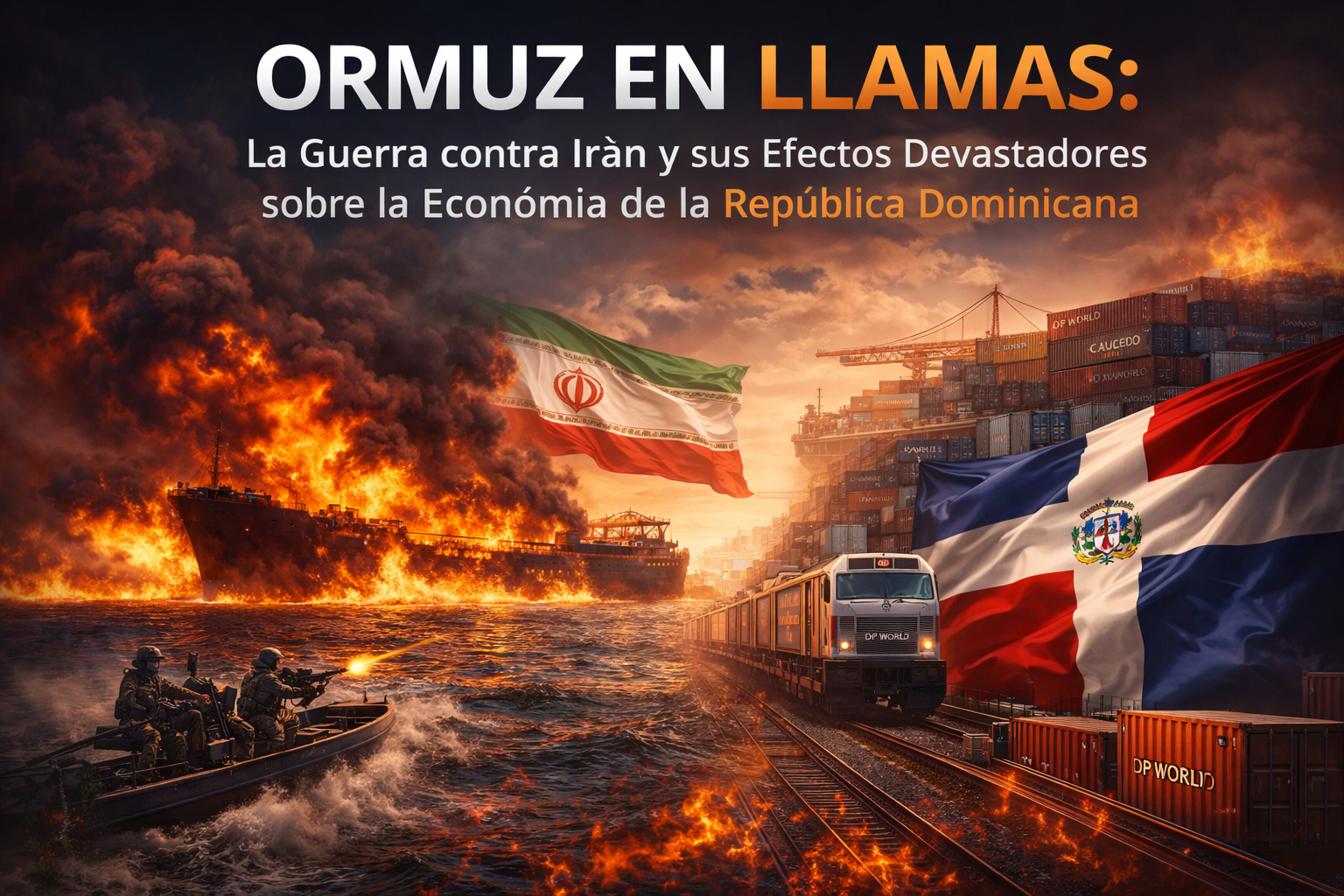
Trump nos ha jodido; Ormuz en Llamas y R.D. perjudicada

republica dominicana, iran, estrecho de ormuz, seguridad nacional, guerra, diplomacia, inteligencia, C. Constantin Poindexter Salcedo

La Guerra contra Irán y sus Efectos Devastadores sobre la Economía de la República Dominicana

El 28 de febrero de 2026, Estados Unidos e Israel lanzaron una ofensiva militar contra Irán que transformó de manera abrupta el panorama energético mundial. La decisión del presidente Donald Trump de iniciar esta campaña bélica, tomada sin agotar las vías diplomáticas disponibles, ha provocado la mayor disrupción del suministro petrolero global desde la crisis de Suez de 1956 (Al Jazeera, 2026). El cierre prácticamente total del Estrecho de Ormuz, por donde transita cerca del 20% del petróleo mundial, ha generado un shock de precios que amenaza con sumir a las economías importadoras de crudo en una espiral inflacionaria severa. Para la República Dominicana, un país que no produce petróleo y que depende completamente de las importaciones de hidrocarburos para mover su economía, las consecuencias de este conflicto son potencialmente catastróficas.

Aquí reviso las múltiples dimensiones del impacto económico que la guerra con Irán tiene sobre el pueblo dominicano, desde el encarecimiento inmediato de los combustibles hasta las amenazas estructurales al turismo, la seguridad alimentaria y la estabilidad fiscal del Estado. Mi argumento central es que la República Dominicana, por su condición de importador neto de energía y su limitada capacidad de almacenamiento estratégico, se encuentra en una posición de vulnerabilidad extrema que podría traducirse en un deterioro significativo de la calidad de vida de millones de dominicanos.

El Contexto Global: Un Shock Energético sin Precedentes

La magnitud de la crisis energética desatada por la guerra es difícil de exagerar. Desde el inicio del conflicto, el precio del crudo Brent ha subido aproximadamente un 80%, pasando de alrededor de $70 por barril a niveles cercanos a los $110, con picos que han tocado los $120 (Fortune, 2026; CNBC, 2026a). Esta volatilidad extrema se explica por la paralización casi total del tránsito marítimo a través del Estrecho de Ormuz, una vía estratégica por donde circulan diariamente más de 20 millones de barriles de petróleo, equivalentes a una quinta parte del consumo global (Al Jazeera, 2026). Los ataques iraníes contra buques, la colocación de minas navales y las interferencias con equipos de navegación han forzado a la mayoría de los operadores a anclar sus embarcaciones en los extremos del estrecho en lugar de arriesgarse a cruzarlo.

La respuesta internacional no ha logrado contener el daño. La Agencia Internacional de Energía anunció la liberación de 400 millones de barriles de reservas estratégicas, la mayor operación de este tipo en su historia, y Estados Unidos se comprometió a liberar 172 millones de barriles de su Reserva Estratégica de Petróleo (CNBC, 2026b). Sin embargo, estas medidas han tenido un efecto limitado sobre los precios. Analistas de firmas como Onyx Capital Group y UBS advierten que si el conflicto se prolonga, los precios podrían escalar hasta los $200 por barril, un escenario que transformaría esta crisis energética en una recesión global (CNBC, 2026c).

La Vulnerabilidad Estructural de la República Dominicana

La República Dominicana no produce petróleo, gas natural ni carbón, lo que la obliga a acudir a los mercados internacionales para satisfacer la totalidad de su demanda energética (Comisión Nacional de Energía, 2022). En 2024, las importaciones petroleras del país ascendieron a más de $5,100 millones de dólares, según datos de la Dirección General de Aduanas (El Dinero, 2025). El economista Andy Dauhajre ha señalado que el país importó alrededor de $4,700 millones en combustibles, y que un aumento del 40% en el precio del crudo representaría un impacto negativo de aproximadamente $2,000 millones para la economía nacional (Proceso, 2026). Esta cifra es particularmente alarmante si se considera que desde la desaparición del acuerdo Petrocaribe en 2017, el país debe pagar el 100% de sus importaciones de combustibles sin ningún tipo de financiamiento preferencial.

A esta dependencia se suma la escasez de reservas estratégicas. Según datos citados por Diario Libre, las reservas de combustibles de la Refinería Dominicana de Petróleo (Refidomsa) cubrirían apenas 30 días de consumo interno si se produjera una interrupción súbita en las importaciones (7Días, 2026). Treinta días es un margen peligrosamente estrecho en un contexto donde el transporte marítimo internacional está severamente comprometido y donde no existe certeza alguna sobre cuándo se normalizarán las rutas de suministro.

Inflación, Costo de Vida y el Golpe a los Más Vulnerables

El petróleo caro no se queda en la bomba de gasolina. Como ha señalado un análisis publicado por Pipex Radio Noticias (2026), en una economía abierta e importadora como la dominicana, el encarecimiento del crudo se transmite a través de múltiples canales: el transporte marítimo, la logística interna, las materias primas industriales, la generación eléctrica y los insumos agrícolas. El economista Henry Hebrard ha advertido que el incremento en el precio de las materias primas derivadas del petróleo termina encareciendo indirectamente los costos de prácticamente toda la actividad productiva del país (N Digital, 2026a).

El Gobierno dominicano ya tomó medidas parciales: la semana del 14 al 20 de marzo de 2026 se dispuso un aumento de RD$5.00 por galón en las gasolinas y el gasoil, mientras se mantiene congelado el precio del GLP mediante un subsidio semanal de RD$1,189.8 millones (N Digital, 2026b). Pero estos subsidios tienen un límite. El presupuesto de 2026 contempla apenas 8 mil millones de pesos para subsidiar combustibles, una cifra que se está agotando a un ritmo acelerado. Si la crisis se extiende, el Estado enfrentará el dilema de aumentar la deuda pública para financiar subsidios o trasladar el costo directamente al consumidor, con consecuencias inflacionarias devastadoras.

El impacto de esta dinámica es profundamente desigual. Mark Zandi, economista jefe de Moody’s, ha explicado que el aumento en los precios de la gasolina funciona como un impuesto regresivo, porque los hogares de menores ingresos dedican una proporción mucho mayor de su presupuesto a la energía (CNBC, 2026d). En un país como la República Dominicana, donde amplios segmentos de la población viven con ingresos limitados y donde el transporte público depende casi exclusivamente del gasoil, el encarecimiento de los combustibles golpea con particular dureza a quienes menos herramientas tienen para absorber el shock. Francisco Monaldi, del Baker Institute de la Universidad de Rice, ha señalado que países como República Dominicana simplemente no tienen la capacidad fiscal para sostener subsidios prolongados, por lo que inevitablemente deben trasladar el impacto a los consumidores (CNN en Español, 2026).

Amenazas al Turismo y la Generación Eléctrica

El turismo, pilar fundamental de la economía dominicana y fuente principal de divisas, enfrenta una amenaza directa. El cierre del espacio aéreo sobre gran parte de Medio Oriente, combinado con el aumento vertiginoso del precio del combustible para aviación, ha provocado que numerosas aerolíneas incrementen los precios de sus boletos o cancelen rutas (Wikipedia, 2026). Si el costo de volar al Caribe aumenta significativamente, la demanda turística podría contraerse justo cuando el país más necesita los dólares que genera el sector.

Por otro lado, la generación eléctrica dominicana mantiene una dependencia considerable de los combustibles fósiles. Aunque la matriz energética se ha diversificado en años recientes, con el gas natural licuado pasando de suplir el 24% de la generación en 2019 al 41% en 2024 (AES, 2025), y las renovables alcanzando el 23% de la capacidad instalada (Ministerio de Energía y Minas, 2025), el sistema sigue expuesto al costo de los hidrocarburos importados. Un encarecimiento sostenido del crudo y del GNL se traduciría en mayores transferencias estatales al sector eléctrico o en aumentos de tarifa que agravarían la presión sobre los hogares y las empresas.

La Respuesta del Gobierno y sus Límites

El ministro de Hacienda y Economía, Magín Díaz, ha asegurado que el Gobierno cuenta con las herramientas necesarias para proteger la economía, citando el financiamiento anticipado del presupuesto, la posibilidad de redistribuir partidas y la buena credibilidad crediticia del país en los mercados internacionales (Hoy, 2026). Sin embargo, estas garantías oficiales contrastan con las advertencias de economistas independientes. Hebrard ha dejado claramente establecido que la economía dominicana no resistiría un escenario prolongado del conflicto, y que el margen fiscal para absorber el impacto a través de subsidios es limitado (N Digital, 2026a). Dauhajre, por su parte, ha insistido en que la presión inflacionaria podría escalar y forzar aumentos en las tasas de interés, lo que desaceleraría aún más la actividad económica (Proceso, 2026).

El problema de fondo es que la República Dominicana llegó a esta crisis sin las reservas estratégicas de combustibles ni los mecanismos de cobertura de riesgo que podrían haber amortiguado el golpe. A diferencia de los países miembros de la Agencia Internacional de Energía, que cuentan con reservas de emergencia equivalentes a meses de consumo, Refidomsa apenas almacena para un mes. Esta realidad desnuda una debilidad estratégica que trasciende la crisis actual y que plantea preguntas serias sobre la planificación energética de largo plazo del país.


La guerra contra Irán iniciada por la administración Trump constituye un GRAN error geopolítico cuyas consecuencias se extienden mucho más allá del campo de batalla. Para la República Dominicana, el conflicto representa una tormenta perfecta, . . . un país sin producción petrolera, con reservas de apenas treinta días, una factura de importación de miles de millones de dólares, un sector eléctrico dependiente de combustibles fósiles y un turismo vulnerable al encarecimiento de los vuelos internacionales. El costo lo pagarán, como siempre, los sectores más vulnerables de la sociedad dominicana: los hogares de bajos ingresos que destinan la mayor proporción de su presupuesto a la energía y al transporte.

La crisis actual debe servir como llamada de atención. República Dominicana necesita con urgencia ampliar sus reservas estratégicas de combustibles, acelerar la transición hacia fuentes de energía renovables, diversificar las rutas de aprovisionamiento y diseñar mecanismos financieros de cobertura contra shocks petroleros. La dependencia total de un mercado internacional sujeto a las decisiones imprudentes de actores externos no es sostenible. Como bien dijo nuestro tamaño figura Juan Bosch, y como recuerda el economista Domingo Núñez Polanco, “Las guerras son fáciles de comenzar, pero muy difíciles de terminar” (Domingo La Revista, 2026). Digo yo, no sin un chin de cólera, el pueblo dominicano no inició esta idiotez, pero estaremos pagando sus consecuencias.

C. Constantin Poindexter Salcedo, M.A. en Inteligencia, Certificado de Posgrado en Contrainteligencia, J.D., certificación CISA/NCISS OSINT, Certificación U.S. DoD/DoS BFFOC, Dipl. Diplomacia Global, Dipl. Derechos Humanos por USIDHR

Bibliografía

  • AES Corporation. (2025). Energas and AES break the Dominican Republic’s reliance on oil. AES Energy Insights. https://www.aes.com/energy-insights/energas-and-aes-break-dominican-republics-reliance-oil
  • Al Jazeera. (2026, 10 de marzo). How will soaring oil prices caused by Iran war impact food costs? Al Jazeera News. https://www.aljazeera.com/news/2026/3/10/how-will-soaring-oil-prices-caused-by-iran-war-impact-food-prices
  • CNBC. (2026a, 16 de marzo). Oil prices fall as Trump pressures allies to help protect tankers in Strait of Hormuz. CNBC. https://www.cnbc.com/2026/03/15/oil-prices-today-iran-war.html
  • CNBC. (2026b, 16 de marzo). Oil prices: Why traders are getting nervous about Iran’s $200 warning. CNBC. https://www.cnbc.com/2026/03/16/oil-prices-iran-war-200-crude-strait-of-hormuz-supply-shock.html
  • CNBC. (2026c, 16 de marzo). Oil prices: Why traders are getting nervous about Iran’s $200 warning. CNBC. https://www.cnbc.com/2026/03/16/oil-prices-iran-war-200-crude-strait-of-hormuz-supply-shock.html
  • CNBC. (2026d, 17 de marzo). Iran war, oil price surge worsen K-shaped economy, say economists. CNBC. https://www.cnbc.com/2026/03/17/iran-war-oil-price-surge-worsen-k-shaped-economy-say-economists.html
  • CNN en Español. (2026, 5 de marzo). El ataque a Irán sacudió el mercado del petróleo. Así se afectan o benefician los países de América Latina. CNN. https://cnnespanol.cnn.com/2026/03/05/economia/iran-precios-petroleo-america-latina-orix
  • Comisión Nacional de Energía. (2022, 7 de abril). Aseguran independencia energética depende del aprovechamiento recursos naturales de país. CNE. https://cne.gob.do/
  • Domingo La Revista. (2026, 16 de marzo). Ormuz: la guerra que puede encender la próxima crisis mundial. https://domingolarevista.com/2026/03/16/ormuz-la-guerra-que-puede-encender-la-proxima-crisis-mundial/
  • El Dinero. (2025, 30 de enero). ¿Cuáles son los combustibles con mayor demanda en República Dominicana? El Dinero. https://eldinero.com.do/312199/cuales-son-los-combustibles-con-mayor-demanda-en-republica-dominicana/
  • Fortune. (2026, 18 de marzo). Oil prices hit nearly $110 as Iran vows to escalate the war in ‘new ways.’ Fortune. https://fortune.com/2026/03/18/oil-prices-110-crude-brent-iran-war-israel-strait-hormuz-lng/
  • Hoy. (2026, 16 de marzo). ¿Cómo afectará el aumento del petróleo a la economía dominicana en 2026? Hoy Digital. https://hoy.com.do/economia/afectara-aumento-petroleo-economia-dominicana-2026_1079938.html
  • N Digital. (2026a, 13 de marzo). Hebrard advierte economía de RD no resistiría se prolongue conflicto EE.UU.–Israel–Irán. N Digital. https://n.com.do/2026/03/13/hebrard-advierte-economia-de-rd-no-resistiria-se-prolongue-conflicto-eeuu-israel-iran/
  • N Digital. (2026b, 13 de marzo). Gobierno aumenta RD$5 en gasolinas y gasoil por conflicto en Irán. N Digital. https://n.com.do/2026/03/13/gobierno-anuncia-alza-de-rd5-en-gasolinas-y-gasoil-por-conflicto-en-iran/
  • NPR. (2026, 16 de marzo). Gasoline prices are still rising as the Iran war stretches into its third week. NPR. https://www.npr.org/2026/03/16/nx-s1-5749333/iran-war-gasoline-prices-day-17
  • Pipex Radio Noticias. (2026, 17 de marzo). El petróleo caro no se queda en la bomba (Opinión). https://radio.interx.top/
  • Proceso. (2026, 12 de marzo). Economista Andy Dauhajre advierte precios del petróleo podrían presionar la inflación en RD. Proceso. https://proceso.com.do/2026/03/12/economista-andy-dauhare-advierte-precios-del-petroleo-podrian-presionar-la-inflacion-en-rd/
  • 7Días. (2026, 5 de marzo). Reservas de combustibles de RD: ¿qué pasaría ante crisis? 7Días. https://7dias.com.do/2026/03/05/republica-dominicana-solo-tiene-reservas-de-combustibles-para-un-mes-en-medio-de-la-crisis-del-petroleo/
  • Wikipedia. (2026). Economic impact of the 2026 Iran war. Wikipedia. https://en.wikipedia.org/wiki/Economic_impact_of_the_2026_Iran_war
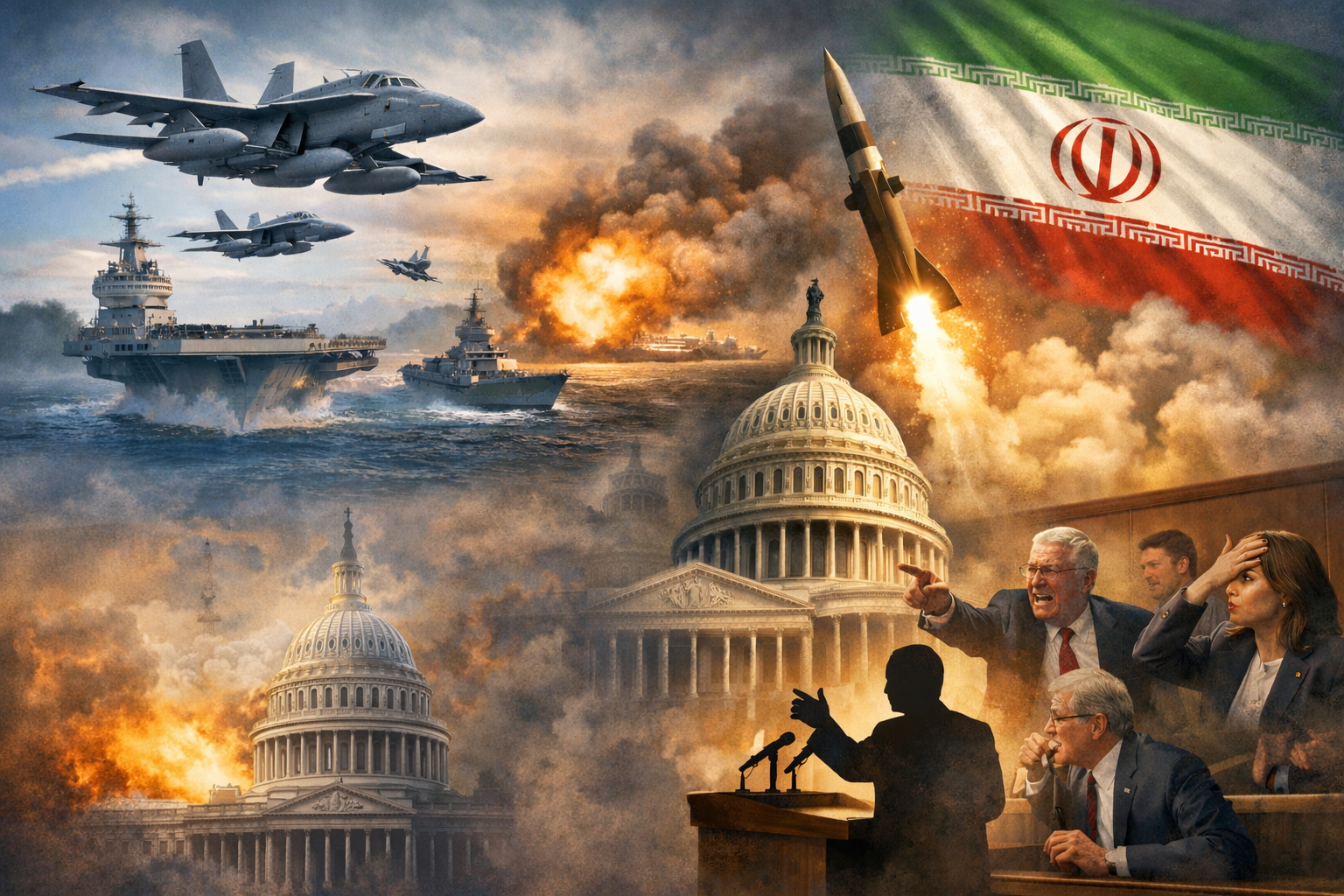
A U.S. Attack on Iran, a Catastrophic Unforced Error

war, warfighter, Iran, U.S., intelligence, counterintelligence, espionage, counterespionage, C. Constantin Poindexter, CIA, NSA

Public and Congressional Support: The Decisive Constraint That Can Turn U.S. Military Dominance Over Iran Into Strategic Defeat

The United States retains overwhelming advantages in the material and operational prerequisites of high-end conventional warfare. In any prospective conflict with Iran, Washington can assume advantages in air and naval superiority, intelligence and surveillance coverage, precision strike capacity, suppression of enemy air defenses, long-distance logistics, and advanced cyber and electronic warfare. Yet those advantages do not automatically translate into strategic success. The decisive variable is not whether the United States can destroy targets faster than an adversary can replace them, but whether the United States can sustain the political mandate to keep fighting after the initial shock of combat wears off, the costs become visible, and the enemy adapts.

This is the core vulnerability of a discretionary war with Iran. Public support and congressional support are not merely background noise or messaging challenges. They are strategic enablers. When they are absent or brittle, they shape rules of engagement, constrain time horizons, narrow acceptable costs, and fracture coalition cohesion. In that environment, even tactically brilliant operations can fail to achieve the most important objectives because political will collapses sooner than the enemy’s capacity to resist. Vo Nguyen Giap articulated this logic explicitly. A belligerent can leave enemy forces partly intact if it can destroy the enemy’s will to remain in the war. (PBS, n.d.) That insight was operationalized against the United States in Vietnam, echoed in Afghanistan, and remains relevant to any prospective United States-Iran war.

The Strategic Center of Gravity: Legitimacy and Endurance

Clausewitz argued that war is a continuation of politics by other means. In American practice, the political character of war is inseparable from constitutional structure and democratic consent. A war that begins without clear congressional authorization, or that proceeds amid broad public skepticism, can win battles while steadily losing its domestic foundation. The War Powers Resolution codifies Congress’s position that the President introduces U.S. forces into hostilities only pursuant to a declaration of war, specific statutory authorization, or a national emergency created by an attack on the United States or its forces. (50 U.S.C. § 1541, 1973) In a discretionary strike campaign that grows into sustained hostilities, the gap between executive action and legislative consent becomes a recurring legitimacy crisis rather than a one-time procedural dispute.

Recent reporting underscores that this institutional fault line is not theoretical. Reuters reported that the U.S. Senate rejected a bid to curb presidential Iran war powers, reflecting a live and lively, contested debate over authority and oversight in potential Iran hostilities. (Reuters, 2025) That debate matters operationally because contested legitimacy does not remain in Washington. It affects allied basing decisions, overflight permissions, intelligence sharing, escalation thresholds, and the credibility of U.S. signals to both adversaries and partners. A campaign that looks unilateral, politically improvised, or domestically unpopular becomes harder to sustain and easier for Iran and its proxy network to frame as illegitimate aggression.

Material Superiority Versus Political Fragility

From my perspective (military/intelligence), the United States can plausibly execute many of the classic prerequisites you listed. But those capabilities do not eliminate the central political question: what is the concrete objective, and how long will the American public accept the costs required to achieve it?

Public sentiment data indicates a serious constraint. A University of Maryland Critical Issues Poll found only 21 percent favor the United States initiating an attack on Iran, with 49 percent opposed and 30 percent unsure. (University of Maryland Critical Issues Poll, 2026) A YouGov report covering an Economist YouGov poll likewise found Americans more likely to oppose than to support using military force to attack Iran, with 49 percent opposing and 27 percent supporting, and with significant partisan and independent resistance. (YouGov, 2026) Meanwhile, an AP NORC poll found that while many Americans view Iran as an enemy and express concern about Iran’s nuclear program, they have low trust in presidential judgment on the use of military force, with only about three in ten expressing high trust and more than half expressing little or no trust. (Associated Press NORC, 2026)

The former being said, all of this has strategic implications. They suggest that domestic consent is not merely divided. It is structurally thin, with a large, uncertain middle and a relatively small affirmative mandate for initiating war. Low confidence in the decision maker’s judgment means that early setbacks or civilian casualties can rapidly convert uncertainty into opposition. Further, thin consent invites legislative confrontation, and legislative confrontation invites operational constraints. This is exactly the kind of environment in which an adversary designs a strategy of political attrition rather than symmetrical military competition.

Vietnam: Giap’s Theory of Victory Was Political

The claim that “North Vietnam did not win the Vietnam War” can be true in a narrow kinetic sense. The United States inflicted vast battlefield losses and dominated many tactical engagements. Yet North Vietnam and the Viet Cong were able to outlast the United States by targeting the political will that sustained American participation. Giap described the objective as breaking “the American will to remain in the war,” using operations intended to force de-escalation and reshape the political calculus in Washington. (PBS, n.d.) The point is not that one event alone decided the outcome. The point is that the adversary’s theory of victory treated American domestic endurance as the center of gravity. Once that center weakened, America’s material advantages could not convert into a stable political settlement on acceptable terms.

For an Iran scenario, the parallel is not an exact replay of Vietnam’s terrain or insurgency structure. The parallel is “strategic method”. Iran does not need to win a conventional air-sea contest. It needs to ensure that the United States does not achieve its most important objectives at a politically acceptable cost. If Iran can force Washington into a cycle of escalation and retaliation, or can trigger regional proxy pressure that steadily raises the price of engagement, then the war becomes a contest of domestic patience more than a contest of platforms.

Afghanistan and the Logic of “Time”

The Afghanistan experience reinforces the same strategic logic through a different mode of war. A saying widely attributed to Taliban fighters captures the asymmetry of time horizons: “You have the watches, we have the time.” (Maclean’s, 2017) The exact provenance of the phrase is less important than its strategic meaning. The U.S. Administration is about fall into the same bullshit trap. Democracies fight under time constraints produced by elections, news cycles, budget politics, and public casualty sensitivity. Insurgent and revolutionary actors often fight under generational horizons, with lower sensitivity to near term losses and a stronger tolerance for prolonged hardship.

Iran’s leadership and its proxy network have repeatedly demonstrated a long-horizon approach to regional strategy. In a conflict, Iran can employ calibrated escalation through proxies, maritime harassment, missile and drone pressure, and political warfare aimed at eroding coalition cohesion (a “coalition” of states that have already publicly objected to U.S. warplanning). The objective is not necessarily to defeat U.S. forces in the field. It is to make the conflict feel indefinite, morally ambiguous, and strategically distracting, which are precisely the conditions that drain public support in the United States.

“Shock and Awe” Does Not Solve the Political Problem

Advocates of rapid strike campaigns often argue that overwhelming early force can preempt political attrition by ending the conflict quickly. History offers caution. Initial public support (pretty clearly NOT the case today) can be high at the onset of a war, but it can erode sharply as the war’s duration and costs expand, particularly if the rationale becomes contested. The Iraq example is instructive: Gallup reported 72 percent support for the war against Iraq in late March 2003. (Gallup, 2003) Yet Gallup later documented substantial erosion in perceived worth and support over time as realities on the ground diverged from initial expectations. (Gallup, 2006) The Brookings analysis of early Iraq war opinion similarly underscores the rally effect and its limits. (Kull, Ramsay, and Lewis, 2003)

For Iran, the political risk is heightened because current polling suggests the United States would begin without anything like the 2003 level of public backing. (University of Maryland Critical Issues Poll, 2026) (YouGov, 2026) (Associated Press NORC, 2026) Without a broad initial mandate, the usual pattern reverses: instead of rallying, creating a cushion against early shocks, early shocks can collapse a narrow coalition of support. Moreover, Iran is structurally capable of generating early shocks through proxy responses and regional disruption, meaning that the political challenge may begin immediately, not after months or years.

Congress as a Strategic Actor, Not a Background Variable

In a system where Congress controls funding and has constitutional war powers, the legislative branch becomes a de facto strategic actor. When Congress is divided, when authorization is ambiguous, or when the public is skeptical, Congress can constrain the war through funding restrictions, reporting requirements, and political signaling that affects allied behavior. Reuters reporting on war powers debates around Iran illustrates that these conflicts are not hypothetical. (Reuters, 2025) Even the sycophants are likely to run out of patience for another endless foray, largely due to constituent pressure rather than disloyalty to their cult.

This really matters. Strategic clarity requires durable political consensus. If objectives are unclear or expand, congressional opposition becomes more likely and more intense. Further, Iran can exploit visible domestic division through information operations, propaganda, and calibrated escalation intended to polarize U.S. politics. In that sense, a weak domestic mandate is not merely a constraint on U.S. freedom of action. It becomes a targetable vulnerability. The North Vietnamese knew it. The Afghans knew it, and the more sober members of the Department of Defense know it.

A Missing Ingredient: Defined, Credible Political Objectives

Even if the United States can strike nuclear facilities, degrade air defenses, and disrupt command networks, the strategic question remains what “winning” means and what settlement conditions are realistically attainable. If the objective is limited, such as delaying nuclear capabilities, the question becomes whether limited objectives justify the costs and risks of regional escalation. If the objective expands to regime change, the problem becomes far harder because military destruction does not automatically produce political legitimacy, stable governance, or a non-hostile successor regime. Here, the user’s final criterion is decisive. Post-conflict planning, a wicked difficult peril that we have botched over and over again, will repeat itself. History shows that military victory without a stabilization strategy yields strategic failure, and the public tends to punish wars that feel open-ended, morally muddled, or poorly planned.

In the Iran case, this risk is amplified because a strike campaign can trigger proxy retaliation in multiple theaters, raise energy and shipping risks, and produce unpredictable political reverberations, all of which can be framed domestically as an optional war of choice rather than a necessary act of self-defense. When a war’s necessity is contested, public support becomes the decisive front.

Dominance in Combat Power Does Not Guarantee Strategic Success

The United States may indeed be dominant across many of the operational categories that matter for battlefield performance. Yet wars are not won solely by platform superiority. They are won by aligning military means with politically sustainable ends. Current public opinion suggests a narrow and fragile mandate for initiating an attack on Iran, combined with low confidence in executive judgment about the use of force. (University of Maryland Critical Issues Poll, 2026) (YouGov, 2026) (Associated Press NORC, 2026) In that environment, congressional contention over authorization and war powers becomes a predictable friction point, not an occasional procedural dispute. (50 U.S.C. § 1541, 1973) (Reuters, 2025) Iran and its proxy network do not need to defeat the United States conventionally to succeed strategically. They need to prolong, complicate, and regionalize the conflict until the United States loses the will and domestic legitimacy to continue, echoing Giap’s theory of victory in Vietnam and the time horizon logic captured by the Afghanistan aphorism. (PBS, n.d.) (Maclean’s, 2017)

A United States attack on Iran will NOT end well. We’ll have tactical dominance paired with a complete strategic disaster. Without sustained public and congressional support, the United States will fail to achieve its most important objectives (if the Administration can even articulate them) at an acceptable cost. The venture will not end with a clear victory, but with political exhaustion and a forced search for exit ramps. That is not my political critique. It is a strategic assessment rooted in how democratic states actually choose war and wage war. My call? Don’t f. do it. Exaggerations about “days from completing a nuclear weapon” coupled with no clear objective or endgame is a movie that we’ve seen before.

C. Constantin Poindexter, MA in Intelligence, Graduate Certificate in Counterintelligence, JD, CISA/NCISS OSINT certification, DoD/DoS BFFOC Certification

Bibliography

  • Associated Press NORC Center for Public Affairs Research. 2026. “Most Americans see Iran as enemy but doubt Trump on military force: poll.” Associated Press.
  • 50 U.S.C. § 1541. 1973. War Powers Resolution, “Purpose and policy.” Legal Information Institute, Cornell Law School.
  • Gallup. 2003. “Seventy Two Percent of Americans Support War Against Iraq.” Gallup News Service, March 24, 2003.
  • Gallup. 2006. “Three Years of War Have Eroded Public Support.” Gallup News Service, March 17, 2006.
  • Kull, Steven, Clay Ramsay, and Evan Lewis. 2003. “Rally Round the Flag: Opinion in the United States before and after the Iraq War.” Brookings Institution.
  • Maclean’s. 2017. “Fighting in Afghanistan: ‘You have the watches. We have the time’.” September 2, 2017.
  • PBS. n.d. “Peoples Century: Guerrilla Wars: Vo Nguyen Giap Transcript.” Public Broadcasting Service.
  • Reuters. 2025. “US Senate rejects bid to curb Trump’s Iran war powers.” June 27, 2025.
  • University of Maryland Critical Issues Poll. 2026. “Do Americans Favor Attacking Iran Under the Current Circumstances? The Latest Critical Issues Poll Findings.”
  • YouGov. 2026. “Few Americans support U.S. military action against Iran, but a majority think it’s likely.” Economist YouGov poll, February 20 to 23, 2026.

Iran Cyber Operations Target Utility Infrastructure

cyber, cyber operations, espionage, counterespionage, counterintelligence, cyber defense, CISA, countermeasures, constantin poindexter

Per the U.S. Cybersecurity and Infrastructure Security Agency (CISA), “Since at least November 22, 2023, these IRGC-affiliated cyber actors have continued to compromise default credentials in Unitronics devices. The IRGC-affiliated cyber actors left a defacement image stating, “You have been hacked, down with Israel. Every piece of equipment ‘made in Israel’ is CyberAv3ngers legal target.” The victims span multiple U.S. states. The authoring agencies urge all organizations, especially critical infrastructure organizations, to apply the recommendations listed in the Mitigations section of this advisory to mitigate the risk of compromise from these IRGC-affiliated cyber actors.” (CISA, 12/01/2023)

The penetrations were aimed at critical utilities, in the extant case of U.S. water and water waste treatment infrastructure. Per CISA, “Beginning on November 22, 2023, IRGC cyber actors accessed multiple U.S.-based WWS facilities that operate Unitronics Vision Series PLCs with an HMI likely by compromising internet-accessible devices with default passwords. The targeted PLCs displayed the defacement message, “You have been hacked, down with Israel. Every equipment ‘made in Israel’ is Cyberav3ngers legal target.” The Water and Wastewater Systems Sector (Water Sector) underpins the health, safety, economy, and security of the nation. It is vulnerable to both cyber and physical threats.” The warning is instructive. The fallout from a successful compromise of public water systems can be severe. Andrew Farr warns, “The imagination can run wild with worst-case scenarios about what a threat actor could do to a water system, but Arceneaux explains that sophisticated actors could hack a system and manipulate pumps or chemical feeds without the utility even knowing they were in the system. They could also create a water hammer that could lead to cracked pipes or release untreated wastewater back into a source water body. What if that happens [to a water system] in a medium or a big city? Maybe it’s only for a few hours, but it could go on for a few days or weeks, depending on how extensive the damage is.” (Farr, WF&M, 04/11/2022) Darktrace reports the very real consequence of a successful water system compromise. “Earlier this month, cyber-criminals broke into the systems of a water treatment facility in Florida and altered the chemical levels of the water supply.” (Matthew Wainwright, Darktrace) If potable water delivered to consumers contains dangerous contaminants or improper balances of the “good” chemicals blended to the product (fluoride, chlorine, chloramine, etc.), it can cause negative health effects. Gastrointestinal illness, nervous system damage, reproductive system damage, and chronic diseases such as cancer are very real risks associated with the same.

CISA cyber defense model of the “brute force” methodology deployed by IRGC operatives may be viewed at MITRE.