Operation Merlin: A D&D Failure by Strategic Compromise

Operation Merlin, denial and deception, d and d, intelligence, counterintelligence, espionage, counterespionage, HUMIN, C. Constantin Poindexter, CIA, NSA, DIA

Operation Merlin: A Denial and Deception Case Study in Covert Sabotage and the Anatomy of a Strategic Blunder of Enormous Proportions

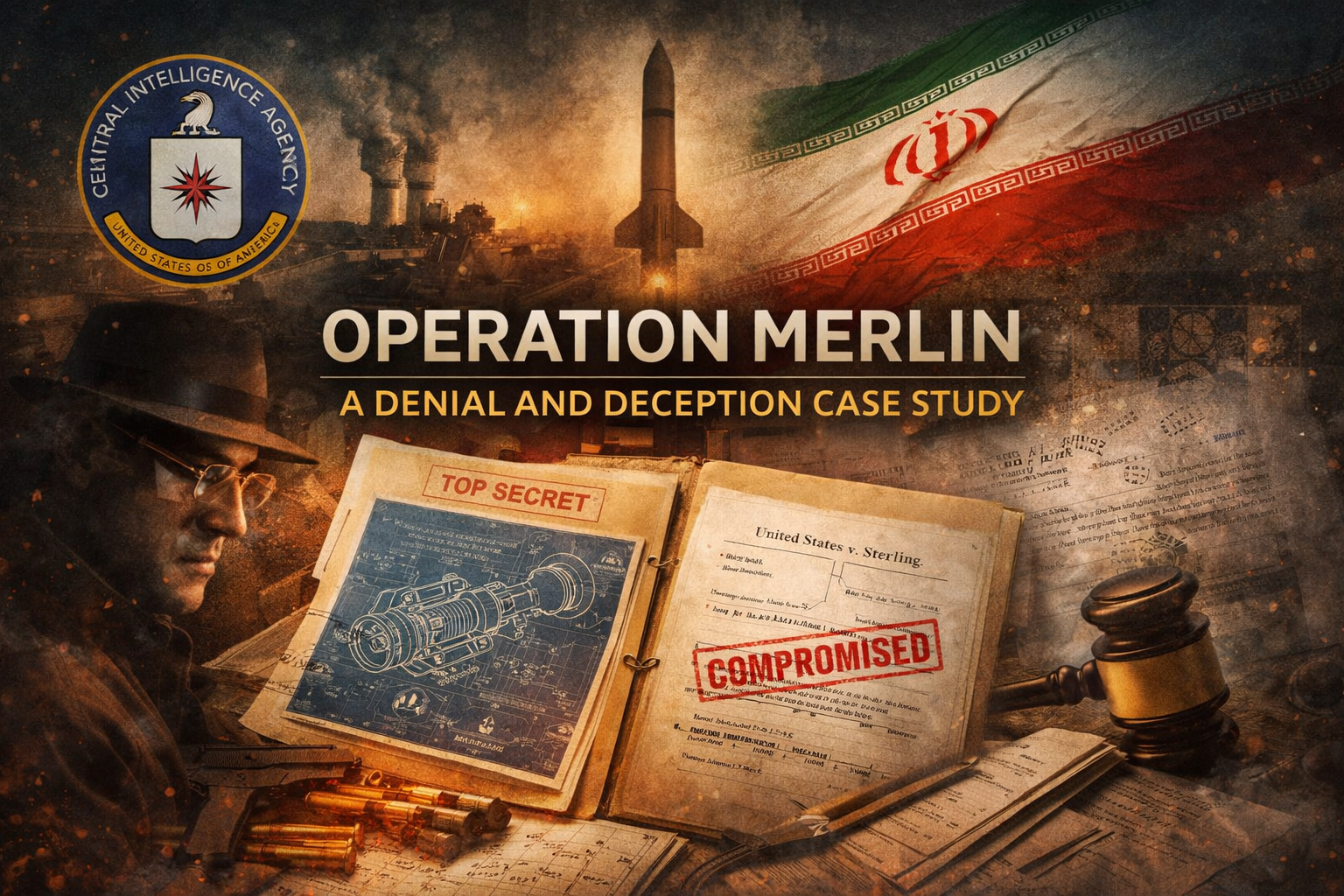
Operation Merlin was a clandestine CIA program designed to undermine Iran’s nuclear weapons development program by inserting deliberately sabotaged warhead component blueprints through a recruited human asset. Executed from approximately 1998 through the early 2000s, the operation was an ambitious attempt at deception against a state-level nuclear proliferator. I am going to share my thoughts here about Operation Merlin through the lens of Denial and Deception (D&D) doctrine, evaluate its design, execution, and compromise against accepted deception planning frameworks. Drawing on trial exhibits from United States v. Sterling (2015), investigative reports, and foundational D&D literature, my opinion is that Operation Merlin, while possessing a sound deception concept, suffered from catastrophic failures in channel selection, feedback architecture, operational security, and post-compromise institutional decision-making that collectively rendered it not merely ineffective but potentially counterproductive to the national security interests it was designed to serve.

I. Introduction: Deception as Counterproliferation

The use of deception as a counterproliferation tool occupies an uncomfortable space in American intelligence history. Unlike tactical battlefield deception or strategic wartime misdirection, i.e., domains in which the United States and its allies developed sophisticated doctrinal frameworks during the Second World War, deception operations targeting foreign weapons programs operate in a gray zone where the consequences of failure are measured not in lost engagements but in accelerated existential threats. Operation Merlin sits at the center of this tension: an operation whose architects understood the strategic imperative but whose execution betrayed a fundamental misapprehension of the doctrinal requirements for successful material deception against a sophisticated state adversary.

To offer a robust eveluation of Merlin, we need to move beyond the narrative of its public exposure (the prosecution of CIA case officer Jeffrey Sterling, the journalism of James Risen, the spectacle of a federal trial in which CIA operatives testified behind seven-foot partitions) and instead subject the operation to the same analytical framework that professional deception planners apply to their own work. This essay applies the six-element D&D planning framework derived from Barton Whaley’s foundational taxonomy in Stratagem: Deception and Surprise in War (Whaley, 2007), Richards Heuer’s cognitive analytical model from Psychology of Intelligence Analysis (Heuer, 1999), and the operational principles codified in Joint Publication 3-13.4, Military Deception (Joint Chiefs of Staff, 2012), supplemented by the historical precedent of the XX Committee’s Double Cross System as the benchmark for successful material deception at scale.

II. Strategic Context and the Deception Concept

By the late 1990s, the U.S. Intelligence Community assessed with growing confidence that Iran was pursuing nuclear weapons capability, though the evidentiary basis for this assessment remained contested internally. The 2001 National Intelligence Estimate, the first to formally conclude that Iran was working toward a nuclear weapon, was later characterized by Paul Pillar, then the CIA’s National Intelligence Officer for the Near East and South Asia, as resting on “a matter of inference” rather than direct evidence (Porter, 2014). Nevertheless, the policy imperative to disrupt Iran’s nuclear trajectory was acute, and the menu of available options was constrained by the absence of a viable military target set and the diplomatic limitations of the post-JCPOA environment that would not materialize for another fifteen years.

Into this gap stepped the CIA’s Directorate of Operations with a proposal rooted in material deception: recruit a Russian nuclear scientist with legitimate technical credentials, provide him with doctored blueprints for a nuclear warhead firing set, and direct him to deliver these blueprints to Iranian officials under the legend of a mercenary walk-in seeking financial compensation for proliferation-grade technical intelligence (Risen, 2006).

Within Whaley’s taxonomy, this concept falls squarely under the category of “mimicking”, creating a false artifact that imitates a real one closely enough to be accepted as authentic by the target (Whaley, 2007). The doctored blueprints were not fabrications from whole cloth; they were based on genuine Russian weapons designs, modified to contain dozens of hidden engineering flaws that would cause any device constructed from them to fail. The deception’s success depended on the flaws being sufficiently subtle to evade detection by Iranian scientists while being sufficiently fundamental to render the resulting weapon inoperable.

The concept was sound. Material deception (the introduction of fabricated or corrupted physical artifacts into an adversary’s intelligence or procurement stream ) has a long and occasionally successful history, from Operation Mincemeat’s fictitious invasion plans in 1943 to the CIA’s Cold War-era contamination of Soviet technical collection channels. The critical question was never whether the concept could work in principle, but whether the CIA possessed the operational infrastructure, tradecraft discipline, and institutional patience to execute it against a counterintelligence-aware adversary like Iran.

III. Operational Design and Execution

The operation’s centerpiece was a human asset — a Russian nuclear engineer recruited by the CIA and referred to at trial under the cryptonym “Merlin” (United States Department of Justice [USDOJ], 2015). Merlin possessed genuine scientific credentials, making him a plausible vector for the delivery of proliferation-grade material. His CIA handler from November 1998 through May 2000 was case officer Jeffrey Alexander Sterling, who managed the asset relationship and coordinated the operational logistics of the delivery (USDOJ, 2015).

The delivery was designed to exploit a known vulnerability in Iran’s procurement architecture: its reliance on intermediaries and walk-in sources for weapons-relevant technical intelligence. Merlin was directed to approach Iran’s mission to the International Atomic Energy Agency (IAEA) in Vienna, Austria, and provide an incomplete set of the doctored blueprints. The incompleteness was deliberate. It created an incentive structure requiring the Iranians to re-contact Merlin for the remaining schematics, thereby confirming acceptance of the bait and potentially opening a sustained intelligence collection channel into Iran’s nuclear procurement apparatus (Risen, 2006).

Former National Security Adviser Condoleezza Rice testified at Sterling’s trial that the program was “one of the only levers we had to try to disrupt Iran’s nuclear program” and characterized it as among the government’s “most closely held secrets” (Barakat, 2015). Rice further stated that she personally intervened with the New York Times to suppress publication of a story about the operation, arguing that exposure could result in catastrophic loss of life (Gerstein, 2015).

The execution in February 2000 deviated significantly from the operational plan. Merlin’s testimony at trial revealed that he had difficulty locating the Iranian mission in Vienna. When he found it, no one answered the door. He ultimately placed the envelope containing the blueprints in a mailbox and covered it with a newspaper (Solomon, 2015). Additionally, Merlin deviated from his handlers’ instructions regarding the contact mechanism: rather than providing an American mailing address as directed, he substituted an email address, reasoning that an American postal address would appear suspicious to Iranian counterintelligence and could be traced back to him (Solomon, 2015).

These deviations carry BIG implications when evaluated against D&D doctrine. An asset who autonomously modifies operational parameters based on his own risk calculus (however rational that calculus may be) introduces uncontrolled variables into the deception architecture. More critically, Merlin’s technical competence, which made him a credible channel, simultaneously made him capable of evaluating the material he was tasked to deliver. According to Risen’s account, Merlin recognized the deliberate flaws in the schematics and transmitted his belief along with the delivery which signaled to the Iranians that the blueprints were intelligence service-manufactured, allowing Iranian scientists to identify and discard the sabotaged elements while extracting legitimate technical data (Risen, 2006). Merlin denied these characterizations under oath, testifying that Risen’s depiction of him as reluctant was “completely untrue” (Solomon, 2015). The divergence itself is analytically significant: if Risen’s source was not Merlin, then whoever provided those details possessed the kind of intimate operational knowledge consistent with a case officer’s access.

IV. D&D Doctrinal Evaluation

A. Desired Perception

The foundational requirement of any deception operation is a clearly defined desired perception, i.e., the specific belief the operation is designed to induce in the target’s mind (Joint Chiefs of Staff, 2012). Operation Merlin’s desired perception was straightforward: that the blueprints were genuine proliferation material obtained through an illicit procurement channel (a disgruntled or mercenary Russian scientist selling weapons knowledge for financial gain).

This perception was plausible on its face. Russian nuclear scientists in the post-Soviet period were documented to be underpaid, underemployed, and in some cases actively solicited by proliferating states. The desired perception exploited a real phenomenon, which is doctrinally correct. The most effective deceptions are those anchored in patterns the target already recognizes and expects (Heuer, 1999). Assessment: Adequate.

B. The Deception Story

The constructed narrative, a Russian scientist approaching Iran’s IAEA mission as a walk-in, offering warhead-grade schematics for money, was coherent as a standalone legend. Walk-in approaches by foreign nationals offering technical intelligence were not unprecedented in proliferation networks.

However, there is no indication in the trial record that the CIA subjected this story to rigorous adversarial analysis “red-teaming” we call it. The planners missed specifically examining how Iran’s Ministry of Intelligence and Security (VEVAK) would process and evaluate a cold-approach walk-in offering firing set blueprints. VEVAK had extensive institutional experience identifying Western intelligence provocations, and a walk-in of this nature. An unsolicited player offering the single most sensitive category of weapons data, with no prior relationship or established bona fides would have triggered significant counterintelligence scrutiny. The absence of documented red-team analysis suggests the deception story was evaluated for internal plausibility rather than adversarial resilience. Assessment: Deficient.

C. Channel Selection

D&D doctrine, codified in lessons from the London Controlling Section’s World War II operations and subsequent CIA and DoD guidance, instructs that the credibility of the delivery channel is the single most critical variable in material deception. The channel must be one that the adversary already trusts or is predisposed to trust, typically because the source has previously provided verified intelligence, is embedded in a network the adversary already exploits, or mimics an approach pattern the adversary has successfully used before (Holt, 2004).

From Iranian FIS’s perspective Merlin possessed none of these attributes . He was an unknown entity conducting a cold approach. His operational execution was amateurish, i.e., unable to locate the mission, leaving material in an unattended mailbox, etc.. From an Iranian counterintelligence officer’s perspective, applying the analytical principles Heuer articulated, the approach contained no prior cognitive anchor that would predispose acceptance (Heuer, 1999). The channel was cold, unvetted from the target’s vantage point, and operationally clumsy.

Taking a lesson from history, the Double Cross System is instructive. The XX Committee’s deception channels, turned German agents who fed disinformation to the Abwehr, were effective precisely because they were channels the adversary had already accepted and validated through prior intelligence exchanges. Double Cross built credibility over months and years of carefully calibrated true-false reporting mixtures before introducing critical strategic deceptions like FORTITUDE. Operation Merlin attempted to deliver the equivalent of FORTITUDE-grade material through a channel with zero established credibility. Assessment: Critically Deficient.

D. Feedback Architecture

The operation’s feedback mechanism was its most elegant design element: the deliberate incompleteness of the blueprints created a natural trigger requiring Iran to re-contact Merlin for the remaining schematics, thereby confirming acceptance.

The problem was singular and fatal: Iran never responded. This silence created an analytical void that the operation had no means to resolve. The CIA could not determine whether Iran had detected the deception and discarded it, had accepted the material but chose to develop it independently, had never routed the material to a competent analyst, or whether VEVAK had flagged the approach as a provocation and filed it as a counterintelligence reference.

Well-designed deception operations maintain redundant feedback mechanisms precisely to prevent this kind of interpretive paralysis. The Double Cross System’s feedback architecture, continuous monitoring of German assessments through ULTRA decrypts of Abwehr and OKW communications, allowed deception planners to observe in near-real-time whether their false intelligence was being accepted, rejected, or partially integrated, and to adjust their deception stories accordingly (Howard, 1995). Operation Merlin had a single feedback point, and when that point went silent, the operation was effectively blind. No secondary collection mechanism (SIGINT, HUMINT from other sources inside Iran’s nuclear apparatus, or technical surveillance of Iranian procurement activity) was established to provide independent confirmation of the operation’s effect. Assessment: Critically Deficient.

E. Adaptability

Nothing in the trial record indicates that the CIA developed contingency plans for the various failure modes the operation might encounter — Iranian detection, asset compromise, the asset’s autonomous deviation from instructions, or operational exposure through internal security breaches. The reassignment of Sterling in May 2000 without documented succession planning or compartmentation review further suggests that continuity of operations planning was inadequate (USDOJ, 2015). He was the only player with intimate knowledge of the asset. When Sterling subsequently entered an adversarial posture with the agency, there was no adaptive mechanism to contain the resulting vulnerability. Assessment: Critically Deficient.

F. Operational Security

This is where Operation Merlin became a catastrophic F.U. The universe of individuals with knowledge of the operation expanded and expanded. The President, the National Security Adviser, senior CIA leadership, multiple case officers, the Russian asset and his wife, and after Sterling raised concerns through ostensibly proper channels, staffers on the Senate Select Committee on Intelligence knew it all. Each additional read-in was a point of compromise.

The most fundamental security failure was personnel-related. Sterling possessed direct, intimate knowledge of the operation, the asset’s identity, the tradecraft, and the operational dynamics. He was reassigned and then, within three months, became an Agency “adversary”. Counterintelligence doctrine requires enhanced monitoring of personnel with access to sensitive compartmented information who demonstrate indicators of potential unreliability. That would ABSOLUTELY include legal disputes with the employing I.C. agency. There is no indication that any such monitoring was implemented (Gerstein, 2015; Solomon, 2015). Assessment: Catastrophically Deficient.

V. The Vectors of Compromise

Operation Merlin was compromised through three distinct vectors, each representing a failure at a different level of the D&D security architecture.

The asset’s autonomous judgment constituted the first vector. Merlin’s technical competence, the very attribute that made him a credible channel, enabled him to evaluate and potentially undermine the material he was tasked to deliver. This is a structural paradox inherent in using technically sophisticated assets for material deception: the more credible the channel, the more capable it is of detecting and subverting the deception it carries.

The case officer’s grievance constituted the second vector. The prosecution established through communications metadata that Sterling and Risen were in contact during the periods preceding and following the publication of State of War, i.e., phone calls to Risen’s residence, emails containing articles related to Sterling’s former operational portfolio, and continued contact from December 2003 through November 2005 (USDOJ, 2015). Sterling’s defense argued that Senate Intelligence Committee staffers were a more plausible source and that the government’s evidence proved only communication, not the transmission of classified content (Wheeler, 2015). The jury found the circumstantial evidence sufficient, convicting Sterling on nine felony counts on January 26, 2015, and Judge Leonie Brinkema sentenced him to forty-two months (USDOJ, 2015).

The government’s self-compromise constituted the third and most strategically damaging vector. In prosecuting Sterling under the Espionage Act, the government introduced CIA operational cables, internal planning documents, and testimony from twenty-three CIA officers into the public record of a federal courtroom (Solomon, 2015). The trial revealed the operational concept, the asset’s role, the delivery methodology, the nature of the sabotaged blueprints, and the strategic rationale in far greater specificity than Risen’s book had disclosed. Bloomberg News reported from Vienna that the IAEA would “probably review intelligence they received about Iran as a result of the revelations,” with a former British envoy to the IAEA warning that the disclosures suggested “a possibility that hostile intelligence agencies could decide to plant a ‘smoking gun’ in Iran for the IAEA to find” (Solomon, 2015). Prosecutor James Trump acknowledged at sentencing that the exposure “ended the use of the nuclear-plans ruse against other countries” (Gerstein, 2015).

This third vector represents the most consequential D&D failure. In attempting to punish a compromise that had exposed a single operation, the government’s prosecution compromised an entire deception methodology. Any state with access to the public trial record — which now constitutes the most comprehensive open-source documentation of a CIA material deception program targeting a foreign nuclear capability — could retroactively audit its own procurement channels for similar operations and inoculate itself against future attempts. This is SPECIFICALLY why I refer to this as a strategic rather than tactical or operational disaster.

The Anti-Double Cross

Evaluated in its totality against the D&D planning framework, Operation Merlin represents something approaching the inverse of the Double Cross System. Where Double Cross maintained dozens of simultaneous channels with established credibility, Merlin relied on a single cold channel with no prior validation. Where Double Cross monitored adversary acceptance in near-real-time through ULTRA, Merlin had a single feedback mechanism that produced silence. Where Double Cross adapted its deception narratives continuously based on observed adversary reactions, Merlin had no adaptive capability. Where Double Cross maintained ruthless operational security — including the execution of compromised agents — Merlin allowed a disaffected case officer with comprehensive operational knowledge to depart the agency in an adversarial posture without enhanced counterintelligence monitoring.

The strategic concept underlying Operation Merlin (using sabotaged technical intelligence to misdirect a proliferating state’s weapons development) was theoretically sound. In a different operational context, I believe that it was completely viable. The failure was not conceptual but executional: a series of compounding deficiencies in channel selection, feedback architecture, adaptability, and operational security that transformed an ambitious deception operation into what may ultimately have been a net intelligence gain for the very adversary it was designed to deceive.

For the counterintelligence professional, Operation Merlin’s most enduring lesson may be its final chapter. The institutional impulse to punish unauthorized disclosure, when pursued through the adversarial transparency of a federal prosecution, can inflict damage orders of magnitude greater than the original compromise. The prosecution of Jeffrey Sterling did not restore the secrecy of Operation Merlin. It annihilated it. With it went the viability of an entire category of covert action against nuclear proliferators for the foreseeable future.

Regardless of which and what was worse, the results ware and are BAAADD. The op. is now a template. Any state with a competent intelligence service and access to the trial record (which is to say, absolutely everyone) can now retroactively audit its own procurement channels for operations matching this kind of pattern. The Agency has also created a counterintelligence inoculation of the adversary set. Every proliferating state now possesses a known reference case for how the U.S. I.C. constructs material deception against nuclear programs. Add to that the diplomatic blowback with the IAEA and lingering Iran-theatre analytical poisoning, and this becomes even uglier.

C. Constantin Poindexter, MA in Intelligence, Graduate Certificate in Counterintelligence, JD, CISA/NCISS OSINT certification, DoD/DoS BFFOC Certification

Bibliography

  • Barakat, M. (2015, January 16). CIA asset ‘Merlin’ testifies about mission at CIA leak trial. Associated Press.
  • Gerstein, J. (2015, May 11). Former CIA officer sentenced to 3-1/2 years for leaking Iran details. Politico.
  • Heuer, R. J. (1999). Psychology of intelligence analysis. Center for the Study of Intelligence, Central Intelligence Agency.
  • Holt, T. (2004). The deceivers: Allied military deception in the Second World War. Scribner.
  • Howard, M. (1995). Strategic deception in the Second World War: British intelligence operations against the German High Command. W. W. Norton.
  • Joint Chiefs of Staff. (2012). Joint Publication 3-13.4: Military deception. U.S. Department of Defense.
  • Porter, G. (2014). Manufactured crisis: The untold story of the Iran nuclear scare. Just World Books.
  • Risen, J. (2006). State of war: The secret history of the NSA and the Bush administration. Free Press.
  • Solomon, N. (2015, February 27). CIA evidence from whistleblower trial could tilt Iran nuclear talks. Guernica.
  • United States Department of Justice. (2015, May 11). Former CIA officer sentenced to 42 months in prison for leaking classified information and obstruction of justice [Press release].
  • United States of America v. Jeffrey Alexander Sterling, No. 1:11-cr-00005 (E.D. Va. 2015). Selected case files. Federation of American Scientists, Project on Government Secrecy.
  • Whaley, B. (2007). Stratagem: Deception and surprise in war. Artech House.
  • Wheeler, M. (2015, February 21). What was the CIA really doing with Merlin by 2003? EmptyWheel.

Share this post:

Partizan Crap Characterizes the 2026 I.C. Threat Assessment

national threat assessment, intelligence community, CIA, NSA, DIA, espionage, counterespionage, intelligence, counterintelligence, C. Constantin Poindexter

Unvarnished No More: The 2026 Annual Threat Assessment and the Politicization of American Intelligence, a Critical Analysis of Departures from Intelligence Community Analytical Traditions

On March 18, 2026, Director of National Intelligence Tulsi Gabbard presented the 2026 Annual Threat Assessment (ATA) to the Senate Select Committee on Intelligence, fulfilling the Intelligence Community’s statutory obligation under Section 617 of the FY21 Intelligence Authorization Act. The document’s own introduction pledges to deliver “nuanced, independent, and unvarnished intelligence” to policymakers (Office of the Director of National Intelligence [ODNI], 2026, p. 2). Yet a careful comparison of the 2026 ATA with its predecessors reveals systematic omissions, rhetorical softening, and political editorializing that collectively undermine the document’s claim to analytical independence. I argue that the 2026 ATA departs from Intelligence Community analytical traditions in ways that align with the administration’s political preferences, particularly regarding Russia, domestic extremism, and climate, and that these departures represent a failure of the DNI’s duty to provide unvarnished intelligence to Congress and the American people.

The significance of this argument cannot be overstated. The ATA exists precisely because democratic governance requires that elected officials receive honest assessments of threats, unfiltered by political convenience. Intelligence Community Directive 203, issued in 2007, codified the community’s formal tradecraft standards, mandating objectivity, transparency regarding sources and assumptions, and independence from political considerations (Just Security, 2025). The Intelligence Reform and Terrorism Prevention Act of 2004 (IRTPA) further requires that the DNI ensure intelligence products are “timely, objective, independent of political considerations, based upon all sources of available intelligence, and employ the standards of proper analytic tradecraft” (Pub. L. No. 108-458, § 1019). When an ATA is shaped to avoid contradicting the sitting president’s preferred narratives, it ceases to function as intelligence and instead becomes an instrument of political communication.

The Softening of Russia as a Strategic Threat

The 2024 ATA, produced under DNI Avril Haines, described Russia’s aggression in Ukraine as underscoring that Moscow “remains a threat to the rules-based international order” (ODNI, 2024, p. 5). The 2026 ATA, by contrast, introduces conciliatory language throughout its Russia analysis that reads less like threat assessment and more like diplomatic aspiration. It states that “Russia’s aspirations for multipolarity could allow for selective collaboration with the U.S. if Moscow’s threat perceptions regarding Washington were to diminish” and suggests that “a durable settlement to the war in Ukraine could open the door for a thaw in U.S.–Russia relations and an improved bilateral geostrategic and commercial relationship” (ODNI, 2026, pp. 27–28). This framing mirrors the administration’s diplomatic posture toward Moscow rather than the IC’s traditional threat-focused analytical lens.

The document further characterizes the concept of adversary alignment among China, Russia, Iran, and North Korea as overstated, calling it “limited and primarily bilateral” and asserting that the notion “overstates the depth of cooperation that is currently occurring” (ODNI, 2026, p. 20). This downgrading arrives despite the IC’s own acknowledgment in the same document that North Korea deployed over 11,000 troops to support Russian combat operations in Ukraine (ODNI, 2026, p. 24). The analytical minimization of adversary cooperation is consistent with President Trump’s longstanding reluctance to characterize Russia as an adversary, a posture that dates to his public siding with Vladimir Putin over U.S. intelligence findings at the 2018 Helsinki summit (Foreign Policy Research Institute [FPRI], 2019) as well as the point of view expressed by Gabbard publicly even predating her position within the I.C.

The Disappearance of Foreign Election Interference

Perhaps the most conspicuous omission in the 2026 ATA is the near-total absence of any discussion of foreign interference in U.S. elections. As Defense One reported, this marks the first time in nearly a decade that foreign threats to U.S. elections have been omitted from the annual threat assessment (Defense One, 2026). The 2024 ATA explicitly warned that China, Russia, and Iran would attempt to interfere in U.S. elections using generative AI and other means (ODNI, 2024). The 2025 DHS Homeland Threat Assessment similarly identified the 2024 election cycle as “an attractive target for many adversaries” and warned that nation-state-aligned actors would “continue to target democratic processes” (DHS, 2024, p. 4). The ODNI itself published a separate report titled “Foreign Threats to US Elections After Voting Ends in 2024” (ODNI, 2024b). That this entire threat category has vanished from the 2026 ATA is analytically inexplicable absent political motivation.

When Senator Mark Warner, the panel’s top Democrat, pressed Gabbard on this omission at the March 18 hearing, asking whether there was “no foreign threat to our elections in the midterms this year,” Gabbard’s response was evasive, stating only that the IC “has been and continues to remain focused on any collection and intelligence that show a potential foreign threat” (Defense One, 2026). This non-answer is consistent with DNI Gabbard’s broader pattern of minimizing Russian interference in American democracy. In July 2025, Gabbard declassified documents she claimed exposed a “treasonous conspiracy” by Obama-era officials regarding the 2016 Russian interference findings—allegations that multiple investigations, including the Republican-led Senate Intelligence Committee’s own probe, had already examined and found unsubstantiated (CNN, 2025; Lawfare, 2025). As the Council on Foreign Relations assessed, Gabbard’s actions have “deprived her of any pretension to analytical judgment independent of the president” (Betts, 2025).

The Erasure of Domestic Violent Extremism

The 2026 ATA’s terrorism section is focused almost exclusively on Islamist terrorism. Domestic violent extremism (DVE)—a category that encompasses racially or ethnically motivated extremism, anti-government militias, and other ideologically motivated domestic threats—receives no dedicated treatment. This stands in stark contrast to years of IC and DHS assessments that identified DVE as among the most persistent threats to the homeland. The DHS’s 2024 Homeland Threat Assessment warned that domestic violent extremists “driven by various anti-government, racial, or gender-related motivations” had conducted multiple attacks and that law enforcement had disrupted additional plots (DHS, 2024). The FBI reported over 1,700 domestic terrorism investigations underway as of late 2024 (House Homeland Security Committee, 2025). The Government Accountability Office released a comprehensive report in 2025 documenting the federal government’s ongoing domestic terrorism strategies and the persistent nature of the threat (GAO, 2025).

The omission of DVE from the 2026 ATA aligns with the Trump administration’s broader effort to reframe the terrorism discourse around Islamist ideology while downplaying threats from domestic actors whose motivations often overlap with right-wing political movements. The 2026 ATA’s extended discussion of the Muslim Brotherhood and its characterization of Islamist ideology as a “fundamental threat to freedom and foundational principles that underpin Western Civilization” (ODNI, 2026, p. 8) represents an analytical emphasis not seen in prior ATAs, which treated the terrorism landscape as ideologically diverse. This selective emphasis serves the administration’s political narrative while leaving Congress and the public without the IC’s assessment of a threat category that the FBI’s own data indicates remains active and lethal. It also unironically gives cover to a not insignificant group of Trump supporters, certainly purposeful by design.

The Removal of Climate Change as a Security Threat

The 2024 ATA treated climate change as a significant threat multiplier, stating that “the accelerating effects of climate change are placing more of the world’s population, particularly in low- and middle-income countries, at greater risk from extreme weather, food and water insecurity, and humanitarian disasters, fueling migration flows and increasing the risks of future pandemics” (ODNI, 2024, p. 5). Climate change appeared throughout that document as a driver of instability across multiple regions, including in assessments of Iran’s water scarcity challenges. The 2026 ATA eliminates climate change entirely as a named threat category. The term does not appear once. A single passing reference to “extreme weather events” in the migration section (ODNI, 2026, p. 7) is the only remnant of what had been a substantial analytical thread across multiple prior assessments.

This excision is not analytically defensible. The physical phenomena that made climate change a security concern in 2024 have not abated in 2026; if anything, the scientific consensus has strengthened. The removal reflects the Trump administration’s hostility toward climate science as a policy matter—a political preference that has no legitimate bearing on an intelligence community’s assessment of how environmental change affects geopolitical stability, food security, migration patterns, and conflict risk. The DNI’s role is to present the IC’s best assessment of reality, not to curate that reality to avoid topics the White House considers ideologically inconvenient.

Political Editorializing in an Intelligence Product

The 2026 ATA’s Foreword contains language that would have been unthinkable in prior assessments. It credits “President Trump sealing the U.S.–Mexico border” for enforcement successes and notes that “fentanyl seizures by weight have decreased 56 percent at the U.S.–Mexico border since President Trump took office” (ODNI, 2026, pp. 4–5). Annual threat assessments have traditionally employed dry, institutional prose that avoids attributing policy outcomes to individual political leaders by name. The function of an ATA is to assess threats, not to validate a president’s policy record. This departure transforms portions of what should be an analytical document into something resembling a political communication.

The editorializing extends beyond border policy. The Foreword adopts the administration’s rhetorical framework wholesale, stating that “we should be cautious about thinking that every problem in the world directly threatens us” (ODNI, 2026, p. 4)—a statement that, while perhaps reasonable in isolation, mirrors the administration’s America First foreign policy framing rather than reflecting IC analytical tradition. As scholars at the Foreign Policy Research Institute have warned, when political appointees shape intelligence products to serve the president’s messaging priorities, the core mission of the intelligence community—to provide independent analysis that may contradict leadership preferences—is fundamentally compromised (FPRI, 2019). The AEI documented how Gabbard fired the acting chair of the National Intelligence Council and his deputy after they produced assessments that contradicted administration positions, then physically relocated the NIC to her office to prevent what she characterized as “politicization” (American Enterprise Institute, 2025).

My Thoughts

From my view, the cumulative effect of these five departures, i.e., the softening of Russia’s threat profile, the erasure of foreign election interference, the omission of domestic violent extremism, the elimination of climate change as a security concern, and the introduction of political editorializing, is an Annual Threat Assessment that fails its statutory and institutional purpose. Each omission or distortion aligns with known political preferences of the Trump administration, and each contradicts the IC’s own recent analytical record. The IRTPA requires the DNI to ensure that intelligence is “independent of political considerations.” Intelligence Community Directive 203 mandates “objectivity, transparency regarding sources and assumptions, and independence from political considerations” (Just Security, 2025). The 2026 ATA, by its own internal evidence, fails both standards.

The consequences of this failure extend beyond the document itself. When intelligence products become vehicles for political messaging, policymakers lose the independent analytical baseline they need to make informed decisions. Congressional oversight is undermined when the IC’s primary public-facing threat assessment omits entire threat categories for political reasons. And public trust in the intelligence community, already strained by decades of controversy, erodes further when citizens can compare successive ATAs and observe that threats appear and disappear not because the world has changed but because the White House has changed. As Richard Betts of the Council on Foreign Relations observed, intelligence’s prime value often lies in telling leaders facts or implications they do not want to hear (Betts, 2025). A DNI who cannot or will not fulfill that function has, in the most consequential sense, abdicated the office’s reason for existing. The inconvenient truth is that the DNI’s acts and omissions are willful, a fact on perfect display during the Congressional hearing today (March 18th), during which Gabbard said, “Senator, the only person who can determine what is and is not an imminent threat is the president.” The Intelligence Community’s primary task is to provide warning intelligence, which is the very definition of the reporting of an “imminent threat”.

C. Constantin Poindexter, MA in Intelligence, Graduate Certificate in Counterintelligence, JD, CISA/NCISS OSINT certification, DoD/DoS BFFOC Certification

References

  • American Enterprise Institute. (2025, May 21). The politicization of intelligence. AEI. https://www.aei.org/articles/the-politicization-of-intelligence/
  • Betts, R. K. (2025, August 21). The intelligence community’s politicization: Dueling to discredit. Council on Foreign Relations. https://www.cfr.org/articles/intelligence-communitys-politicization-dueling-discredit
  • Defense One. (2026, March 18). Annual threat assessment omits election security. https://www.defenseone.com/policy/2026/03/annual-threat-assessment-election-security/412217/
  • Department of Homeland Security. (2024). 2025 Homeland Threat Assessment. https://www.dhs.gov/sites/default/files/2024-10/24_1002_ia_homeland-threat-assessment-2025.pdf
  • Foreign Policy Research Institute. (2019, August 12). A nadir is reached in the politicization of U.S. intelligence. https://www.fpri.org/article/2019/08/a-nadir-is-reached-in-the-politicization-of-u-s-intelligence/
  • Government Accountability Office. (2025). Domestic terrorism: Additional actions needed to implement the national strategy (GAO-25-107030). https://www.gao.gov/assets/gao-25-107030.pdf
  • House Homeland Security Committee. (2025, December 19). Threat snapshot: House Homeland unveils updated “Terror Threat Snapshot” assessment. https://homeland.house.gov/2025/12/19/threat-snapshot/
  • Intelligence Reform and Terrorism Prevention Act of 2004, Pub. L. No. 108-458, 118 Stat. 3638.
  • Just Security. (2025, June 20). When intelligence stops bounding uncertainty: The dangerous tilt toward politicization under Trump. https://www.justsecurity.org/114297/trump-administration-politicized-intelligence/
  • Lawfare. (2025, August 6). From Russian interference to revisionist innuendo: What the Gabbard files actually say. https://www.lawfaremedia.org/article/from-russian-interference-to-revisionist-innuendo–what-the-gabbard-files-actually-say
  • NBC News. (2024, December 11). Would Tulsi Gabbard bring a pro-Russian bias to intelligence reporting? https://www.nbcnews.com/politics/national-security/will-tulsi-gabbard-bring-russian-bias-intelligence-reporting-rcna180248
  • Office of the Director of National Intelligence. (2024). 2024 Annual Threat Assessment of the U.S. Intelligence Community. https://www.dni.gov/files/ODNI/documents/assessments/ATA-2024-Unclassified-Report.pdf
  • Office of the Director of National Intelligence. (2026). 2026 Annual Threat Assessment of the U.S. Intelligence Community. https://www.dni.gov/files/ODNI/documents/assessments/ATA-2026-Unclassified-Report.pdf
  • PBS NewsHour. (2025, July 24). Gabbard pushes report on Obama and Russia probe. https://www.pbs.org/newshour/show/gabbard-pushes-report-on-obama-and-russia-probe-as-trump-faces-pressure-over-epstein
  • Wittes, B. (2025, July 22). The situation: The lies of Tulsi Gabbard. Lawfare. https://www.lawfaremedia.org/article/the-situation–the-lies-of-tulsi-gabbard
Share this post:

Silent Surveillance: The Threat of Tire Pressure Monitors

tire pressure monitoring system surveillance, intelligence, counterintelligence, counterespionage, C. Constantin Poindexter, CIA, NSA, DIA

Sneaking a covert GPS tracker into (or under) a motor vehicle is no longer spy-chic. Surveillants and counterintelligence players see a discreet new option.

In the contemporary era of information operations, the adversary’s toolkit has expanded beyond surveillance and HUMINT to include the exploitation of ubiquitous, low-power wireless signals. As a counterintelligence operator or surveillance professional, maintaining operational security requires a granular understanding of how standard automotive telemetry can be weaponized for tracking and profiling. While traditionally viewed as a mere safety mechanism, the Tire Pressure Monitoring System (TPMS) presents a sophisticated, low-cost vector for persistent surveillance. Here are my thoughts, technical architecture of TPMS vulnerabilities, the operational utility of its data streams, and the strategic implications for intelligence collection and target analysis, the new “AUTO-INT”.

Technical Architecture and Signal Vulnerabilities

The TPMS functions as a distributed sensing network within a vehicle, designed to ensure safety and optimize fuel efficiency by alerting drivers to under-inflated tires. In the United States, Federal Motor Vehicle Safety Standard (FMVSS) No. 138 mandates the use of direct TPMS in all light vehicles manufactured after September 2007 (Kobayashi, 2019). Technically, these systems consist of pressure sensors located within each wheel assembly, which periodically transmit radio frequency (RF) data to a central receiver module.

The critical vulnerability for intelligence collection lies in the transmission protocol and data integrity. Unlike modern communication standards, TPMS signals are transmitted in clear text without any form of encryption or authentication (Kobayashi, 2019). This lack of cryptographic protection renders the signals easily interceptable by any third party in proximity. Furthermore, these sensors broadcast a unique, static identifier for each tire that remains constant throughout the sensor’s operational life (Kobayashi, 2019). This static ID allows for the long-term tracking of a specific vehicle, as the identifier persists regardless of the sensor’s physical location or the vehicle’s operational status.

The range and reliability of interception capabilities further amplify the threat. Research indicates that TPMS signals can be intercepted at distances exceeding 40 meters from the vehicle (Kobayashi, 2019). Recent advancements in receiver technology have demonstrated that data capture is possible from distances of up to 50 meters and even when the receiver is located inside a building without direct line-of-sight to the vehicle (Vijayan, 2026). This capability allows for the passive collection of telemetry from vehicles parked in secured compounds, residential garages, or office parking lots, providing a persistent tracking vector that does not require the subject to be actively driving.

Operational Utility for Tracking and Behavioral Profiling

The operational value of TPMS extends beyond simple geolocation. It provides a rich dataset for behavioral profiling and movement analysis. A seminal study conducted by researchers at the University of Cantabria and distributed by Dark Reading demonstrated the feasibility of tracking a fleet of vehicles using a network of low-cost spectrum receivers (Vijayan, 2026). The research team captured over six million TPMS transmissions from approximately 20,000 vehicles over 10 weeks, successfully matching signals from different tires to the same vehicle to reconstruct movement patterns.

This data allows for the reconstruction of detailed movement profiles. By analyzing the timing, frequency, and intensity of transmissions, an operator can infer the subject’s driving patterns, such as commute routes, rest periods, and travel velocity. The researchers noted that TPMS transmissions can be systematically used to infer sensitive information, including the presence, type, or weight of the driver (Vijayan, 2026). Variations in tire pressure readings can correlate with changes in vehicle load, providing clues about whether a passenger is present or if cargo has been loaded or unloaded. In a counterintelligence context, this could reveal the presence of a handler, a meeting partner, or the movement of sensitive materials.

Implications for Operational Security and Countermeasures

For the counterintelligence operator, the existence of silent tracking via TPMS has profound implications for Operational Security (OPSEC). Traditional methods of tracking, such as visual tailing or license plate recognition, can be compromised if the target is aware of the surveillance. TPMS offers a covert alternative that operates passively and without direct interaction with the subject. An adversary could deploy a stationary receiver node in a strategic location, such as a choke point on a target’s daily commute, and aggregate data over time to build a comprehensive movement dossier without alerting the subject to the surveillance.

Furthermore, the ubiquity of TPMS makes this a scalable surveillance technique. The researchers utilized receivers priced at approximately $100 each, making it a cost-effective tool for intelligence collection compared to more sophisticated tracking hardware (Vijayan, 2026). The technology is not dependent on the subject’s connectivity to the internet or the activation of location services on a smartphone; it relies solely on the vehicle’s own safety systems.

My Take

The Tire Pressure Monitoring System represents a significant component of the modern surveillance landscape. Its inherent vulnerabilities (i.e., unencrypted, authenticated, and ubiquitous) make it an effective tool for tracking and profiling targets. For the counterintelligence operator or a surveillant, recognizing the capabilities of TPMS is crucial for assessing the security of one’s own movements and anticipating the methods adversaries may employ to monitor them. As vehicle systems become increasingly interconnected and digitized, the utility of standard automotive features for intelligence gathering will only continue to grow. We are going to need a much broader understanding of the “Internet of Vehicles” within the context of national and agency operational security.

C. Constantin Poindexter, MA in Intelligence, Graduate Certificate in Counterintelligence, JD, CISA/NCISS OSINT certification, DoD/DoS BFFOC Certification

Bibliography

  • Kobayashi, M. (2019). Understanding TPMS: A Guide to Tire Pressure Monitoring Systems. SAE International.
  • Vijayan, J. (2026, March 3). Vehicle Tire Pressure Sensors Enable Silent Tracking. Dark Reading. https://www.darkreading.com/ics-ot-security/tire-pressure-sensors-silent-tracking
  • Khan, H. (2020). Wireless Sensor Networks: Principles and Applications. CRC Press.
  • Alippi, C., & Camplani, R. (2019). Wireless Sensor Networks: Performance Analysis and Applications. Academic Press.
  • Stankovic, J. A. (2016). “Wireless Sensor Networks for Industrial Applications.” Proceedings of the IEEE, 104(5), 1013-1022.
  • IEEE. (2021). IEEE Standard for Low-Rate Wireless Networks for Industrial, Scientific, and Medical (ISM) Applications. IEEE 802.15.4-2021.
  • Brown, T. (2022). Cybersecurity for the Internet of Things: Protecting Critical Infrastructure. Wiley.
Share this post:

Defense Intelligence Agency 2025 Threat Assessment, a Brief Review

seguridad nacional, DNI, CNI, espionaje, contraespionaje, inteligencia, contrainteligencia, espia, C. Constantin Poindexter

The 2025 Defense Intelligence Agency (DIA) Worldwide Threat Assessment offers a reasonable thorough overview of global security challenges. There are however certain emerging threats either underrepresented or omitted entirely. I am going to offer a few of my concerns and my thoughts on the implications of the same for U.S. national security. This is not a classified assessment but rather some informed opinion and analysis grounded in open-source intelligence and expert views.

Insider Threats and Human Intelligence Vulnerabilities

The DIA report emphasizes external adversaries, It notably underplays the risks posed by insider threats. A recent incident within the very agency that has provided the 2025 report, underscores this vulnerability. Nathan Vilas Laatsch, is a 28-year-old IT specialist formerly employed by the Defense Intelligence Agency (DIA). Laatsch was arrested on May 29, 2025, for attempting to transmit national defense information to a German government representative. He worked within the DIA’s Insider Threat Division and held a top-secret security clearance. The arrest followed an FBI investigation initiated after a tip-off in March 2025, leading to a sting operation where an undercover agent posed as a foreign official. This breach highlights counterintelligence deficiencies, internal security protocols and the challenges of detecting moles and/or other malicious insiders. Advanced behavioral analytics and machine learning models, such as deep evidential clustering are offering promise in identifying anomalous activities indicative of insider threats. Unfortunately, the integration of such technologies across intelligence community member agencies remains dangerously inconsistent. Addressing this gap requires not only technological adoption but also a cultural shift to robust and proactive internal threat detection.

Artificial Intelligence (AI) and Autonomous Systems as Emerging Threats

The rapid advancement of AI and autonomous systems presents both opportunities and perils. The DIA report acknowledges technological proliferation, however, it lacks a focused analysis of the misuse of AI in cyber warfare, autonomous weaponry, and information manipulation. Recent scholarly work proposes the establishment of an AI incident regime to monitor and counteract threats posed by advanced AI systems. Among recent peer-reviewed material is an excellent piece by Alejandro Ortega. “We put forward a proposal for an AI incident regime that will help to counter threats to national security posed by AI systems, . . . Our ambition is to enable a government agency to maintain comprehensive awareness of AI threats and rapidly counter any resulting risks to national security.” (Ortega, 2025) Frameworks such as that offered by Ortega aim to ensure that AI deployments do not inadvertently compromise national security, and suggest countermeasures that can effectively mitigate identified risks. Given the dual-use nature of AI technologies, there is an urgent need for comprehensive policies that address both their development and potential weaponization.

Unidentified Aerial Phenomena (UAPs) and Aerospace Security

Unidentified Aerial Phenomena (UAPs) have garnered increasing attention due to their potential implications for national security. The DIA report does not address this issue at all. A 2021 assessment by the Office of the Director of National Intelligence highlighted 144 UAP incidents, with 143 remaining unexplained. These occurrences, often near sensitive military installations, raise concerns about airspace sovereignty and surveillance vulnerabilities. The absence of a clear understanding of UAPs hampers the development of effective countermeasures. Integrating UAP analysis into broader threat assessments is essential to ensure comprehensive aerospace security. I am not suggesting that the I.C. should engage in a hunt for UFOs, as the UAPs are more likely collection mechanisms deployed by adversarial FIS, however, leaving the subject matter entirely unaddressed is questionable.

Space-Based Threats and Counterspace Capabilities

The DIA report addresses space and counter-space capabilities. It does NOT offer the breadth nor depth of analysis and informed opinion into the evolving threats in this domain that I expected. This omission is surprising, considering its direct import to the DIA’s most important customers. The Center for Strategic and International Studies’ 2025 Space Threat Assessment details the growing counter-space capabilities of nations like China and Russia, including anti-satellite weapons and electronic warfare tactics. The militarization of space poses GRAVE risks to satellite communications, navigation systems, and surveillance operations. It also endangers the antiquated GPS architecture on which global trade and national security agencies rely. Ensuring the resilience of space-based assets requires not only technological advancement but also international norms and agreements to prevent escalations in this new frontier.

The 2025 DIA Worldwide Threat Assessment provides valuable insights into current global security challenges, however, the omission or underrepresentation of insider threats, AI and autonomous systems, UAPs, and comprehensive space-based threats indicates areas requiring thorough attention. Addressing these gaps is crucial for a holistic understanding of the evolving threat landscape and for formulating effective countermeasures to safeguard national security.

~ C. Constantin Poindexter, MA in Intelligence, Graduate Certificate in Counterintelligence, JD, CISA/NCISS OSINT certification, DoD/DoS BFFOC Certification

References

Department of Justice. “U.S. Government Employee Arrested for Attempting to Provide Classified Information to Foreign Government.” U.S. Department of Justice, May 29, 2025.
https://www.justice.gov/opa/pr/us-government-employee-arrested-attempting-provide-classified-information-foreign-government.

Nakashima, Ellen, and Devlin Barrett. “Pentagon Intelligence Employee Accused of Leaking Secrets to a Foreign Nation.” The Washington Post, May 30, 2025.
https://www.washingtonpost.com/dc-md-va/2025/05/30/dod-classified-document-leak/.

Tucker, Eric. “Justice Department Says Pentagon Employee Tried to Give Classified Info to Foreign Government.” Associated Press, May 30, 2025.
https://apnews.com/article/e60388df7f4e07a8d8d942d86513b27c.

Ortega, Alejandro. “A Proposal for an Incident Regime That Tracks and Counters Threats to National Security Posed by AI Systems.” arXiv preprint, March 29, 2025.
https://arxiv.org/abs/2503.19887.

Defense Intelligence Agency. Statement for the Record: Worldwide Threat Assessment. Submitted to the Senate Armed Services Committee, March 2025.
https://armedservices.house.gov/uploadedfiles/2025_dia_statement_for_the_record.pdf.

Center for Strategic and International Studies (CSIS). Space Threat Assessment 2025. Washington, DC: CSIS, 2025. https://www.csis.org/analysis/space-threat-assessment-2025.

Office of the Director of National Intelligence (ODNI). Preliminary Assessment: Unidentified Aerial Phenomena. Washington, DC: ODNI, June 25, 2021. https://www.dni.gov/files/ODNI/documents/assessments/Preliminary-Assessment-UAP-20210625.pdf.

Share this post: