
Un Fantasma en la Máquina: Dispositivos de Recolección Clandestinos de los Servicios de Inteligencia Extranjeros Chinos en Inversores Solares

espionage, contraespionage, espia, contrainteligencia, c. constantin poindexter

Los operativos de seguridad nacional han encontrado dispositivos de comunicación integrados en inversores de energía solar y baterías fabricados en China, lo que una vez más genera serias preocupaciones sobre la seguridad de la infraestructura energética crítica. Estos dispositivos, capaces de eludir las medidas establecidas de ciberseguridad, parecen susceptibles de ser manipulados de forma remota. Su explotación exitosa podría provocar una interrupción generalizada de la red eléctrica. A continuación, le presento mi análisis sobre los aspectos técnicos de estos dispositivos, su diseño y metodologías de transmisión de datos, las posibles ubicaciones de los receptores de recolección de datos y si su despliegue está alineado con los modelos y métodos conocidos de los Servicios de Inteligencia Extranjeros (FIS) de China. Este análisis se basa en información NO CLASIFICADA.

La integración de fuentes de energía renovable en las redes eléctricas estadounidenses ha sido fundamental en nuestros esfuerzos para combatir el cambio climático. Un componente central en esta integración son los inversores, dispositivos que convierten corriente continua (DC) de paneles solares y turbinas eólicas en corriente alterna (AC) adecuada para su distribución. Ahora nos enfrentamos a un desarrollo sumamente inquietante: el descubrimiento de dispositivos de comunicación clandestinos en inversores y baterías fabricados en China.

Composición e Integración del Dispositivo

Las investigaciones han revelado que ciertos inversores solares y baterías de fabricación china contienen módulos de comunicación no documentados, incluyendo mecanismos similares a redes celulares. Estos componentes no están listados en las especificaciones técnicas del producto y son capaces de establecer canales de comunicación independientes, eludiendo eficazmente los cortafuegos cibernéticos existentes. La presencia de estos módulos permite el acceso y control remoto potencial. (Se detalla más en la sección de contrainteligencia.) Estos dispositivos están integrados de forma encubierta en el hardware de los inversores y baterías, dificultando su detección durante inspecciones normales. Su diseño sugiere un esfuerzo deliberado por ocultarlos. Las funcionalidades que pueden ser activadas a distancia también son una gran señal de alerta. La integración de estos componentes indica un alto nivel de sofisticación y planificación, en línea con tácticas observadas en operaciones de ciberespionaje y sabotaje patrocinadas por Estados.

Canales de Comunicación

Los dispositivos parecen utilizar varios métodos de comunicación para transmitir datos, incluyendo redes celulares, transmisiones locales tipo Bluetooth y potencialmente comunicaciones satelitales. El uso de módulos satelitales como el Iridium 9603 permite cobertura global y transmisiones de baja latencia. Esta característica permitiría capacidades de control remoto incluso en áreas con acceso limitado a redes terrestres.

Exfiltración de Datos y Recepción de Órdenes

Estos módulos de comunicación pueden facilitar tanto la exfiltración de datos desde las plataformas energéticas como la recepción de comandos remotos. Esta capacidad de comunicación bidireccional representa riesgos enormes, por la posible extracción de información sensible y la ejecución de comandos que podrían dañar o interrumpir la infraestructura energética.

Ubicaciones Potenciales de los Receptores de Datos

Las ubicaciones específicas de los receptores de recolección están clasificadas; sin embargo, la naturaleza de los métodos de comunicación sugiere que los datos podrían ser transmitidos a servidores centralizados gestionados por entidades afiliadas o bajo la influencia del FIS chino. El uso de comunicaciones satelitales complica la identificación de los puntos de destino, ya que las señales pueden recibirse literalmente desde cualquier parte del mundo. La estación china en Cuba sería conveniente; sin embargo, dada la amplia infraestructura global y el alcance tecnológico de China, es plausible que las transmisiones pasen por múltiples nodos internacionales antes de llegar a un punto final.

Alineación con los Modelos del Servicio de Inteligencia Extranjero de China

La Ley de Inteligencia Nacional de China exige que todas las organizaciones y ciudadanos apoyen, ayuden y cooperen con las operaciones de inteligencia del Estado. Este marco legal otorga al FIS chino una autoridad amplia para obligar a las empresas a integrar mecanismos de vigilancia y recopilación de datos en sus productos. El despliegue de dispositivos de comunicación clandestinos en infraestructura energética está en línea con este modelo, facilitando la recolección de inteligencia y capacidades potenciales de sabotaje. Las operaciones del FIS chino emplean una combinación de tácticas cibernéticas y HUMINT para penetrar sistemas extranjeros. La integración de dispositivos de comunicación encubiertos en infraestructura crítica representa un ejemplo más de estas tácticas, combinando manipulación de hardware con capacidades cibernéticas. Estas tácticas son coherentes con la estrategia del Ministerio de Seguridad del Estado y las unidades de inteligencia del Ejército Popular de Liberación, que buscan mejorar las ventajas de China mediante medios tecnológicos.

Implicaciones para la Seguridad Energética Global

El descubrimiento de estos dispositivos en componentes solares tiene implicaciones graves para la seguridad de la red energética de EE.UU. La posibilidad de manipulación remota de los sistemas eléctricos amenaza no solo la estabilidad de las redes nacionales sino también la seguridad y bienestar de las poblaciones que dependen de una entrega constante de energía. La erosión de la confianza en las cadenas de suministro internacionales también es un peligro grave, lo que conduce a un aumento del proteccionismo y a daños en las relaciones comerciales globales. La integración de dispositivos de comunicación no documentados en inversores y baterías solares fabricados en China representa una preocupación seria de seguridad. La sofisticación técnica de estos componentes, junto con su posible alineación con los objetivos del FIS chino, subraya la necesidad de una nueva fiscalización y prácticas mejoradas de TSCM respecto a componentes críticos de infraestructura fabricados en el extranjero.

Perspectiva de Contrainteligencia

Esto es un poco técnico, así que le pido paciencia. Hay método en esta locura. Problema 1: Los inversores generalmente están equipados con microcontroladores ARM Cortex-M o Cortex-A que sirven como unidades centrales de procesamiento para la conversión de energía y monitoreo. Los componentes encubiertos parecen usar dispositivos SoC de bajo consumo independientes (piense en “MediaTek MT6261D o Espressif ESP32-S3”), que despliegan procesadores de banda base capaces de manejar comunicaciones GSM/3G/4G/LTE. Estos SoCs vienen precargados con firmware propietario y operan fuera del alcance del firmware del inversor. Usan transceptores RF integrados en bandas GSM, módulos GPS para geolocalización y capacidad de interfaz I2C o UART para sifonar datos sigilosamente del controlador del inversor. A menos que exista un proceso sencillo para detectar una mínima pérdida de energía o desactivar la capacidad celular, el producto completo debe desecharse. Inutilizar transmisiones no es viable considerando la enorme dispersión geográfica de estos componentes.

Una transmisión requiere una parte de recolección, un transmisor, algo que funcione como antena y una fuente de energía. Problema 2: Hay un camino redundante de alimentación. Algunas unidades aprovechan el bus DC del inversor (48V nominal), usando convertidores DC-DC reductores para proporcionar los 3.3V/5V requeridos por el hardware de comunicación. Por tanto, el dispositivo-espía puede adquirir o emitir incluso si el inversor principal está apagado (siempre que haya entrada residual desde los paneles solares o batería). El diseño sofisticado se evidencia por almacenamiento energético mínimo para transmisiones breves, blindaje EMI y supresión de transientes para evitar disparos de los circuitos de protección. De nuevo, puede que no exista ninguna contramedida técnica viable más allá de tirarlo a la basura.

Problema 3: La característica más preocupante es la presencia de interfaces de comunicación encubiertas. Módulos GSM embebidos que pueden transmitir por redes móviles son una prueba clara de su propósito. Estos pueden estar emparejados con antenas de traza PCB internas, lo que hace extremadamente difícil detectarlos sin desarmar completamente el producto y/o realizar un análisis TSCM de espectro completo. Algunas unidades, especialmente en instalaciones críticas o fuera de red, contienen transceptores Iridium 9603. El servicio SBD de Iridium permite mensajería bidireccional de baja latencia en cualquier lugar del mundo. Módulos BLE 4.0/5.0 (“Bluetooth”) a veces están integrados para permitir emparejamientos de corto alcance, facilitando actualizaciones de firmware o cambios de configuración encubiertos por proximidad. Desde una perspectiva de contrainteligencia, este es el más fácil de detectar, ya que requiere la presencia de operativos en el terreno.

Problema 4: Recolección y secuestro de datos son extremadamente problemáticos. Los dispositivos encubiertos pueden interceptar silenciosamente datos del inversor mediante monitoreo UART del tráfico RTU entre el controlador y los mecanismos de gestión de red. La arquitectura de señal diferencial RS-485 permite lectura pasiva y también inyección activa de comandos. Así, no solo pueden recolectar datos de rendimiento y sincronización, sino también insertar comandos remotos (piense en “picos de demanda, cambios de fase o señales de desconexión falsas”) que podrían desestabilizar las operaciones de red. ¿Contramedida? El basurero.

En verdad, hemos tenido suerte de descubrir este intento de compromiso. Una vez operativos, su detección habría sido extremadamente difícil. Los dispositivos no clasificados muestran características anti-forenses muy sofisticadas. Presentan serigrafía PCB ofuscada o recubrimiento negro, blindaje RF, sin MACs identificables y ciclos de sueño temporizados, lo que vuelve inútil un barrido TSCM a menos que ocurra justo en el momento de transmisión. Comunicaciones cifradas vía firmware propietario y ofuscado (AES-128 en CTR) también apuntan a una sofisticación atribuible a un FIS de nivel estatal. La doctrina de inteligencia china considera todo —comercio, academia, hasta los juguetes infantiles— como vectores. Su doctrina de “guerra irrestricta” explica los componentes espía en inversores solares como parte de un esfuerzo sistemático por convertir las cadenas de suministro en armas y explotar dependencias tecnológicas.

~ C. Constantin Poindexter, Máster en Estudios de Inteligencia, Certificado Posgrado en Contrainteligencia, Certificación OSINT CISA/NICCS

Referencias

Reuters. (2025, May 14). Rogue communication devices found in Chinese solar power inverters. Retrieved from: https://www.reuters.com/sustainability/climate-energy/ghost-machine-rogue-communication-devices-found-chinese-inverters-2025-05-14/

TechRadar. (2025, May 14). Chinese energy tech exports found to contain hidden comms and radio devices. Retrieved from: https://www.techradar.com/pro/security/chinese-energy-tech-exports-found-to-contain-hidden-comms-and-radio-devices

DIY Solar Forum. (2025, May 14). Rogue Chinese communication devices found in Solar inverters. Retrieved from: https://diysolarforum.com/threads/rogue-chinese-communication-devices-found-in-solar-inverters.104871/page-4

Wikipedia. (2025, April). National Intelligence Law of the People’s Republic of China. Retrieved from: https://en.wikipedia.org/wiki/National_Intelligence_Law_of_the_People%27s_Republic_of_China

Jamestown Foundation. (2024, March). Foreign Intelligence Hackers and Their Place in the PRC Intelligence Community. Retrieved from: https://jamestown.org/program/foreign-intelligence-hackers-and-their-place-in-the-prc-intelligence-community/

Share this post:

A Ghost in the Machine: Chinese FIS Covert Collection Devices in Solar Inverters

espionage, spy, sabotage, subversion, intelligence, counterintelligence, counterespionage, c. constantin poindexter

National security operatives have found communication devices embedded within Chinese-manufactured solar power inverters and batteries, again raising significant concerns about the security of critical energy infrastructure. These devices, capable of bypassing established cybersecurity measures, appear to be capable of remote manipulation. Successful exploitation could lead to widespread power grid disruption. The following is my take on the technical aspects of the devices, design and data transmission methodologies, the potential locations of data collection receivers, and if their deployment aligns with known Chinese Foreign Intelligence Service (FIS) models and methodology. The following is based on my review of NON-CLASSIFIED INFORMATION.

The integration of renewable energy sources into U.S. power grids has been a cornerstone of our efforts to combat climate change. Central to this integration are power inverters, devices that convert direct current (DC) from solar panels and wind turbines into alternating current (AC) suitable for distribution across the power grid. We now have a really disconcerting development: the discovery of rogue communication devices within Chinese-manufactured inverters and batteries.

Device Composition and Integration

Investigations have revealed that certain Chinese-made solar inverters and batteries contain undocumented communication modules, including cellular-like mechanisms. These components are not listed in product specifications and are capable of establishing independent communication channels, effectively bypassing existing cybersecurity firewalls . The presence of such modules allows for potential remote access and control. (More about this in the counterintelligence section below.) These devices are covertly integrated into the hardware of the inverters and batteries making detection challenging during normal inspections. Their design suggests a deliberate effort to conceal them. The functionalities that can be activated remotely are also a BIG red flag. The integration of these components indicates a high level of sophistication and planning, aligning with tactics observed in state-sponsored cyber-espionage and sabotage operations.

Communication Channels

The devices appear to utilize various communication methods to transmit data, including cellular networks, perhaps local bluetooth-like transmission and potential satellite communications. The use of satellite communication modules such as the Iridium 9603 allows for global coverage and low-latency transmission. This feature would enable remote control capabilities even in areas with limited terrestrial network access .

Data Exfiltration and Command Reception

These communication modules can facilitate both the exfiltration of data from the energy platforms and the reception of remote commands. This bidirectional communication capability poses enormous risks because of the potential extraction of sensitive information and the execution of commands that could disrupt or damage energy infrastructure.

Potential Locations of Data Collection Receivers

The specific locations of collection receivers are classified, however, the nature of the communication methods suggests that data could be transmitted to centralized servers managed by entities affiliated with or under the influence of Chinese FIS. The use of satellite communications makes the identification of data endpoints complicated, as signals can be received from literally any point on the globe. The Chinese station in Cuba would be convenient, however, given China’s extensive global infrastructure and technological reach, it is plausible that transmissions could be routed through multiple international nodes before reaching a final collection point.

Alignment with Chinese Foreign Intelligence Service Models

China’s National Intelligence Law mandates that all organizations and citizens support, assist, and cooperate with state intelligence operations. This legal framework provides Chinese FIE with broad authority to compel companies to integrate surveillance and data collection mechanisms into their products. The deployment of rogue communication devices in energy infrastructure aligns with this model, facilitating intelligence gathering and potential sabotage capabilities. Chinese FIS operations employ a combination of cyber and HUMINT tactics to penetrate foreign systems. The integration of clandestine communication devices into critical infrastructure represents yet another example of these tactics, blending hardware manipulation with cyber capabilities. These tactics are consistent with the strategy of the Ministry of State Security and the People’s Liberation Army’s intelligence units that seek to enhance China’s advantages through technological means.

Implications for Global Energy Security

The discovery of these devices in solar components has grave implications for U.S. energy grid security. The potential for remote manipulation of power systems threatens not only the stability of national grids but also the safety and well-being of populations reliant on consistent energy delivery. The erosion of trust in international supply chains is also a grave peril, leading to increased protectionism and damage to global trade relationships. The integration of undocumented communication devices into Chinese-manufactured solar inverters and batteries represents a grave security concern. The technical sophistication of these components, coupled with their potential alignment with Chinese FIS objectives, underscores the need for new scrutiny and enhanced TSCM practices with regards to foreign-manufactured critical infrastructure components.

The Counterintelligence View

This is a bit technical so bear with me. There is a method to the madness. Problem 1: Inverters are generally equipped with ARM Cortex-M or Cortex-A series microcontrollers that serve as the core processing units for power conversion and monitoring. The covert components appear to use separate, low-power System-on-Chip (SoC) devices (think “MediaTek MT6261D or Espressif ESP32-S3 series”) which deploy onboard baseband processors capable of handling GSM/3G/4G/LTE communications. These SoCs are preloaded with proprietary firmware and operate outside the visibility of the host inverter firmware. These covert devices appear to use integrated RF transceivers on GSM bands, contain embedded GPS modules for geolocation, and have I2C or UART interface capability for stealth data siphoning from inverter controller. Unless there is a simple process for detecting the very small loss of power or disabling the cellular capability, the entire product must be scrapped. Jamming transmissions is not a feasible countermeasure considering the enormous geographic dispersion of a popular solar system component.

A transmission requires a collection part, a transmitter, something that functions as an antenna, and a power source. Problem 2: There is a redundant power supply path. Some units tap the inverter’s DC bus (48V nominal) deploying step-down DC-DC converters to deliver the 3.3V/5V required by the communication hardware. So, the shit-rogue device can acquire and/or broadcast even if the main inverter is powered down (assuming there is residual DC input from the solar panels or battery storage). Sophisticated design is evidenced by minimal-energy storage to allow burst transmissions, EMI shielding to reduce signatures and transient suppression to avoid triggering protective circuits. Again, there may not be any feasible technical countermeasure other than tossing the entire thing in the garbage.

Problem 3: Perhaps the most concerning feature is the presence of covert communication interfaces. The presence of miniature embedded GSM modules that can transmit over mobile networks is a clear indicator of the device’s true purpose. These can be paired with internal PCB-trace antennas which makes detection extremely difficult without picking the entire product apart and/or conducting a full-spectrum TSCM RF analysis. Some units, notably ones used in off-grid or critical infrastructure installations, contain Iridium 9603 transceivers. The Iridium Short Burst Data (SBD) service enables low-latency two-way messaging literally anywhere on Earth. BLE 4.0/5.0 (“Bluetooth”) modules are sometimes embedded to allow nearby short-range device pairing, enabling covert firmware updates or configuration changes via proximity-based access. From a counterintelligence perspective this one is the easiest to detect as it requires the presence of field operatives.

Problem 4: Collection and hijack are extremely problematic. The rogue devices are capable of silently intercepting inverter data via UART snooping of RTU traffic between the inverter controller and grid management mechanisms. RS-485 differential signal bridging architecture in these devices allows simultaneous passive read and active command injection. So, not only can they passively collect performance, grid sync, and telemetry but also insert remote commands (think “demand spikes, phase shifts, or false trip signals”) which could destabilize grid operations. Countermeasure? The garbage bin.

In truth, we are fortunate to have discovered this attempt to compromise these components. Once operational, detection would have been extremely difficult. The unclassified exhibits demonstrate very sophisticated anti-forensic features. They present obfuscated PCB silkscreening or black conformal coating as a physical deception, RF shielding within inverter chassis grounding, no identifiable MAC addresses and time-triggered sleep cycles which makes TSCM useless unless the sweep is conducted at the exact moment of a transmission. Encrypted communication via proprietary, obfuscated firmware (AES-128 in CTR) further points a finger at a sophistication attributable to state-level FIS. China’s intelligence doctrine views everything; commerce, academia, and even kids’ toys as vectors and to their advantage. Chinese “unrestricted warfare” doctrine, i.e., any mass-produced consumer or industrial good may serve as a channel for acquisition or disruption, explains the rogue components in solar inverters, another part of a larger, systematic effort to weaponize supply chains and exploit technological dependencies.

~ C. Constantin Poindexter, Master in Intelligence Studies, Graduate Certificate in Counterintelligence, CISA/NICCS OSINT Certified

References

Reuters. (2025, May 14). Rogue communication devices found in Chinese solar power inverters. Retrieved from: https://www.reuters.com/sustainability/climate-energy/ghost-machine-rogue-communication-devices-found-chinese-inverters-2025-05-14/

TechRadar. (2025, May 14). Chinese energy tech exports found to contain hidden comms and radio devices. Retrieved from: https://www.techradar.com/pro/security/chinese-energy-tech-exports-found-to-contain-hidden-comms-and-radio-devices

DIY Solar Forum. (2025, May 14). Rogue Chinese communication devices found in Solar inverters. Retrieved from: https://diysolarforum.com/threads/rogue-chinese-communication-devices-found-in-solar-inverters.104871/page-4

Wikipedia. (2025, April). National Intelligence Law of the People’s Republic of China. Retrieved from: https://en.wikipedia.org/wiki/National_Intelligence_Law_of_the_People%27s_Republic_of_China

Jamestown Foundation. (2024, March). Foreign Intelligence Hackers and Their Place in the PRC Intelligence Community. Retrieved from: https://jamestown.org/program/foreign-intelligence-hackers-and-their-place-in-the-prc-intelligence-community/

Share this post:

Volatilidad Económica y Dinámica del Mercado: Implicaciones para las Compañías Afianzadoras

fianza, fianzas, caución, cauciones, compañía afianzadora, seguros

La industria de las fianzas contractuales enfrenta un panorama económico complejo, caracterizado por la inflación, la volatilidad de las tasas de interés y las disrupciones en las cadenas de suministro. Estos factores ejercen una presión conjunta sobre la estabilidad financiera de los contratistas, aumentando la probabilidad de incumplimientos y reclamaciones, y obligando a las compañías afianzadoras a reafirmar su disciplina en la suscripción y sus estrategias de gestión de riesgos.

La inflación ha provocado un aumento significativo en los costos de construcción, incluyendo materiales, mano de obra y equipo. Por ejemplo, el alza en los precios de materiales como el acero y la madera ha incrementado los presupuestos de los proyectos, a menudo más allá de las estimaciones iniciales. Los contratistas que operan bajo contratos de precio fijo enfrentan dificultades para absorber estos costos imprevistos, lo cual puede erosionar sus márgenes de ganancia y tensionar sus flujos de caja. En consecuencia, el riesgo de retrasos y de incumplimientos en los proyectos se incrementa, lo que representa un desafío para los suscriptores de fianzas que deben evaluar los riesgos financieros elevados asociados con este tipo de obligaciones.

El reciente aumento de las tasas de interés, como respuesta a las presiones inflacionarias, ha elevado los costos de financiamiento para los contratistas. El mayor gasto financiero puede disminuir los ingresos netos y afectar la capacidad de los contratistas para atender sus obligaciones crediticias. Esta presión financiera puede derivar en problemas de liquidez, dificultando el cumplimiento de sus compromisos contractuales. Las compañías de fianzas, por su parte, enfrentan una mayor exposición a posibles reclamaciones, ya que la salud financiera de los contratistas afianzados se torna más frágil.

Las disrupciones globales en la cadena de suministro, provocadas por tensiones geopolíticas y las políticas comerciales (o su ausencia de tales) de la actual administración estadounidense, han causado escasez de materiales y retrasos en las entregas. Estas interrupciones pueden paralizar proyectos de construcción, provocando extensiones en los plazos de ejecución e incrementos en los costos. Los contratistas suelen enfrentar cláusulas de daños liquidados y otras penalidades por la entrega tardía de proyectos, lo que afecta aún más su estabilidad financiera. Para las compañías afianzadoras, estos retrasos se traducen en periodos de exposición más prolongados y una mayor probabilidad de siniestros. Por tanto, se vuelve imperativo implementar un monitoreo más riguroso de los proyectos y una planificación de contingencias más robusta.

Frente a estos desafíos económicos, las compañías de fianzas están —y deben estar— revisando sus criterios de suscripción para mitigar la exposición al riesgo. Es fundamental acentuar la evaluación de los estados financieros de los contratistas, sus historiales crediticios y su capacidad operativa. Una revisión más minuciosa de las condiciones contractuales, incluyendo la existencia de cláusulas de escalamiento que permitan absorber aumentos de costos, también resulta prioritaria. Los contratistas con solidez financiera deberían seguir accediendo al respaldo afianzador como hasta ahora, pero la amplia base de operadores más pequeños y aquellos que consideramos “más cercanos al margen que a la solidez” presentarán mayores desafíos para ser suscritos. Diversificar las carteras, redoblar el uso de análisis predictivo para evaluar perfiles de riesgo, y reafirmar relaciones cercanas y colaborativas con los contratistas y sus corredores de fianzas, debe ser el enfoque prioritario mientras no se aclare la evolución del panorama económico actual. Asimismo, este contexto representa una oportunidad (o una excusa legítima) para que el sector afianzador abogue por la inclusión de cláusulas contractuales que permitan ajustes de precios en función de las fluctuaciones del mercado.

La confluencia de la inflación, la volatilidad de las tasas de interés y las disrupciones en la cadena de suministro plantea desafíos significativos para las compañías afianzadoras que operan en el ramo contractual. Estos factores económicos incrementan los riesgos y exigen una revisión profunda de las prácticas de suscripción y el fortalecimiento de las estrategias de gestión de riesgos. No podemos respaldar a los contratistas si no somos capaces de proteger nuestra propia estabilidad financiera.

~ C. Constantin Poindexter, MA, JD, CPCU, AFSB, ASLI, ARe

Referencias

Share this post:

Russian Intelligence Plot Against European Air Cargo

russian FIS, intelligence, espionage, subversion, sabotage, counterintelligence, c. constantin poindexter

Recent reporting of a disturbing plot orchestrated by Russian FIS targeting European air cargo networks, potentially including flights bound for the United Kingdom has raised the “grey zone” warfare being waged against the West. A fairly sophisticated operation, reportedly involving the placement of incendiary devices within seemingly innocuous parcels carried by logistics giant DHL, underscores the evolving and increasingly brazen nature of adversarial hybrid warfare campaigns against Western nations. While the Kremlin has denied involvement, the convergence of evidence and assessments from multiple European security agencies paints an ugly picture of a deliberate and dangerous attempt to disrupt critical infrastructure and sow chaos. I am NOT going to provide instruction on how to make a thermostat mercury tube and block of magnesium into something useful, offer detail on attack surfaces, nor placement logistics however knowledge of the plot, briefly stating the nature of the devices employed, the chosen attack vector, the timing of the discovered incidents, the suspected involvement of Russian intelligence services, and a brief assessment of the potential effectiveness and broader implications of such an operation are fine for open source commentary.

The devices were not conventional high explosives designed for immediate, destructive detonation. Non-classified reports suggest the use of incendiary mechanisms concealed within ordinary consumer goods shipped through standard air cargo channels. Details emerging from investigations in Germany, the United Kingdom, and Poland indicate that items such as massage pillows and sex toys were used as Trojan horses to smuggle these components into the logistics network. The incendiary nature of the devices is a critical aspect, suggesting that the actors were not focused on instantaneous structural failure of an aircraft but rather on initiating a fire within the cargo hold. At cruising altitude a fire presents a severe threat capable of compromising the aircraft’s structural integrity, affect flight control systems, and/or produce incapacitating smoke and fumes.  

NO blueprints here! However, the reported outcomes of their ignition provide clues about their composition and design. That the incidents occurred in logistics hubs on the ground in Germany and the UK rather than in flight suggests a timing mechanism designed for delayed activation. This delay could have been triggered by a variety of methods, such as a timer, barometric pressure changes (simulating altitude), or simple friction or impact during transit. Camouflage as harmless consumer electronics points to a degree of technical sophistication aimed at bypassing standard security screening protocols, which are primarily geared to detecting traditional explosives and weapons. German authorities, in testing replicas of the devices, reportedly found that fire suppression systems typically installed in aircraft cargo holds might not be sufficient to extinguish the fires initiated by these incendiaries. The operators clearly conducted research into the vulnerabilities of air cargo safety measures. The selection of materials that burn intensely and are difficult to suppress, such as certain metallic compounds or accelerants, is consistent with the objective of causing an uncontainable fire.

The choice of the air cargo network as the attack service highlights several strategic considerations for adversarial FIE. Air cargo is a vital component of global commerce, moving vast quantities of goods rapidly across international borders. Targeting this network allows for potential disruption on a significant scale, impacting supply chains and causing economic damage. Cargo planes, while subject to security measures generally do not have the same level of stringent passenger screening associated with commercial passenger flights. They are softer targets for introducing illicit devices. The distributed nature of cargo handling across numerous facilities and the sheer volume of packages processed daily also present opportunities for effective camouflage and smuggling. Utilizing established courier services like DHL, with their extensive networks and trusted reputation, leveraged existing infrastructure for Russia’s ends, blending the dangerous parcels with legitimate shipments to reduce suspicion.  

The timing of the discovered incidents in July 2024, is noteworthy. These events occurred within the broader context of Russia’s ongoing full-scale invasion of Ukraine and heightened tensions between Russia and Western countries providing support to Kyiv. Western officials have increasingly warned of an intensification of Russian hybrid warfare. “Grey zone” operations that include sabotage, cyberattacks, and disinformation are distinctively Russian and likely aimed at undermining support for Ukraine and destabilizing European societies. This sort of kinetic act of sabotage with potentially far-reaching consequences aligns with the I.C.’s understanding of Russian FIS’s pattern of escalation. The incidents in July 2024 in Germany and the UK appear to be “test runs,” intended to assess the feasibility of the method and the reaction of security agencies before execution of a more widespread and/or impactful attack. We have good cause to be concerned with the likelihood of the targeting of flights destined to North America. The subsequent arrests in Poland and Lithuania in the latter half of 2024 evidence that investigations advanced quickly, certainly through intelligence liaison with European security services.  

Attribution requires compelling evidence, often gathered through covert means, however, the consistent assessment by multiple Western security agencies pointing towards Russian FIE, specifically the GRU (Main Intelligence Directorate of the General Staff), should surprise no one. The GRU has a documented history of engaging in aggressive foreign operations, including sabotage, assassination attempts and cyberattacks, often conducted with a high degree of risk tolerance and a willingness to operate in a gray area between conventional warfare and deniable covert action. Their involvement in previous incidents on European soil, such as the Sergei Kripal assassination attempt, demonstrate Russia’s capability and intent to carry out dangerous operations abroad.  

There are more specifics that give us good reason to point to the GRU. The nature of the operation, a covert act of sabotage targeting critical infrastructure in countries supporting Ukraine, aligns with Russia’s strategic objectives in its conflict with the West. Disrupting logistics networks, creating fear and uncertainty serves to pressure governments and populations supporting Ukraine. The use of “disposable agents” or recruited individuals in various European countries to handle the parcels is consistent with known GRU tradecraft, which often utilizes cut-outs to maintain plausible deniability. The arrests in Poland and Lithuania were of individuals from different nationalities, suggesting a network of recruited operatives rather than directly deployed intelligence officers. Further, comm. intercepts revealed discussions among senior GRU officials regarding the plot, providing direct evidence of the involvement of Russian FIS. The Kremlin’s standard practice of flatly denying involvement does NOT refute the I.C.’s assessments and attribution.  

The effectiveness of the explosive/incendiary device and its attack service must be assessed on multiple levels. From a technical standpoint, an incendiary device capable of initiating an uncontrollable fire in an aircraft cargo hold at altitude is highly effective at creating a catastrophic in-flight emergency. Modern cargo planes have sophisticated fire detection and suppression systems, but if the fire source is resistant to the suppression agents (like halon or nitrogen), or if the fire spreads rapidly before suppression is effective, the consequences can be dire. The potential for loss of the aircraft and its cargo, as well as the risk to populated areas if a crash were to occur, makes this a high-impact peril. German authorities’ findings regarding the potential ineffectiveness of fire suppression systems against the tested replicas should make the hair on your neck stand up.

From an operational perspective, the attack service (legitimate air cargo network) was effective in allowing the devices to penetrate security layers and reach their intended environment. The volume and speed of air cargo movement make comprehensive, item-by-item security screening a significant logistical challenge. By concealing the incendiaries within seemingly innocuous items and utilizing established shipping routes, the operators exploited inherent vulnerabilities in this system. The incidents in July 2024, demonstrated that the devices could be successfully introduced into the network and ignite, thereby validating the initial stages of the attack methodology and giving the GRU proof of concept They just didn’t count on the unintended early ignition. The plot was ultimately disrupted, indicating limitations in the overall effectiveness of the methodolgy, however, the GRU learns from its mistakes. Early ignition of the devices on the ground, while potentially providing valuable data to the perpetrators, also served as a big red flag to security agencies allowing for rapid investigation, intelligence sharing, and the apprehension of individuals involved, thereby preventing in-flight incidents. These were described as “test runs” so the operation was likely still in an experimental phase. The premature ignitions forced the perpetrators’ hand and exposed the plot before it could be realized on a larger scale.

The broader effectiveness must also be considered in the context of Russian hybrid warfare objectives. The successful downing of a cargo plane would create significant shock and disruption, even the exposure of such a plot serves Russia’s goals of sowing fear, demonstrating capability, and forcing Western nations to expend resources on the enhancement of security measures. The psychological impact of knowing that potentially dangerous devices could be present in everyday shipments carried by air can and will erode public confidence in transportation networks. Further, attribution of the plot to Russian FIS exacerbates existing tensions and reinforces the narrative of Russia as a hostile and unpredictable actor.

Russian FIS’s plot to plant incendiary devices on DHL cargo planes flying over Europe represents a serious and sophisticated attempt to conduct sabotage against Western infrastructure. The use of concealed incendiary devices, the exploitation of the air cargo network, and the involvement of the GRU align with Russia’s broader hybrid warfare strategy. Russia’s plan exposed vulnerabilities in air cargo security and highlighted the persistent threat posed by adversarial FIEs generally, and Russia more specifically. The incident serves as a stark reminder of the need for continued vigilance, enhanced security measures, and robust intelligence liaison to counter covert bullshit of this nature that are clearly aimed at destabilizing global systems. The plot underscores the evolving landscape of Russia’s willingness to do engage in unacceptable methods, international security more broadly, and the critical importance of understanding the motivations, methods, and capabilities of adversarial intelligence services.

Sources:

Associated Press. (2024, November 5). Western officials suspect Russia was behind a plot to put incendiary packages on cargo planes. PBS NewsHour.
 
Business Standard. (2024, November 5). Russia suspected of plotting to send incendiary devices to US on planes. Business Standard.
 
CSIS. (n.d.). Russia’s Shadow War Against the West. Center for Strategic & International Studies.

EUvsDisinfo. (2024, November 26). Disinfo: The West organised the DHL cargo plane crash in Vilnius to blame Russia. EuvsDisinfo.
 
Newsweek. (2024, November 5). Russia Suspected of Plot to Put Incendiary Devices on US-Bound Planes. Newsweek.

Politico.eu. (n.d.). Europe is under attack from Russia. Why isn’t it fighting back? Politico.eu.

Radio Free Europe/Radio Liberty. (n.d.). A Russian Airline Bomb Plot? What We Know About The Polish PM’s Accusations. Radio Free Europe/Radio Liberty.

The Record. (2024, November 5). Lithuania: Russian military intelligence behind plot to parcel bomb cargo planes. The Record.

UNN. (n.d.). Incendiary devices in parcels in Europe: Russian intelligence services are behind the sabotage – investigation. UNN.

UNITED24 Media. (2024, October 15). Suspected Russian Sabotage Nearly Caused German Plane Crash, German Intelligence Chief Says. UNITED24 Media.

Share this post:

Supresores 2025: Una visión comparativa

supresores, silanciardores, instructor de armas, c. constantin poindexter

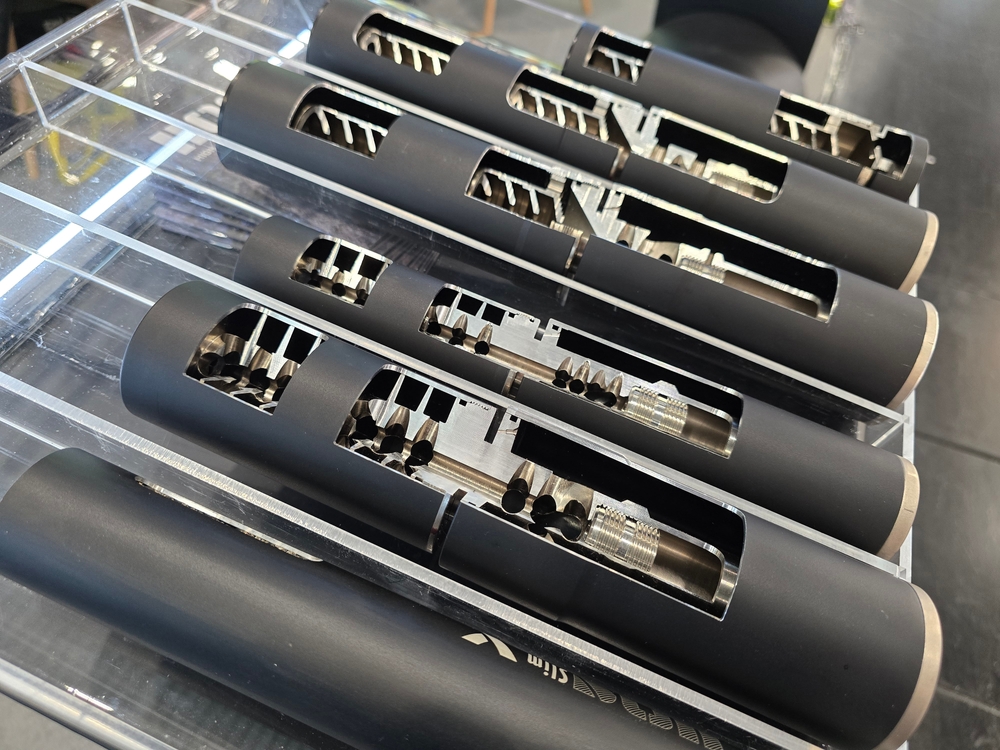
Los supresores (comúnmente llamados “silenciadores”, aunque en realidad no existe tal cosa como un arma “silenciosa”) han evolucionado significativamente debido a un auge en su popularidad y a la agilización del proceso de obtención del sello fiscal por parte de los distribuidores. Los tubos modernos ofrecen un rendimiento mejorado en cuanto a reducción de ruido, fiabilidad, facilidad de mantenimiento y tecnologías avanzadas de gestión de gases. A partir de 2025, la tecnología de los supresores continúa mejorando mediante innovaciones en ciencia de materiales y manufactura, como la impresión 3D y el diseño modular. A continuación, voy a ofrecer un breve análisis comparativo de cinco de los modelos de supresores más vendidos: el SilencerCo Omega 36M, Dead Air Sandman-S, SureFire SOCOM556-RC2, HUXWRX Flow 762 Ti y B&T Monoblock 762, con un enfoque en sus fortalezas y limitaciones en reducción de ruido, fiabilidad, facilidad de limpieza y gestión de gases.

El SilencerCo Omega 36M es reconocido por su versatilidad y modularidad. Aceptando una amplia gama de calibres, desde .22LR hasta .338 Lapua Magnum, este supresor se adapta a una gran variedad de usuarios. Su configuración modular permite ajustar entre un formato compacto para una mayor maniobrabilidad y una configuración más larga para una mejor supresión del sonido. En cuanto a reducción de ruido, ofrece un rendimiento sólido en todo el espectro, aunque puede no alcanzar el nivel máximo de silenciamiento de supresores diseñados específicamente para ciertos calibres. Construido en titanio y acero inoxidable, el Omega 36M ofrece alta fiabilidad bajo diversas condiciones de disparo. Aunque no es completamente accesible para el usuario, su construcción modular facilita el desmontaje y mantenimiento en comparación con las unidades completamente soldadas. No obstante, utiliza un sistema de deflectores tradicional que, aunque eficaz, tiende a generar mayor presión de retroceso en comparación con las alternativas modernas de flujo continuo.

El Dead Air Sandman-S ha desarrollado una base leal entre tiradores tácticos y profesionales que priorizan la resistencia y el rendimiento constante. Este supresor es particularmente eficaz en plataformas de 7.62mm, ofreciendo una excelente reducción de ruido sin comprometer la durabilidad. Su construcción presenta un núcleo de deflectores de Stellite completamente soldado, lo que garantiza resistencia incluso bajo fuego automático o altos volúmenes de disparos. Sin embargo, el Sandman-S es una unidad sellada, por lo que no está diseñado para ser desmontado o limpiado por el usuario. Usted debe confiar en la dinámica interna de los gases para limitar la acumulación o recurrir a limpieza profesional. Al igual que el Omega 36M, utiliza un sistema de deflectores tradicional que puede resultar en presión de retroceso y escape de gases, una desventaja común en los diseños sin flujo continuo.

El SureFire SOCOM556-RC2 representa un supresor de alto rendimiento diseñado para cumplir con las especificaciones militares de los Estados Unidos. Está optimizado para rifles de 5.56mm y ofrece un equilibrio entre una eficaz supresión de sonido y una fiabilidad operacional sostenida. Fabricado en Inconel y acero inoxidable, este modelo destaca en condiciones extremas, incluyendo fuego automático y ambientes de alta temperatura. Si bien su supresión de sonido puede no igualar la de modelos para calibres más grandes o de diseño de flujo continuo, ofrece un rendimiento constante con un impacto mínimo en el funcionamiento del arma. Al igual que el Sandman-S, el SOCOM556-RC2 es un supresor sellado y no accesible para el usuario, lo que limita la facilidad de limpieza. Utiliza una pila estándar de deflectores, lo cual puede causar un aumento de presión de retroceso, aunque ha sido cuidadosamente diseñado para mantener un flujo de gases aceptable en aplicaciones militares.

El HUXWRX Flow 762 Ti introduce un avance notable en tecnología de supresores mediante el uso de un diseño patentado de flujo continuo. En lugar de capturar el gas en una serie de cámaras, este modelo lo canaliza hacia adelante, reduciendo dramáticamente la presión de retroceso y el escape de gases que experimenta el tirador. Aunque no ofrece la menor supresión de decibelios, el sonido percibido es constante y más tolerable en distintos entornos. Fabricado con titanio impreso en 3D, el supresor es liviano, resistente y menos propenso a la fatiga estructural. Otra ventaja de su arquitectura de flujo continuo es la menor acumulación de carbono, lo que reduce la necesidad de limpieza y permite intervalos de mantenimiento más prolongados. Este enfoque innovador mejora significativamente la comodidad del tirador y la fiabilidad del sistema, especialmente cuando se usa en rifles operados por gas.

El B&T Monoblock 762 es un supresor de gama alta preferido por tiradores de precisión debido a su extraordinaria capacidad de supresión de ruido y calidad de construcción. En evaluaciones independientes, ha logrado la mayor reducción general de energía sonora entre más de 100 supresores probados. Construido con titanio impreso en 3D en una configuración monolítica, el supresor se beneficia de un diseño sin uniones que mejora la integridad estructural y el control de resonancia. A pesar de su impresionante rendimiento en supresión de sonido, el Monoblock 762 tiene algunas limitaciones prácticas. Al igual que varios otros en este grupo, no es accesible para el usuario, lo que complica su limpieza. Sin embargo, su avanzada geometría interna gestiona el flujo de gases con notable eficiencia, lo que contribuye a su reputación como uno de los supresores más silenciosos disponibles.

A continuación, se presenta un análisis comparativo que resume las fortalezas y debilidades relativas de estos cinco modelos:

Modelo de SupresorReducción de RuidoFiabilidadFacilidad de LimpiezaTecnología de Flujo de Gases
SilencerCo Omega 36MAltaAltaModeradaDeflectores Tradicionales
Dead Air Sandman-SAltaMuy AltaBajaDeflectores Tradicionales
SureFire SOCOM556-RC2ModeradaMuy AltaBajaDeflectores Tradicionales
HUXWRX Flow 762 TiModeradaAltaAltaDiseño de Flujo Continuo
B&T Monoblock 762Muy AltaAltaBajaDiseño Interno Avanzado

La elección de un supresor de arma de fuego, por supuesto, depende de los objetivos específicos del operador y del contexto operacional. Para quienes buscan flexibilidad en múltiples calibres y configuraciones, el SilencerCo Omega 36M ofrece una solución integral destacada. El Dead Air Sandman-S y el SureFire SOCOM556-RC2 son ideales para usos tácticos exigentes donde la durabilidad y la fiabilidad comprobada en el campo son fundamentales. Para usuarios que priorizan la gestión de la presión de retroceso y la comodidad del tirador, el HUXWRX Flow 762 Ti introduce un innovador control de gases sin exigir demasiado mantenimiento. Por último, para quienes exigen una supresión sonora superior y un rendimiento de precisión, el B&T Monoblock 762 se sitúa a la vanguardia. Es probable que la tecnología de supresores continúe evolucionando, con tendencias orientadas hacia diseños de flujo continuo, materiales más livianos y componentes modulares que ofrezcan mayor control y optimización del rendimiento al usuario. Jaguar ha lanzado un nuevo tubo con una tecnología de regulación de gases patentada denominada ‘Intermittent-Flow Technology’, que promete mucho. Si cumple con sus expectativas, merecerá estar entre los modelos destacados.

Por supuesto, cada supresor va a afectar el desplazamiento del punto de impacto (POI), generalmente de forma consistente y medible (a menudo entre 0.5 y 2 MOA), aunque esto varía según la combinación de arma y supresor. Si usted utiliza ópticas, querrá configurar dos perfiles: uno para disparos con supresor y otro sin él. Un tubo puede aumentar la velocidad de salida (debido al aumento de presión de retroceso), lo que podría alterar mínimamente la trayectoria del proyectil a larga distancia. Este cambio rara vez es significativo en enfrentamientos típicos de menos de 300 yardas, pero puede ser importante en disparos de precisión o francotiradores. Además, la reducción en el retroceso y el levantamiento del cañón facilita disparos de seguimiento más rápidos y precisos, una vez que usted se haya adaptado a la combinación de su tubo y arma.

Share this post:

Firearm Suppressors Today: A Comparative Review

firearms training, firearm instruction, firearm instructor, c. constantin poindexter

Suppressors (commonly called “silencers” even though there is no such thing as “silent”), have evolved significantly due to an explosion in popularity and streamlined tax-stamp processing by dealers. Modern tubes afford enhanced performance in noise reduction, reliability, ease of maintenance and advanced gas flow technologies. As of 2025, suppressor technology continues to improve through innovations in materials science and manufacturing, such as 3D printing and modular design. I am going to give a brief comparative analysis of five top-selling suppressor models: the SilencerCo Omega 36M, Dead Air Sandman-S, SureFire SOCOM556-RC2, HUXWRX Flow 762 Ti, and B&T Monoblock 762, with a focus on their strengths and limitations in noise reduction, reliability, cleaning, and gas management.

The SilencerCo Omega 36M is renowned for its versatility and modularity. Accommodating a wide range of calibers, from .22LR to .338 Lapua Magnum this suppressor suits a broad user base. Its modular configuration allows users to adjust between a compact setup for maneuverability and a longer configuration for improved sound suppression. In terms of noise reduction, it performs well across the spectrum but may not reach the peak quietness of suppressors tailored to specific calibers. Constructed from titanium and stainless steel, the Omega 36M delivers high reliability under various shooting conditions. Although it is not completely user-serviceable, its modular construction makes disassembly and maintenance more feasible than traditional fully welded units. However, the suppressor uses a traditional baffle system, which, while effective, tends to generate higher backpressure compared to modern flow-through alternatives.

The Dead Air Sandman-S has developed a loyal following among tactical shooters and professionals who prioritize ruggedness and consistent performance. This suppressor is particularly effective on 7.62mm platforms, offering excellent noise reduction without compromising durability. Its construction features a fully welded Stellite baffle core, which ensures resilience even under full-auto firing or high round counts. However, the Sandman-S is a sealed unit, meaning it is not designed for user disassembly or cleaning. Users must rely on internal gas dynamics to limit buildup or seek professional cleaning. Like the Omega 36M, it utilizes a traditional baffle system that can result in backpressure and gas blowback, a common drawback in non-flow-through suppressor designs.

The SureFire SOCOM556-RC2 represents a high-performance suppressor designed to meet U.S. military specifications. It is optimized for 5.56mm rifles and offers a balance between effective sound suppression and sustained operational reliability. Manufactured from Inconel and stainless steel, this model excels in harsh conditions, including full-auto and high-temperature environments. While its noise suppression may not rival larger-caliber or flow-through designs, it delivers consistent performance with minimal impact on weapon function. Like the Sandman-S, the SOCOM556-RC2 is a sealed suppressor and not user-serviceable, limiting ease of cleaning. It uses a standard baffle stack system, which may cause increased back-pressure, but it is carefully engineered to maintain acceptable gas flow for military applications.

The HUXWRX Flow 762 Ti introduces a notable advancement in suppressor technology through its use of a patented flow-through design. Rather than capturing gas within a series of chambers, this model channels it forward, dramatically reducing backpressure and the resulting blowback experienced by the shooter. While it does not offer the lowest decibel suppression, the perceived sound is consistent and more tolerable across different environments. Made from 3D-printed titanium, the suppressor is lightweight, strong, and less prone to structural fatigue. Another advantage of the flow-through architecture is a reduced rate of carbon buildup, which helps limit cleaning requirements and supports longer maintenance intervals. This innovative approach significantly enhances shooter comfort and system reliability, particularly when used with gas-operated rifles.

The B&T Monoblock 762 is a premium suppressor favored by precision shooters for its extraordinary noise suppression and build quality. In independent evaluations, it has achieved the highest overall reduction in sound energy among over 100 suppressors tested. Constructed using 3D-printed titanium in a monolithic configuration, the suppressor benefits from a seamless design that improves structural integrity and resonance control. Despite its impressive sound suppression performance, the Monoblock 762 has some practical limitations. Like several others in this group, it is not user-serviceable, making cleaning more complex. However, its advanced internal geometry manages gas flow with remarkable efficiency, which contributes to its reputation as one of the quietest suppressors available.

Below is a comparative analysis summarizing the relative strengths and weaknesses of these five models:

Suppressor ModelNoise ReductionReliabilityEase of CleaningGas Flow Technology
SilencerCo Omega 36MHighHighModerateTraditional Baffles
Dead Air Sandman-SHighVery HighLowTraditional Baffles
SureFire SOCOM556-RC2ModerateVery HighLowTraditional Baffles
HUXWRX Flow 762 TiModerateHighHighFlow-Through Design
B&T Monoblock 762Very HighHighLowAdvanced Internal Design

The choice of a firearm suppressor of course is guided by the operator’s specific objectives and operational context. For shooters seeking flexibility across multiple calibers and configurations, the SilencerCo Omega 36M offers a strong all-around solution. The Dead Air Sandman-S and SureFire SOCOM556-RC2 are ideal for rugged tactical use where durability and field-tested reliability are paramount. For users prioritizing backpressure management and shooter comfort, the HUXWRX Flow 762 Ti introduces innovative gas control without excessive maintenance demands. Lastly, for those who demand superior sound suppression and precision performance, the B&T Monoblock 762 stands at the forefront. Suppressor technology will likely continue to evolve, with trends pointing toward flow-through designs, lighter materials, and modular components that offer greater user control and performance optimization. Jaguar has released a new tube with a proprietary ‘Intermittent-Flow Technology’ gas regulation technology which looks good. If it lives up to its hype, will deserve to be among these.

Of course, each suppressor is going to affect POI shift, usually consistent and measurable (often within 0.5 to 2 MOA) but it will vary by firearm and suppressor combination. If you are using optics, you will want to take two optic profiles; one for suppressed and one for unsuppressed settings. A tube increases muzzle velocity (due to added backpressure), which may alter bullet trajectory marginally at long range. The change is rarely significant for typical engagements under 300 yards but may matter in precision shooting or sniping. Also, the reduction in recoil and muzzle rise are going to make follow-up shots faster and more accurate once you get the feel for your tube/firearm combination.

Share this post:

The DeepSeek Threat: A Counterintelligence and National Security Concern

deepseek, intelligence, counterintelligence, espionage, counterespionage, export control, spy

Artificial intelligence (AI) is emerging as a transformative force in global economic, technological and military domains. Among the newest threats in the domain of adversarial AI is “DeepSeek,” a China-based generative AI platform. According to the bipartisan House Select Committee on the CCP, DeepSeek poses a serious national security risk to the United States, and I pose a grave counterintelligence one as well. I agree with the Committee’s four primary findings regarding DeepSeek and have included here some corroborating evidence and light analysis of the platform’s broader counterintelligence implications.

I. Data Funnel to the PRC through Military-Linked Infrastructure

DeepSeek funnels Americans’ data to the PRC through backend infrastructure connected to a U.S.-sanctioned Chinese military company. This is consistent with open-source cybersecurity and export control reporting. DeepSeek is affiliated with Beijing DeepSeek Technology Co., which maintains close technical cooperation with state-controlled firms like Tsinghua Tongfang Co., a subsidiary of China Electronics Corporation (CEC), a company sanctioned by the U.S. Department of Defense for its affiliation with the People’s Liberation Army (PLA). U.S. officials have long warned that Chinese firms (even ostensibly private ones) are legally required under China’s 2017 National Intelligence Law to support state intelligence activities. Thus, even passive collection of user queries and metadata from American users can be directly routed to China’s military-civil fused architecture. Cloud traffic analysis tools confirm that some of DeepSeek’s endpoints resolve to IP addresses controlled by Alibaba Cloud and Huawei Cloud, two platforms repeatedly identified for surveillance and data harvesting risks.

II. Covert Propaganda Alignment with CCP Objectives

DeepSeek’s second threat involves covert manipulation of search and response results to align with CCP propaganda. Chinese 2021 ‘Regulations on Recommendation Algorithms’ mandates that AI systems uphold “core socialist values.” Content analysis of DeepSeek’s outputs reveals alignment with these mandates. For instance, when queried about events such as the Tiananmen Square massacre or Uyghur internment camps, DeepSeek either deflects, omits content, or offers CCP-aligned narratives. This contrasts with U.S.-based LLMs that provide factual accounts supported by open-source citations. This form of algorithmic censorship mirrors practices deployed by Baidu and Sogou and serves as a soft power tool for narrative control.

III. Theft of U.S. AI Models through Distillation Techniques

The Committee finds that DeepSeek likely used model distillation to unlawfully replicate U.S. LLMs, a postulate supported by emerging AI security analyses. Distillation, a process whereby a smaller model is trained to mimic a larger one, is legal when trained on open data but when done using unauthorized API access or scraping against licensed outputs, it constitutes intellectual property theft. Reports from AI security firm Mithril Analytics suggest that DeepSeek’s model shows pattern duplication, formatting, and semantic behavior strikingly similar to OpenAI’s GPT-3.5 and Anthropic’s Claude-1.6 This aligns with China’s broader strategy of intellectual property misappropriation, which the Office of the U.S. Trade Representative has labeled a “national policy.”

IV. Use of Prohibited NVIDIA Chips in Defiance of U.S. Export Controls

The fourth finding, that DeepSeek operates on advanced U.S.-made chips which circumvent export restrictions, reflects a broader problem of enforcement challenges in U.S. semiconductor control policy. According to internal supply chain tracking data and reporting from The Information and Reuters, DeepSeek appears to operate on thousands of NVIDIA A100 and H100 GPUs. These high-performance chips were restricted for export to China under the Biden Administration’s 2022 CHIPS Act enforcement measures. Nevertheless, Chinese AI companies have procured these processors through shell companies and resellers in Singapore, Hong Kong, and the UAE. The massive computing power needed to train and operate a GPT-scale model would be nearly impossible without these restricted components, confirming that DeepSeek benefits from illicitly obtained U.S. hardware.

Counterintelligence Threat of DeepSeek

DeepSeek poses a significant and multifaceted counterintelligence threat to the United States and its allies. The platform’s capacity to collect metadata, behavioral data, and potentially personally identifiable information (PII) from Americans creates an intelligence bonanza for Chinese FIS. Unlike traditional espionage, AI systems like DeepSeek operate invisibly and at scale, accumulating user data that can be used for profiling, influence operations, and further AI training purposes that effectively turn every American interaction into an exploitable data point.

DeepSeek represents a vector for information warfare. By manipulating answers to politically sensitive questions, promoting false equivalency in authoritarian narratives, and suppressing democratic values, the platform operates as a digital emissary of the CCP’s ideological and subversive goals. Such influence is subtle, persistent, and if not countered, capable of reshaping discourse as we have observed within our own political discourse.

The use of stolen U.S. intellectual property to build DeepSeek creates long-term strategic disadvantage. This is not a new peril. Not only does IP theft compromise American innovation, but it enables a hostile foreign power to accelerate its AI capability with limited investment. The widespread use of DeepSeek in academic or research settings could further enable China to monitor cutting-edge developments in Western institutions of higher education, R&D laboratories and to conduct surveillance on American professionals for recruitment by Chinese FIS or its allied FIEs.

Further, the misuse of restricted U.S. technology in DeepSeek is a direct challenge to the U.S. export control regime. The failure to prevent such chips from reaching adversarial AI projects undermines the deterrent effect of these restrictions and signals enforcement vulnerabilities to other hostile actors. This threat is potentially multiplicative as the CCP may allow restricted technology delivery to other state and non-state threat actors.

These grave threats demand a comprehensive counterintelligence and more broadly, national security strategy, one that includes aggressive export control enforcement, increased funding for AI provenance tracking, sanctions against companies that enable illicit procurement, and public awareness campaigns warning users of the risks posed by foreign AI platforms. Data is NOT merely informational. It is strategic. DeepSeek, if left unchecked, could be the spearhead of the CCP’s broader ambition to dominate the next frontier of digital power.

~ C. Constantin Poindexter, MA in Intelligence Studies, Graduate Certificate in Counterintelligence, JD, NICCS/CICS Certified OSINT

Footnotes

U.S. Department of Defense. “DOD Releases List of Additional ‘Communist Chinese Military Companies’ Operating in the U.S.” (2020).

National Intelligence Law of the PRC, Articles 7 and 10 (2017).

Recorded Future. “Chinese Cloud Providers and the Global Data Exfiltration Risk.” (2023).

Cyberspace Administration of China. “Provisions on the Administration of Algorithmic Recommendation for Internet Information Services.” (2021).

Freedom House. “China’s Model of Digital Authoritarianism.” (2022).

Mithril Analytics. “Behavioral Fingerprinting of LLMs: Identifying Unauthorized Model Replication.” (2024).

Office of the U.S. Trade Representative. “2023 Special 301 Report on Intellectual Property Rights.”

The Information. “Inside China’s Underground Chip Market.” (2024).

Reuters. “Exclusive: China’s AI Firms Bypass U.S. Chip Ban with Grey Market Imports.” (2024).

Share this post:

Challenges Facing Surety Companies: A Bondsman’s Perspective

surety, surety bond, surety bonds, c. constantin poindexter, reinsurer, reinsurance

The surety industry, a vital niche within the broader insurance and financial services landscape, is currently facing transformative challenges that threaten traditional underwriting models, profitability and long-term sustainability. While by no means exhaustive, I’d like to share five dominant themes that from my perspective emerge as most pressing issues: rising default risk in a volatile economy, a shifting regulatory landscape, the pressure to innovate underwriting practices while constrained by legacy systems, tightening reinsurance availability, and the industry-wide imperative of talent and succession planning. The following are these issues, case examples and some insight into how surety companies might strategically respond.nd.

Rising Default Risk in a Volatile Economy

Contract surety bonding represents a significantly larger portion of premium revenues. The risk of contractor default has grown sharply in recent years due to economic volatility, inflationary pressures, and constrained access to credit. New tariff regimes will likely exacerbate these pressures however that is a topic better addressed later in the year. An illustrative case involves a North Carolina general contractor who declared Chapter 7 bankruptcy during the construction of a high school. The surety on the project was compelled to intervene, tender a replacement contractor, and respond to over three million dollars in payment bond claims (Surety & Fidelity Association of America [SFAA], 2022). This example underscores the heightened financial exposure that sureties face as economic conditions deteriorate and underscores the importance of rigorous underwriting.

Shifting Regulatory Landscape

New and impending regulations are reshaping the risk profile and capital structure requirements of surety operations. One of the most significant developments is the implementation of Basel IV, a global regulatory framework that will require surety-affiliated financial institutions to increase capital reserves. This shift, effective July 2025, may restrict liquidity and limit the ability of sureties to write new business without adjusting their risk appetites (Brown & Brown, 2024). RWAs calculated using internal models will not be allowed to fall below 72.5%. While ostensibly this will affect banking institutions involved in the sector, it is instructive to surety companies that may face RBC changes that regulators may choose to implement. Bottom line, surety companies will need to be more agile in managing capital efficiency and compliance risk.

Underwriting Innovation vs. Legacy Systems

The industry is under increasing pressure to adopt advanced underwriting platforms, data analytics, and artificial intelligence. Many surety carriers continue to rely on legacy IT infrastructure and unformatted data sets (especially class loss histories). Allianz Trade’s issuance of a sixty million dollar performance bond for a multinational’s operations in Brazil is a prime example of how modern underwriting capabilities, international partnerships, and legal agility are becoming essential (Allianz Trade, 2024). This case illustrates that firms with outdated systems may struggle to compete for complex and international business, highlighting the urgent need for digital transformation. There is big talk about “Enhanced Underwriting”. The use of advanced tools (A.I.), technologies, and analytical methodologies to improve the evaluation of risk, creditworthiness, and project viability are imperative. Predictive analysis is commonly identified as the eight hundred pound gorilla in the room, however, machine learning models and statistical tools may not be sufficient. Contract surety is a “relationship” business so e-driven underwriting is not going to be a panacea.

Reinsurance Tightening

Surety companies are facing tightening reinsurance markets, particularly for high bond-penalty obligations and more especially in jurisdictions with litigious environments. Donald Trump’s inability to obtain a $464 million appeal bond in a civil fraud case, despite soliciting over thirty sureties (Stempel & Pierson, 2024) is a case in point. The industry’s collective reluctance reveals in part a growing conservatism in the reinsurance sector and the practical limitations faced by clients that might be considered highly creditworthy and solvent. We in the surety sector know the supersedeas obligation and collateralize accordingly, however, reinsurers stand on cessionary underwriting fundamentals that do not necessarily reflect “what we know”. The need for sureties to reassess their treaty relationships and reinsurance structures is imperative.

Talent and Succession Planning

The surety industry’s talent pool is aging. A shortage of specialized underwriters and senior corporate leadership threaten long-term capacity. A recent study found that small and medium-sized businesses frequently encounter difficulties obtaining surety bonds due to the lack of knowledgeable underwriters who understand their operational realities (Muriithi et al., 2022). As experienced professionals retire, the industry must invest in recruitment, mentorship, and education programs to develop the next generation of underwriting and claims professionals. Large ongoing concerns are not immune. The Harvard Business Review offers a case study of succession that worked out well (“The High Cost of Poor Succession Planning”) however, it could easily have gone the other way. The authors’ observations deserve serious consideration.

Conclusion

Each of these five challenges; economic volatility, regulatory transformation, digital lag, reinsurance pressure, and talent scarcity, represents a critical pivot point for surety companies, currently. Addressing these concerns requires strategic investment, policy advocacy, technology integration, and a strong emphasis on human capital development. Firms that succeed will be those that can stick to underwriting discipline in risk management but simultaneously embrace innovation, or we will not enjoy growth nor acceptable profitability. The point here is focus, reframing and doubling-down on agility in what appears to be a volatile and rapidly shifting risk landscape.

~ C. Constantin Poindexter, MA, JD, CPCU, AFSB, ASLI, ARe

References

Allianz Trade. (2024). Surety bond case study: Performance bond for a Brazilian project. Retrieved from https://www.allianz-trade.com/en_US/surety-bonds/surety-bonds-case-study.html

Brown & Brown. (2024). Surety Q3 2024 Market Trends. Retrieved from https://www.bbrown.com/us/insight/two-minute-takeaway-surety-q3-2024-market-trends

Muriithi, S., Louw, L., & Radloff, S. E. (2022). SMEs and the Surety Bonding Market: Exploring Underwriter Challenges. Managerial and Decision Economics, 43(3), 684–696. https://doi.org/10.1002/mde.4447

Stempel, J., & Pierson, R. (2024, March 18). Trump has failed to get appeal bond for $454 million civil fraud judgment. Reuters. Retrieved from https://www.reuters.com/legal/trump-has-failed-get-appeal-bond-454-mln-civil-fraud-judgment-lawyers-say-2024-03-18

Surety & Fidelity Association of America. (2022). Surety Case Study: North Carolina Public Project Completion. Retrieved from https://suretyinfo.org/?wpfb_dl=150

Gregory Nagel and Carrie Green, “The High Cost of Poor Succession Planning”, HBR, May-June 2021, https://hbr.org/2021/05/the-high-cost-of-poor-succession-planning

Share this post:

La Medida Cautelar y la Fianza

medida cautelar, injunction, fianza, fianzas, fianza judicial, fianza de tribunal, surety one, suretyone.com, c. constantin poindexter

Una orden judicial de “injuction” (medida cautelar) es un recurso judicial poderoso que puede afectar significativamente los derechos y la conducta de las partes durante un litigio. El mecanismo de la fianza para medidas cautelares es un componente fundamental del proceso de reparación equitativa, ya que ofrece una garantía financiera especial a las partes afectadas en caso de que posteriormente se determine que la medida cautelar fue concedida de manera improcedente. En este escrito, exploro la base legal y la aplicación de las fianzas en medidas cautelares, con un breve análisis comparativo de los estatutos y prácticas relevantes en el sistema judicial federal y en los estados de California, Illinois y Carolina del Norte.

Por supuesto, cada estado cuenta con su propio régimen legal respecto a este tipo de fianza, por lo que no pretendo realizar una comparación exhaustiva, sino más bien observar algunas jurisdicciones en las que se emiten MUCHAS de estas fianzas y donde también existe jurisprudencia relevante. Evaluaré algunas similitudes y divergencias en el lenguaje legal, la interpretación judicial y la aplicación procesal, destacando las implicaciones para los litigantes, los tribunales y las compañías de fianzas.

Introducción

Las medidas cautelares son un componente central de los remedios equitativos en la jurisprudencia estadounidense, diseñadas para mantener el statu quo o prevenir daños irreparables mientras se resuelve el litigio de fondo. No obstante, debido a su potencial carácter disruptivo, los tribunales suelen condicionar la concesión de estas medidas al otorgamiento de una fianza, conocida como “fianza de medida cautelar” o “garantía judicial”. Este mecanismo cumple una función esencial en el equilibrio de intereses de justicia y en la prevención del abuso de las medidas equitativas. Las jurisdicciones federales y estatales han adoptado diversos marcos normativos y procesales para este tipo de fianzas, reflejando diferentes consideraciones de política pública y filosofías judiciales.

Estatuto federal sobre fianzas en medidas cautelares

En el ámbito federal, las fianzas están reguladas por la Regla 65(c) de las Reglas Federales de Procedimiento Civil, la cual dispone:

“El tribunal podrá emitir una medida cautelar preliminar o una orden de restricción temporal únicamente si el solicitante otorga una garantía en la cantidad que el tribunal considere apropiada para cubrir los costos y daños sufridos por cualquier parte que resulte haber sido indebidamente restringida o afectada.”

Esta regla deja a discreción del tribunal la determinación del monto de la fianza, aunque su exigencia es obligatoria salvo en circunstancias excepcionales. El propósito de la Regla 65(c) es asegurar que la parte afectada pueda recuperar daños si se determina que la medida no debió haberse emitido. Por lo tanto, la fianza funciona como una limitación de responsabilidad: los daños por una medida indebida generalmente son recuperables solo hasta el monto de la fianza. (Véase Grupo Mexicano de Desarrollo, S.A. v. Alliance Bond Fund, Inc., 527 U.S. 308 (1999)).

Los tribunales tienen discreción para establecer el monto de la fianza, y las cortes de apelación normalmente respetan la decisión del tribunal de primera instancia salvo que constituya un abuso de dicha discreción. En Apple Inc. v. Samsung Electronics Co., el Distrito Norte de California exigió a Apple una fianza de $95.6 millones para emitir una medida cautelar preliminar, ejemplificando lo que está en juego.

Estatuto de California sobre fianzas en medidas cautelares

El régimen legal de California está codificado en el Código de Procedimiento Civil de California, §§ 529–532. El artículo 529 establece:

“Al conceder una medida cautelar, el tribunal o juez debe exigir una garantía por parte del solicitante, con o sin fiadores, en la suma que el tribunal o juez determine…”

El estatuto establece que la fianza garantiza el pago de daños a la parte restringida si el tribunal determina que la medida fue improcedente. Al igual que la norma federal, la ley de California exige la fianza como condición previa para emitir una medida cautelar, pero permite mayor flexibilidad respecto a los requisitos de fianza y fiador.

Un aspecto destacado de la ley californiana es su especificidad en cuanto a los daños recuperables a través de la fianza, incluyendo honorarios legales y daños consecuenciales, siempre que la medida haya sido improcedente. El artículo 534 también permite suspender una medida cautelar si la fianza es insuficiente o mal ejecutada.

Los tribunales de California también han interpretado la ley para permitir reclamaciones más allá del monto de la fianza bajo ciertas teorías equitativas, aunque esta interpretación sigue siendo controvertida. En White v. Davis, 30 Cal.4th 528 (2003), la Corte Suprema de California permitió reclamos por daños contra el Estado, pese a la existencia de inmunidades legales.

Estatuto de Illinois sobre fianzas en medidas cautelares

En Illinois, los requisitos están regulados por el artículo 735 ILCS 5/11-103 (Código de Procedimiento Civil), el cual establece:

“Ninguna medida cautelar preliminar u orden de restricción temporal podrá emitirse sino mediante la presentación de una garantía por parte del solicitante, en la suma que el tribunal estime adecuada, para el pago de los costos y daños que puedan haber sido incurridos o sufridos por cualquier parte que resulte haber sido indebidamente afectada…”

Los tribunales de Illinois mantienen una visión relativamente estricta de esta exigencia. La falta de presentación de la fianza puede invalidar la medida cautelar, y la recuperación de daños se limita generalmente al monto indicado, salvo que la fianza haya sido obtenida fraudulentamente.

Un precedente importante es In re Marriage of Newton, 2011 IL App (1st) 090683, donde el tribunal de apelaciones sostuvo que los daños deben ser claramente probados y estar directamente vinculados a la emisión de la medida. La ley permite que una compañía afianzadora actúe como fiador, pero la fianza debe ser presentada al mismo tiempo que se emite la medida cautelar. A diferencia de las cortes federales, los tribunales de Illinois son más estrictos en cuanto al cumplimiento formal de los requisitos legales, reflejando un enfoque más conservador.

Estatuto de Carolina del Norte sobre fianzas en medidas cautelares

Carolina del Norte regula estas fianzas bajo el Estatuto General § 1A-1, Regla 65(c) y G.S. § 1-485 y siguientes, que siguen el modelo federal con ciertos matices estatales. G.S. § 1-485 dispone:

“No se concederá ninguna orden de restricción sin que la parte solicitante otorgue una garantía con suficiente fiador, que será aprobado por el tribunal…”

La fianza debe ser suficiente para cubrir los daños si se determina que la medida fue improcedente. Por lo general, los tribunales de Carolina del Norte exigen la fianza, salvo que la parte afectada la renuncie o el caso se enmarque dentro de una excepción, como demandas de interés público o por parte de demandantes indigentes.

Notablemente, la ley se refiere explícitamente a la fianza como un “compromiso” (undertaking), y los tribunales han interpretado este término como una obligación de tipo fiduciario para los fiadores y beneficiarios. En A.E.P. Industries, Inc. v. McClure, 301 N.C. 393 (1980), la Corte Suprema del estado sostuvo que la fianza debe ser interpretada y aplicada estrictamente conforme a sus términos. El enfoque de Carolina del Norte es relativamente formalista y consistente con una tradición de cumplimiento procesal estricto, exigiendo a las partes observar cuidadosamente las obligaciones tanto sustantivas como procesales.

Análisis Comparativo

6.1. Discrecionalidad y Obligación
Las cuatro jurisdicciones exigen la presentación de una fianza antes de conceder medidas cautelares preliminares. Sin embargo, la discrecionalidad del tribunal varía. Las normas federales y de Carolina del Norte otorgan cierta flexibilidad en cuanto al monto, pero imponen la obligación salvo renuncia. California e Illinois permiten mayor flexibilidad en términos de ejecución y condiciones.

6.2. Daños Recuperables
En todas las jurisdicciones se reconocen daños por medidas indebidas, pero el alcance varía. En el ámbito federal e Illinois, la recuperación se limita generalmente al monto de la fianza. California y Carolina del Norte permiten interpretaciones más amplias en casos excepcionales. California es la más liberal, permitiendo daños consecuenciales y honorarios legales. Cabe advertir aquí sobre la “inflación social”: aunque las compañías de fianzas desean que sus obligaciones se limiten estrictamente al monto indicado en la fianza, varios tribunales han superado estos límites mediante orden judicial. (Ver más en mi artículo sobre inflación social).

6.3. Formalismo Procesal
Illinois y Carolina del Norte reflejan un enfoque más formalista, exigiendo presentación contemporánea de la fianza y cumplimiento estricto del lenguaje legal. California adopta un enfoque más equitativo, permitiendo excepciones en interés de la justicia.

6.4. Requisitos de Fianza y Fiadores
Cada jurisdicción permite fiadores individuales o corporativos, aunque los estándares varían. Carolina del Norte exige aprobación judicial explícita del fiador. California permite fianzas sin fiadores en ciertos casos. Las cortes federales suelen aplicar prácticas comerciales estándar, pero TODAS las obligaciones deben ser ejecutadas por compañías que figuren en el Circular del Tesoro de EE.UU. como emisores aceptables.

Consideraciones de Política Pública

La fianza en medidas cautelares cumple una doble función: disuadir solicitudes frívolas y proteger a los demandados contra perjuicios derivados de restricciones improcedentes. Sin embargo, estos objetivos deben equilibrarse con el interés público de conceder alivio en casos meritorios. Una fianza excesiva puede desalentar reclamos legítimos, especialmente de demandantes con recursos limitados. Una exigencia muy baja puede no proteger adecuadamente a las partes afectadas. Por ello, los tribunales deben ejercer juicio matizado, especialmente cuando se equilibran intereses privados con el bien público, como en casos ambientales o de derechos civiles.

Además, el rol de los fiadores en estos mecanismos no puede subestimarse. Las compañías de fianzas asumen el riesgo del pago de daños y deben evaluar la credibilidad del solicitante y la probabilidad de resultados adversos. En ese sentido, las fianzas no son solo instrumentos legales, sino también financieros, donde consideraciones actuariales e instrumentos de suscripción se entrelazan con la justicia procesal.

El mecanismo de la fianza en medidas cautelares es una herramienta esencial del litigio civil en EE.UU., proporcionando un método estructurado para compensar daños causados por medidas judiciales provisionales. Aunque el sistema federal y los estados de California, Illinois y Carolina del Norte exigen fianzas antes de emitir medidas cautelares, existen diferencias sustanciales en cuanto a discrecionalidad, daños permitidos y rigidez procesal.

Los profesionales del derecho deben comprender estas diferencias para navegar eficazmente por el proceso de medidas cautelares. Futuras revisiones del recurso cautelar y las fianzas que lo respaldan deberían considerar datos empíricos sobre los resultados de estas fianzas, tendencias judiciales en su fijación y el papel evolutivo de los fiadores en el litigio civil, a fin de ofrecer mejor orientación tanto al poder judicial como al foro legal.

~ C. Constantin Poindexter, MA, JD, CPCU, ASLI, ARe, AFSB

Referencias

• 735 Ill. Comp. Stat. 5/11-103 (Illinois Code of Civil Procedure).
• A.E.P. Industries, Inc. v. McClure, 301 N.C. 393, 271 S.E.2d 226 (1980).
• Apple Inc. v. Samsung Electronics Co., No. 12-CV-00630, 877 F. Supp. 2d 838 (N.D. Cal. 2012).
• Cal. Civ. Proc. Code §§ 529–534.
• Fed. R. Civ. P. 65(c).
• Grupo Mexicano de Desarrollo, S.A. v. Alliance Bond Fund, Inc., 527 U.S. 308 (1999).
• In re Marriage of Newton, 2011 IL App (1st) 090683.
• N.C. Gen. Stat. § 1-485.
• White v. Davis, 30 Cal. 4th 528, 68 P.3d 74 (2003).

Share this post:

Injunction Bonds, a Brief Comparative View

injuction, injuction bond, federal injunction bond, surety, surety bond, surety bonds, court bond, court surety, judicial surety, c. constantin poindexter, surety one;

An injunction is a powerful judicial remedy that can significantly impact the rights and conduct of parties during litigation. The injunction bond mechanism is a critical component of the equitable relief process, providing special financial assurance to enjoined parties in the event that an injunction is later found to have been improvidently granted. I am going to explore the legal foundation and application of injunction bonds here, with a brief comparative analysis of relevant statutes and practices in the federal judiciary and in the states of California, Illinois, and North Carolina. Of course, each state has its own statutory regime with regards to the injunction bond so I do not mean this an exhaustive comparison paper but rather a look at some of the venues in which MANY of these bonds are issued and where significant precedent also exists. I am going to assess some similarities and divergences in statutory language, judicial interpretation, and procedural application, highlighting implications for litigants, courts, and surety companies.

  1. Introduction

Injunctions are a core component of equitable remedies in U.S. jurisprudence, designed to maintain the status quo or prevent irreparable harm pending final adjudication. However, due to their potentially disruptive nature, courts often condition the granting of injunctions on the posting of a bond, known as an “injunction bond” or “undertaking.”

This bond acts as a financial guarantee for the enjoined party, allowing for compensation should the injunction later be deemed wrongful. This mechanism plays an essential role in balancing the interests of justice and preventing abuse of equitable relief. Federal and state jurisdictions have adopted varying statutory and procedural frameworks for injunction bonds, reflecting differing policy considerations and judicial philosophies.

  1. The Federal Injunction Bond Statute and Rule

In federal court, injunction bonds are governed by Federal Rule of Civil Procedure 65(c), which provides:

“The court may issue a preliminary injunction or a temporary restraining order only if the movant gives security in an amount that the court considers proper to pay the costs and damages sustained by any party found to have been wrongfully enjoined or restrained.”

This rule leaves the determination of the bond amount to the discretion of the court, though the requirement itself is mandatory unless waived in exceptional circumstances. The purpose of Rule 65(c) is to ensure that the enjoined party can recover damages if it is ultimately found that the injunction should not have been issued. The bond therefore functions as a limitation of liability; damages for wrongful injunction are typically recoverable only up to the amount of the bond. (See Grupo Mexicano de Desarrollo, S.A. v. Alliance Bond Fund, Inc., 527 U.S. 308 (1999)).

Courts have discretion to set bond amounts, and appellate review typically defers to the district court’s findings unless they constitute an abuse of discretion. In Apple Inc. v. Samsung Electronics Co., the Northern District of California required Apple to post a $95.6 million bond for a preliminary injunction, exemplifying the high stakes involved.

  1. California’s Injunction Bond Statute

California’s statutory scheme for injunction bonds is codified in California Code of Civil Procedure §§ 529-532. Section 529 requires that:

“On granting an injunction, the court or judge must require an undertaking on the part of the applicant, with or without sureties, in such sum as the court or judge may direct…”

The statute provides that the bond secures payment of damages to the restrained party if the court determines that the injunction was wrongfully issued. Like the federal rule, the California statute makes the bond a condition precedent for the issuance of a preliminary injunction, but it gives broader leeway regarding surety requirements.

A key feature of California law is the specificity with which it permits recovery against the bond, including attorney’s fees and consequential damages, provided the injunction was wrongful. Section 534 also permits the court to stay an injunction if the bond is insufficient or improperly executed.

California courts have also interpreted the statute to permit claims beyond the bond under certain equitable theories, though this remains controversial. In White v. Davis, 30 Cal.4th 528 (2003), the California Supreme Court permitted claims for wrongful injunction damages against the state, though immunities were implicated.

  1. Illinois’ Injunction Bond Statute

In Illinois, injunction bond requirements are governed by 735 ILCS 5/11-103 (Code of Civil Procedure), which states:

“No preliminary injunction or temporary restraining order shall issue except upon the giving of security by the applicant, in such sum as the court deems proper, for the payment of such costs and damages as may be incurred or suffered by any party who is found to have been wrongfully enjoined or restrained…”

Illinois courts take a relatively strict view of the bond requirement. Failure to post the bond can invalidate the injunction, and recovery under the bond is typically limited to the face amount unless the bond was obtained fraudulently.

An important Illinois precedent is In re Marriage of Newton, 2011 IL App (1st) 090683, in which the appellate court held that damages must be clearly proven and directly linked to the issuance of the injunction. Illinois law permits a surety or surety company to act as the bond provider, but the bond must be posted contemporaneously with the injunction order.

Unlike federal courts, Illinois courts are somewhat more rigid in demanding adherence to the statutory bond requirement, reflecting a more conservative approach to judicial equitable discretion.

  1. North Carolina’s Injunction Bond Statute

North Carolina governs injunction bonds under North Carolina General Statutes § 1A-1, Rule 65(c) and G.S. § 1-485 et seq., which are modeled closely after the Federal Rules but include state-specific nuances. G.S. § 1-485 mandates that:

“No restraining order shall be granted until the party applying therefor shall give an undertaking, with sufficient surety, to be approved by the court…”

The bond must be sufficient to cover damages in case the injunction is later found to be unwarranted. North Carolina courts have generally required the bond unless the enjoined party waives it or the case falls under an exception, such as actions involving indigent plaintiffs or public interest litigation.

Notably, North Carolina’s statute explicitly refers to the bond as an “undertaking,” and courts have interpreted this term to impose fiduciary-like obligations on sureties and parties who benefit from the bond. In A.E.P. Industries, Inc. v. McClure, 301 N.C. 393 (1980), the North Carolina Supreme Court held that a bond must be strictly construed and enforced against the principal according to its terms.

North Carolina’s approach is relatively formalistic and consistent with a broader tradition of procedural adherence, requiring parties to observe both substantive and procedural obligations closely when seeking injunctive relief.

  1. Comparative Analysis

6.1. Discretion and Mandates

All four jurisdictions require the posting of a bond before granting preliminary injunctive relief. However, the discretion afforded to the courts varies. The federal rule and North Carolina statutes give courts some discretion in setting the amount but make the bond mandatory unless waived. California and Illinois statutes require bonds but allow more flexibility in determining their terms and execution.

6.2. Recoverable Damages

All jurisdictions recognize damages for wrongful injunctions, but the scope of those damages varies. Federal courts and Illinois limit recovery strictly to the bond amount, while California and North Carolina permit broader interpretations in exceptional cases. California is most liberal in permitting consequential damages and attorney’s fees. I have to insert a word of caution here about “social inflation”. While sureties would like to assume that their obligations will be strictly limited to the bond penalties that appear thereon, several courts have obviated those limits by order. (See more on my piece about social inflation here).

6.3. Procedural Formality

Illinois and North Carolina reflect a more formalistic approach to procedural compliance, emphasizing the importance of contemporaneous bond issuance and strict adherence to statutory language. California courts take a more equitable approach, occasionally allowing exceptions in the interest of justice.

6.4. Suretyship Requirements

Each jurisdiction allows for individual or corporate sureties, though the standards of sufficiency differ. North Carolina requires court approval of sureties explicitly, and California allows for bonds without sureties in certain circumstances. Federal courts typically rely on standard commercial surety practices unless otherwise directed however, ALL obligations issued in federal matters must be executed by surety companies that appear on the current U.S. Treasury Circular of acceptable obligors.

  1. Policy Considerations and Implications

The injunction bond serves dual purposes: deterring frivolous or speculative injunction requests and protecting defendants from losses due to improper restraints. However, these goals must be balanced against the public interest in granting relief in meritorious cases. Too high a bond requirement may chill legitimate claims, particularly from plaintiffs with limited financial resources. Too low a requirement may fail to protect enjoined parties adequately. Courts must therefore exercise nuanced judgment, particularly when balancing private interests with the public good, such as in environmental or civil rights litigation.

Additionally, the role of sureties in these mechanisms cannot be overstated. Surety providers bear the risk of paying damages and must evaluate the principal’s credibility and the likelihood of adverse judicial findings. As such, injunction bonds serve not only as legal instruments but also as financial ones, where actuarial and underwriting considerations intersect with procedural justice.

The injunction bond mechanism is an essential tool in U.S. civil litigation, providing a structured method to compensate for harm caused by provisional judicial remedies. While the federal system and the states of California, Illinois, and North Carolina all mandate bonds before issuing injunctions, they differ meaningfully in the scope of discretion, permissible damages, and procedural rigidity.

Legal practitioners must understand these distinctions to navigate injunctive relief effectively. Future review of the injunction remedy and the surety bonds that secure them should explore empirical data on injunction bond outcomes, judicial trends in bond-setting, and the evolving role of sureties in civil litigation to better inform both the judiciary and the bar.

~ C. Constantin Poindexter, MA, JD, CPCU, ASLI, ARe, AFSB

References

735 Ill. Comp. Stat. 5/11-103 (Illinois Code of Civil Procedure).

A.E.P. Industries, Inc. v. McClure, 301 N.C. 393, 271 S.E.2d 226 (1980).

Apple Inc. v. Samsung Electronics Co., No. 12-CV-00630, 877 F. Supp. 2d 838 (N.D. Cal. 2012).

Cal. Civ. Proc. Code §§ 529–534.

Fed. R. Civ. P. 65(c).

Grupo Mexicano de Desarrollo, S.A. v. Alliance Bond Fund, Inc., 527 U.S. 308 (1999).

In re Marriage of Newton, 2011 IL App (1st) 090683.

N.C. Gen. Stat. § 1-485.

White v. Davis, 30 Cal. 4th 528, 68 P.3d 74 (2003).

Share this post: