Silent Surveillance: The Threat of Tire Pressure Monitors

tire pressure monitoring system surveillance, intelligence, counterintelligence, counterespionage, C. Constantin Poindexter, CIA, NSA, DIA

Sneaking a covert GPS tracker into (or under) a motor vehicle is no longer spy-chic. Surveillants and counterintelligence players see a discreet new option.

In the contemporary era of information operations, the adversary’s toolkit has expanded beyond surveillance and HUMINT to include the exploitation of ubiquitous, low-power wireless signals. As a counterintelligence operator or surveillance professional, maintaining operational security requires a granular understanding of how standard automotive telemetry can be weaponized for tracking and profiling. While traditionally viewed as a mere safety mechanism, the Tire Pressure Monitoring System (TPMS) presents a sophisticated, low-cost vector for persistent surveillance. Here are my thoughts, technical architecture of TPMS vulnerabilities, the operational utility of its data streams, and the strategic implications for intelligence collection and target analysis, the new “AUTO-INT”.

Technical Architecture and Signal Vulnerabilities

The TPMS functions as a distributed sensing network within a vehicle, designed to ensure safety and optimize fuel efficiency by alerting drivers to under-inflated tires. In the United States, Federal Motor Vehicle Safety Standard (FMVSS) No. 138 mandates the use of direct TPMS in all light vehicles manufactured after September 2007 (Kobayashi, 2019). Technically, these systems consist of pressure sensors located within each wheel assembly, which periodically transmit radio frequency (RF) data to a central receiver module.

The critical vulnerability for intelligence collection lies in the transmission protocol and data integrity. Unlike modern communication standards, TPMS signals are transmitted in clear text without any form of encryption or authentication (Kobayashi, 2019). This lack of cryptographic protection renders the signals easily interceptable by any third party in proximity. Furthermore, these sensors broadcast a unique, static identifier for each tire that remains constant throughout the sensor’s operational life (Kobayashi, 2019). This static ID allows for the long-term tracking of a specific vehicle, as the identifier persists regardless of the sensor’s physical location or the vehicle’s operational status.

The range and reliability of interception capabilities further amplify the threat. Research indicates that TPMS signals can be intercepted at distances exceeding 40 meters from the vehicle (Kobayashi, 2019). Recent advancements in receiver technology have demonstrated that data capture is possible from distances of up to 50 meters and even when the receiver is located inside a building without direct line-of-sight to the vehicle (Vijayan, 2026). This capability allows for the passive collection of telemetry from vehicles parked in secured compounds, residential garages, or office parking lots, providing a persistent tracking vector that does not require the subject to be actively driving.

Operational Utility for Tracking and Behavioral Profiling

The operational value of TPMS extends beyond simple geolocation. It provides a rich dataset for behavioral profiling and movement analysis. A seminal study conducted by researchers at the University of Cantabria and distributed by Dark Reading demonstrated the feasibility of tracking a fleet of vehicles using a network of low-cost spectrum receivers (Vijayan, 2026). The research team captured over six million TPMS transmissions from approximately 20,000 vehicles over 10 weeks, successfully matching signals from different tires to the same vehicle to reconstruct movement patterns.

This data allows for the reconstruction of detailed movement profiles. By analyzing the timing, frequency, and intensity of transmissions, an operator can infer the subject’s driving patterns, such as commute routes, rest periods, and travel velocity. The researchers noted that TPMS transmissions can be systematically used to infer sensitive information, including the presence, type, or weight of the driver (Vijayan, 2026). Variations in tire pressure readings can correlate with changes in vehicle load, providing clues about whether a passenger is present or if cargo has been loaded or unloaded. In a counterintelligence context, this could reveal the presence of a handler, a meeting partner, or the movement of sensitive materials.

Implications for Operational Security and Countermeasures

For the counterintelligence operator, the existence of silent tracking via TPMS has profound implications for Operational Security (OPSEC). Traditional methods of tracking, such as visual tailing or license plate recognition, can be compromised if the target is aware of the surveillance. TPMS offers a covert alternative that operates passively and without direct interaction with the subject. An adversary could deploy a stationary receiver node in a strategic location, such as a choke point on a target’s daily commute, and aggregate data over time to build a comprehensive movement dossier without alerting the subject to the surveillance.

Furthermore, the ubiquity of TPMS makes this a scalable surveillance technique. The researchers utilized receivers priced at approximately $100 each, making it a cost-effective tool for intelligence collection compared to more sophisticated tracking hardware (Vijayan, 2026). The technology is not dependent on the subject’s connectivity to the internet or the activation of location services on a smartphone; it relies solely on the vehicle’s own safety systems.

My Take

The Tire Pressure Monitoring System represents a significant component of the modern surveillance landscape. Its inherent vulnerabilities (i.e., unencrypted, authenticated, and ubiquitous) make it an effective tool for tracking and profiling targets. For the counterintelligence operator or a surveillant, recognizing the capabilities of TPMS is crucial for assessing the security of one’s own movements and anticipating the methods adversaries may employ to monitor them. As vehicle systems become increasingly interconnected and digitized, the utility of standard automotive features for intelligence gathering will only continue to grow. We are going to need a much broader understanding of the “Internet of Vehicles” within the context of national and agency operational security.

C. Constantin Poindexter, MA in Intelligence, Graduate Certificate in Counterintelligence, JD, CISA/NCISS OSINT certification, DoD/DoS BFFOC Certification

Bibliography

  • Kobayashi, M. (2019). Understanding TPMS: A Guide to Tire Pressure Monitoring Systems. SAE International.
  • Vijayan, J. (2026, March 3). Vehicle Tire Pressure Sensors Enable Silent Tracking. Dark Reading. https://www.darkreading.com/ics-ot-security/tire-pressure-sensors-silent-tracking
  • Khan, H. (2020). Wireless Sensor Networks: Principles and Applications. CRC Press.
  • Alippi, C., & Camplani, R. (2019). Wireless Sensor Networks: Performance Analysis and Applications. Academic Press.
  • Stankovic, J. A. (2016). “Wireless Sensor Networks for Industrial Applications.” Proceedings of the IEEE, 104(5), 1013-1022.
  • IEEE. (2021). IEEE Standard for Low-Rate Wireless Networks for Industrial, Scientific, and Medical (ISM) Applications. IEEE 802.15.4-2021.
  • Brown, T. (2022). Cybersecurity for the Internet of Things: Protecting Critical Infrastructure. Wiley.
Share this post:

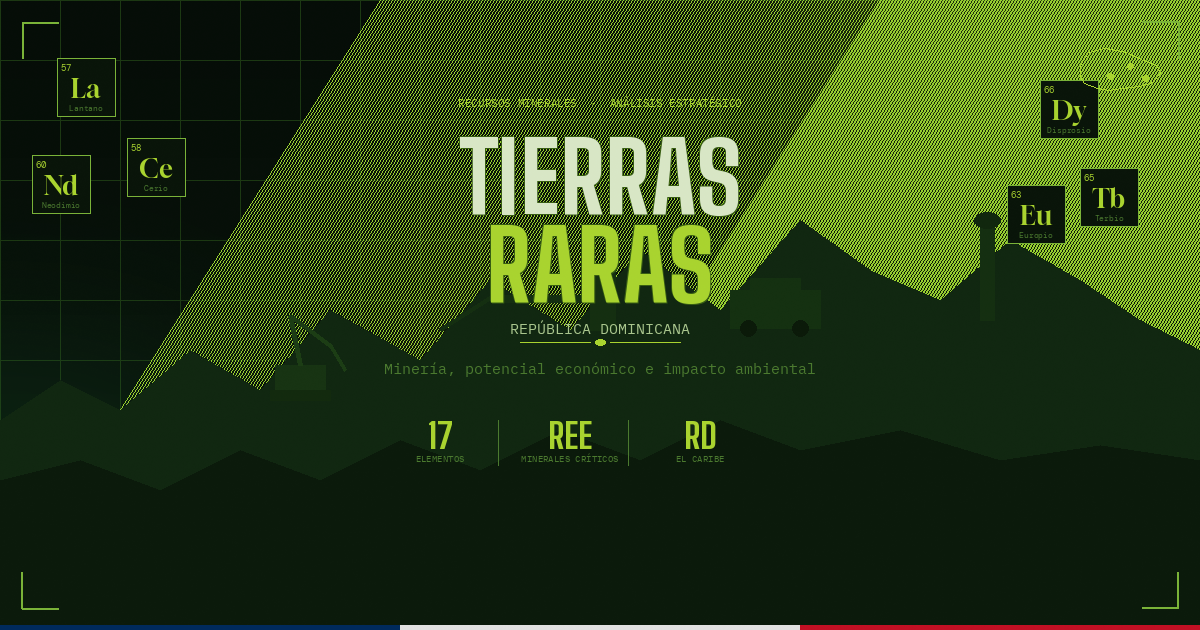
Tierras raras en la República Dominicana: de entusiasmo político a la viabilidad industrial

tierras raras, Republica Dominicana, inteligencia, contrainteligencia, seguridad nacional, economia, C. Constantin Poindexter Salcedo

Tierras raras en Pedernales y la Sierra de Bahoruco, evidencia geológica, confiabilidad de laboratorios internacionales, factibilidad de extracción y procesamiento, y por qué la República Dominicana debe acelerar su ruta hacia una explotación responsable y estratégica.

La afirmación de que la República Dominicana posee un potencial amplio de tierras raras, en poco tiempo ha pasado de ser un tema técnico de geología económica a convertirse en un asunto de soberanía productiva, estrategia industrial y posicionamiento internacional. El presidente Luis Abinader ha sostenido públicamente que estudios preliminares apuntan a depósitos brutos superiores a ciento cincuenta millones de toneladas en la provincia Pedernales, con la promesa de completar evaluaciones y certificar reservas en el corto plazo (Reuters, 2026). Mi posición es coincidente con el sentido de urgencia de esa postura. La ventana geopolítica y económica para integrarnos a una cadena de suministro crítica no permanecerá abierta indefinidamente. Sin embargo, moverse rápido no significa improvisar. Significa acelerar con método, transparencia y disciplina de ingeniería, para convertir un indicio geológico en una oportunidad industrial real y no en un titular pasajero.

Conviene empezar por precisar el lenguaje. En minería, no es lo mismo hablar de “depósito bruto” o “material mineralizado” que hablar de “reserva” económicamente explotable. Un volumen total de material puede ser enorme, pero si las concentraciones recuperables son bajas, si la mineralogía dificulta la separación, o si los costos ambientales y energéticos crecen más rápido que los ingresos, el proyecto se estanca. Por eso, incluso en el mismo reporte sobre la declaración presidencial, se subraya que aún no está claro qué parte del volumen anunciado sería viable para comercialización (Reuters, 2026). Esta distinción no reduce el valor estratégico del anuncio, más bien lo ubica en la fase correcta del ciclo minero: exploración avanzada, caracterización, pruebas metalúrgicas y luego una secuencia de estudios económicos y ambientales que permitan convertir recursos en reservas bajo estándares internacionales.

Dicho lo anterior, la idea de que Pedernales y, en particular, la Sierra de Bahoruco, puedan hospedar concentraciones significativas de elementos de tierras raras no surge de la nada. Existe literatura científica revisada por pares que describe bauxitas kársticas en esa región con contenidos elevados de tierras raras y de itrio, con rangos que llegan, en algunas muestras, a valores notablemente altos para este tipo de depósito, además de una mineralogía portadora relevante para el procesamiento, como monacita y fases tipo bastnasita, entre otras (Villanova de Benavent et al., 2023). También hay investigación más reciente que examina características geoquímicas de depósitos de bauxita kárstica de la Sierra de Bahoruco y los discute explícitamente como un recurso potencial para el país (Chappell et al., 2025). En otras palabras, el fundamento técnico existe. Lo que falta es completar el camino industrial y regulatorio que separa un hallazgo científico de una operación sustentable.

En este contexto aparece el debate sobre la confiabilidad de los “laboratorios internacionales” a los que suelen referirse comunicados y notas periodísticas. En minería moderna, la credibilidad no depende de la nacionalidad del laboratorio, sino de su trazabilidad metrológica. Un resultado es confiable cuando se puede auditar: acreditación del laboratorio, métodos analíticos adecuados, límites de detección, controles de calidad con estándares certificados, duplicados, blancos y cadena de custodia de muestras. Sin esa información, la frase “laboratorios internacionales” es un argumento de autoridad incompleto. No es que sea falso, es que no es suficiente para sostener decisiones de cientos de millones de dólares. Por eso, si queremos movernos rápido con legitimidad, el Estado y los actores técnicos deben publicar, en la medida permitida por la estrategia de negociación, resultados estructurados con protocolos QA y QC y un resumen claro de incertidumbres. La velocidad verdadera no proviene de ocultar datos, sino de estandarizarlos y validarlos desde el empiezo.

Ahora bien, incluso si las concentraciones son prometedoras, la pregunta decisiva es si es factible extraer y, sobre todo, procesar. Las tierras raras se distinguen por un problema central: su química es parecida entre elementos, lo que hace la separación compleja. El verdadero cuello de botella global no suele ser la roca, sino la capacidad de beneficio, refinación y separación en productos comercializables. Este punto es crítico para la República Dominicana porque define dónde quedará el valor agregado. Exportar concentrado y comprar óxidos separados o imanes terminados es la fórmula clásica de pérdida de soberanía económica. Las tendencias internacionales, documentadas por organismos especializados, apuntan a que la demanda de minerales clave, incluyendo tierras raras, sigue creciendo impulsada por la transición energética, vehículos eléctricos, redes eléctricas y otras aplicaciones industriales, lo que incrementa el premio estratégico de participar en la cadena de valor y no solo en la extracción (IEA, 2025). Por la misma razón, los países y empresas fuera de China están invirtiendo con intensidad para reducir vulnerabilidades, porque el control sobre el procesamiento y la refinación sigue muy concentrado (Reuters, 2025).

En el plano de la factibilidad técnica, la Sierra de Bahoruco ofrece una oportunidad pero también una responsabilidad. Si parte de las fases minerales portadoras incluye monacita u otras que pueden asociarse con torio y uranio, entonces la minería y el procesamiento generan residuos con TENORM, es decir, material radiactivo de origen natural tecnológicamente mejorado, lo cual eleva exigencias de manejo, disposición y comunicación pública (EPA, 2025). Este no es un detalle menor. En jurisdicciones con experiencia en refinación, la gestión de residuos y la licencia social han sido determinantes. Un ejemplo contemporáneo es el caso de operaciones de procesamiento de tierras raras donde las autoridades han impuesto condiciones explícitas ligadas a residuos y riesgos radiológicos, reflejando la sensibilidad regulatoria y comunitaria de estos proyectos (AP News, 2026). La conclusión práctica para la República Dominicana es simple: el proyecto debe nacer con ingeniería de residuos y estrategia ambiental desde su fase inicial, no como un apéndice para el final.

La factibilidad económica exige, además, comprender qué “mezcla” de tierras raras contiene el depósito. No todos los elementos tienen el mismo valor. Neodimio y praseodimio suelen sostener la economía de imanes permanentes, mientras disprosio y terbio, considerados más escasos, son críticos para el desempeño térmico de esos imanes y hoy están sujetos a tensiones de suministro. Precisamente por ello, diversos análisis han subrayado la dificultad occidental para cubrir la demanda de tierras raras pesadas y la persistencia de cuellos de botella fuera de China, aun con nuevas inversiones y políticas industriales (Reuters, 2025). Para Pedernales, esto implica que la caracterización debe ser fina, no basta con un total de óxidos de tierras raras. Debe informarse la distribución por elemento, asociaciones minerales, recuperaciones metalúrgicas y costos de separación por producto.

Debemos hablar de soberanía industrial . Los datos de comercio y suministro muestran que, al menos para Estados Unidos, una parte dominante de importaciones de compuestos y metales de tierras raras proviene de China. Esto ilustra la fragilidad de cadenas de suministro concentradas (USGS, 2025). Ese mismo diagnóstico es el que crea una oportunidad para proveedores emergentes en el hemisferio occidental. Si la República Dominicana confirma recursos, define reservas y establece un marco de extracción responsable, su posicionamiento puede ser estratégico para acuerdos de offtake, inversión y transferencia tecnológica. Pero esa ventaja se captura solo si el país ofrece previsibilidad institucional: reglas de concesión claras, estándares ambientales exigentes, mecanismos de transparencia y un plan para que el valor se quede, al menos parcialmente, en territorio dominicano.

“Moverse rápido” (cosa nos incumbe ya) significa diseñar una hoja de ruta con etapas paralelas. Primero, un programa acelerado de exploración y definición de recursos con muestreo representativo, control de calidad robusto y auditoría independiente. Segundo, un paquete de mineralogía y metalurgia con pruebas de laboratorio y planta piloto, orientado no solo a extraer un concentrado, sino a evaluar rutas de separación hasta óxidos individuales o productos intermedios con mercado. Tercero, una arquitectura ambiental desde el inicio: balance hídrico, manejo de relaves, evaluación de TENORM si aplica y trazabilidad de impactos en ecosistemas sensibles. Cuarto, el componente social: consulta temprana, acuerdos de beneficio compartido, empleo local calificado y mecanismos de queja y reparación. Quinto, una estrategia industrial, porque sin política industrial el país corre el riesgo de convertirse en proveedor de bajo margen. El Estado bien puede estructurar incentivos para instalar etapas de valor, por ejemplo, separación o producción de sales u óxidos, en esquemas de asociación público privada con estándares internacionales.

Para ser claro, la prudencia no debe confundirse con lentitud. Los costos de oportunidad de posponer decisiones son reales. El mercado y la geopolítica de minerales críticos se están reconfigurando a velocidad, y los proyectos se alinean hoy con quienes pueden ofrecer certidumbre y cronogramas plausibles. Además, si la República Dominicana espera a que otros definan estándares y rutas de suministro, entrará tarde y negociará desde la debilidad. El anuncio presidencial de acelerar la evaluación y certificación de reservas, aunque todavía condicionado por lo preliminar, apunta en la dirección correcta porque reconoce que el siguiente paso es la certificación técnica, no la retórica (Reuters, 2026). Aun así, lo más inteligente es que el país traduzca esa voluntad en entregables verificables que sostengan confianza, e.d., resultados analíticos auditables, reportes técnicos, estudios económicos preliminares y un marco de gobernanza minera compatible con mejores prácticas.

Ahora bien, que me he desahogado sin pedir permiso, estoy de acuerdo con Abinader en el imperativo de actuar con rapidez hacia la explotación de estos recursos naturales, pero insisto en una precisión. Debemos movernos rápido hacia la explotación responsable y hacia la industrialización, no solo hacia la extracción. La riqueza real de las tierras raras está en la cadena de transformación, y la legitimidad de esa cadena se gana con ciencia reproducible, ingeniería rigurosa y gobernanza transparente. Pedernales puede ser un hito de desarrollo regional y un activo estratégico del Estado dominicano, siempre que la premisa sea clara desde el inicio. La República Dominicana no solo debe tener tierras raras, debe saber convertirlas en valor económico, tecnológico y social sin hipotecar su patrimonio ambiental.

C. Constantin Poindexter, M.A. en Inteligencia, Certificado de Posgrado en Contrainteligencia, J.D., certificación CISA/NCISS OSINT, Certificación U.S. DoD/DoS BFFOC, Dipl. Diplomacia Global, Dipl. Derechos Humanos por USIDHR

Bibliografía

  • AP News. (2026). Malaysia renews Lynas Rare Earths’ license for 10 years, orders end to radioactive waste by 2031.
  • Chappell, M., et al. (2025). Geochemical exploration of rare earth element resources in highland karstic bauxite deposits in the Sierra de Bahoruco, Pedernales Province, Southwestern Dominican Republic. PLOS ONE.
  • EPA. (2025). TENORM: Rare Earths Mining Wastes. United States Environmental Protection Agency.
  • IEA. (2025). Global Critical Minerals Outlook 2025. International Energy Agency.
  • Reuters. (2025). West scrambles to fill heavy rare earth gap as China rivalry deepens.
  • Reuters. (2026). Dominican Republic has over 150 million tons of rare earth deposits, president says.
  • USGS. (2025). Mineral Commodity Summaries 2025, Rare Earths. United States Geological Survey.
  • Villanova de Benavent, C., et al. (2023). REE ultra rich karst bauxite deposits in the Pedernales region, Dominican Republic. Ore Geology Reviews.
Share this post:

The Takaichi “Prompt Exploit” as Novel Tradecraft: A Counterintelligence Operator’s View of AI Enabled Influence Operations

disinformation, information operations, espionage, counterespionage, intelligence, counterintelligence, psyops, C. Constantin Poindexter, CIA, DIA, NSA

AI Enabled Smear Operations and Counterintelligence Detection: Lessons from the Attempted ChatGPT Exploit Targeting Sanae Takaichi

The attempted exploitation of ChatGPT to support a covert smear campaign against Japanese Prime Minister Sanae Takaichi is not a novelty story about AI gone wrong. It is a clear operational vignette of how modern state-linked actors or FIS attempt to compress the intelligence cycle and accelerate influence effects with generative tools. OpenAI’s February 25, 2026 threat reporting describes a now banned ChatGPT account linked to an individual associated with Chinese law enforcement who attempted in mid October 2025 to leverage the model to plan and execute a covert influence operation aimed at discrediting Takaichi, followed by later requests to edit “cyber special operations” status reports after the model refused the original operational ask (OpenAI, 2026). Public reporting based on that disclosure adds that the actor’s plan included coordinated negative commentary, impersonation techniques, and wedge framing designed to mobilize resentment around U.S. tariffs and immigration narratives (Jiji Press, 2026; Reuters, 2026; Axios, 2026). From a counterintelligence perspective, this is a case study in how an adversary treats a commercial large language model as a low-friction staff officer: ideation, drafting, message discipline, and iterative refinement, all without needing to recruit a human asset or expose internal tradecraft through overt tasking channels.

What makes the episode analytically valuable is the specificity of the improper tasking. Reporting indicates that the actor asked ChatGPT to draft a multi part plan to discredit Takaichi, to generate and help post and spread negative comments attacking her stances including immigration, to polish narratives and recurring status reports describing ongoing cyber special operations, and to inflame wedge grievances by amplifying anger over U.S. tariffs on Japan (Jiji Press, 2026; Axios, 2026; OpenAI, 2026). These requests form a recognizable information operations workflow: design the campaign, manufacture content, distribute content, or at least create distribution-ready material, and assess and iterate based on reporting. In classical counterintelligence terms, the operator sought to maximize plausible deniability, minimize cost, and raise tempo, substituting generative capacity for time-consuming human copywriting while reducing the number of personnel who must be read into the narrative engineering function (CISA, 2022; ODNI FMIC, 2024).

The most important counterintelligence observation is that the exploit is not primarily technical. It is procedural and behavioral. Operators do not need to jailbreak a model to gain advantage. They can ask for adjacent assistance such as language polishing, translation, formatting, summarization of internal memos, and audience-tailored variations. OpenAI’s reporting explicitly notes the actor returned after an initial refusal and asked for edits to operational status reports, which is precisely how professional services are laundered in many influence pipelines: when direct enablement is blocked, pivot to editorial support and documentation hygiene (OpenAI, 2026). This aligns with U.S. government’s framing of foreign malign influence as subversive, undeclared, coercive, or criminal activity that uses multiple pathways and intermediaries, often blending overt platforms with covert personas and synthetic content (ODNI FMIC, 2024; DOJ, n.d.). The model is not the operation. It becomes a friction reducer within the operation.

Seen through the lens of the intelligence cycle, the actor’s approach collapses collection, analysis, production, and dissemination into a tight loop. The multi-part plan request is campaign design, meaning objective, target audience, narrative lines, channels, and timing. The post-and-spread request is dissemination planning and, at minimum, the production of ready-to-publish material. The status report editing request is assessment: codifying observed effects, identifying what resonated, and deciding next moves (OpenAI, 2026; Axios, 2026). When an influence apparatus scales, this loop becomes industrialized: many accounts, multi-platform content seeding, and iterative narrative tuning. Reporting around the OpenAI threat case underscores that these efforts can be large-scale, resource-intensive, and sustained, consistent with a bureaucracy rather than hobbyist trolling (Reuters, 2026; CyberScoop, 2026). As Ben Nimmo has emphasized, the intent is to apply pressure everywhere, all at once, which is characteristic of FIS or state-linked coercive information operations rather than organic political discourse (Axios, 2026).

The operational targeting of Takaichi is also instructive for counterintelligence because it sits at the intersection of influence operations and transnational repression. While this case focuses on a smear campaign against a Japanese political figure, OpenAI’s broader description of the actor’s uploaded materials suggests a wider ecosystem aimed at suppressing dissent and silencing critics, including tactics such as forged documentation and intimidation narratives (OpenAI, 2026; CyberScoop, 2026). The FBI defines transnational repression to include online disinformation campaigns, harassment, intimidation, and abuse of legal processes, exactly the kinds of tools that can be amplified or routinized by AI-assisted content generation (FBI, n.d.). In counterintelligence risk terms, that convergence matters. When an adversary blends influence effects, shaping attitudes, with coercive effects, punishing or deterring speech, the target set expands from voters to voices, and the operational threshold for harm drops.

The wedge grievance element, stoking resentment over U.S. tariffs, illustrates classic influence tradecraft. Hijack a real grievance, inflate it, and attach it to the target as a blame object. This is not persuasion via factual argument. It is agitation via emotional mobilization. CISA guidance on foreign influence operations describes how adversaries exploit mis, dis, and malinformation narratives to bias policy and undermine social cohesion, often by inflaming divisive issues (CISA, 2022). The tariff frame is particularly useful because it can be pitched simultaneously as anti-U.S., blaming Washington, and anti-target, blaming Takaichi’s posture for provoking friction, with variants tailored to different audiences. In counterintelligence vocabulary, this is narrative multi-casting: the same kernel is repackaged into mutually reinforcing storylines for disparate communities.

The cross platform distribution pattern referenced in public reporting, activity on X and other sites, with relatively low engagement but persistent output, resembles the known Chinese influence pattern commonly labeled Spamouflage or Dragonbridge: high volume, mixed quality, low authentic engagement, but sustained presence and periodic tactical evolution (Reuters, 2026; NATO StratCom COE, 2023; Graphika, 2025). Low engagement does not mean low intent or low risk. It can indicate poor tradecraft, early-stage testing, or a campaign optimized for secondary effects such as search pollution, narrative seeding for later pickup, or creating “evidence” of public sentiment that can be cited elsewhere. Counterintelligence professionals should treat low engagement content as potential scaffolding. The objective may be to build a lattice of posts, screenshots, and proof artifacts that can later be laundered into higher credibility channels.

From the defender’s side, the case clarifies what model refusal can and cannot do. OpenAI reports that ChatGPT refused overtly malicious prompts, yet the actor appears to have proceeded using other tools and later used ChatGPT for editing (OpenAI, 2026). This reveals a strategic limitation. Safety filters reduce direct enablement. They do not eliminate the underlying operational capability of a state apparatus that can shift to domestic models, human copywriters, or alternative platforms. Effective mitigation requires a layered approach: model-side safeguards, platform-side enforcement, and inter-organizational intelligence sharing that treats AI as one component in a broader influence toolkit (OpenAI, 2026; CISA, 2024). The IC’s Foreign Malign Influence Center has emphasized that foreign malign influence is multi-actor and multi-pathway by design, which implies countermeasures must also be multi-pathway. Detection in one node rarely collapses the whole network (ODNI FMIC, 2024).

For counterintelligence operators, three takeaways are operationally salient. First, generative AI is best understood as an accelerant of existing influence doctrine rather than a replacement. It speeds up drafting, localization, and A B testing of narratives while enabling bureaucratic reporting to be produced faster and with greater stylistic consistency (OpenAI, 2026; CISA, 2022). Second, the human factor remains the decisive vulnerability. The actor’s interaction with ChatGPT created an evidentiary trail that allowed defenders to correlate intent, post-and-spread negative commentary with observed online activity. This is a reminder that operational security failures frequently occur in routine administrative behavior (OpenAI, 2026; CyberScoop, 2026). Third, influence and repression are increasingly convergent lines of effort. When disinformation is used not only to persuade but to intimidate, deplatform, or socially punish, the problem set expands to include civil liberties impacts, diaspora targeting, and sovereignty challenges (FBI, n.d.; DOJ, 2023).

In countermeasures terms, the Takaichi case underscores the value of structured analytic techniques in attribution and mitigation. Analysts should separate narrative content, behavioral signals such as posting cadence and account creation patterns, infrastructure signals such as hosting and coordinated link sharing, and procedural artifacts such as templated emails, repeated phrasing, and report formats. OpenAI’s account-level disruption, combined with open-source correlation to online hashtags and posts referenced in operational materials, is a template for fusion analysis that pairs platform telemetry with OSINT validation (OpenAI, 2026). NATO-aligned research similarly emphasizes that state-sponsored or FIS information operations exploit differences across platforms and jurisdictions. Defenders should expect rapid lateral movement when friction increases on any single platform (NATO StratCom COE, 2023).

The attempted exploit is best characterized as an “AI-enabled influence operation reconnaissance and production cycle, with the model treated as a drafting cell embedded in a broader state-linked apparatus”. The key question is not whether a model can be tasked with dissemination directly. It is whether it can generate dissemination-ready content, standardize narrative discipline, and reduce the time and training required to run a coordinated smear campaign. In this case, it could at least partially, until refusal controls forced the actor to route around and repurpose the model for editing and reporting (OpenAI, 2026; Jiji Press, 2026). For counterintelligence professionals, that reality demands a posture shift.. We must defend not only against disinformation artifacts but against the process improvements that AI grants adversaries. Faster cycles, lower labor costs, and more plausible linguistic camouflage are the new norm. The Takaichi operation appears to have underperformed in engagement, yet it is a forward indicator of how state-backed influence operational tradecraft is adapting to generative systems. They are persistent, multi-platform and procedurally agile (Reuters, 2026; Graphika, 2025).

C. Constantin Poindexter, MA in Intelligence, Graduate Certificate in Counterintelligence, JD, CISA/NCISS OSINT certification, DoD/DoS BFFOC Certification

Bibliography

  • Axios. (2026, February 25). Reporting on OpenAI’s disclosure of a China linked attempt to use ChatGPT to plan and refine a smear campaign targeting Japan’s Prime Minister Sanae Takaichi.
  • Cybersecurity and Infrastructure Security Agency. (2022). Preparing for and mitigating foreign influence operations (CISA Insight).
  • Cybersecurity and Infrastructure Security Agency. (2024, April 17). Guidance for securing election infrastructure against tactics of foreign malign influence (Joint guidance release with FBI and ODNI).
  • CyberScoop. (2026, February 25). Reporting on OpenAI’s threat report and Chinese law enforcement linked “cyber special operations” materials uploaded for editing.
  • Federal Bureau of Investigation. (n.d.). Transnational repression (Overview page describing tactics including online disinformation campaigns, harassment, and intimidation).
  • Graphika. (2025). Chinese state influence (Selected insights from Graphika ATLAS reporting, November 2024 to January 2025).
  • Jiji Press. (2026, February 27). Reporting summarized by Nippon.com on OpenAI’s claim that a Chinese law enforcement official asked ChatGPT to draft a plan to discredit Takaichi and to post and spread negative comments.
  • NATO Strategic Communications Centre of Excellence. (2023). Dragons roar and bears howl: Convergence in Sino Russian information operations in NATO countries.
  • OpenAI. (2026, February 25). Disrupting malicious uses of AI (Threat report describing disruption of accounts, including an influence operation attempt targeting Sanae Takaichi).
  • Reuters. (2026, February 25). Reporting on OpenAI’s threat report detailing misuse of ChatGPT for scams and influence operations, including a smear campaign targeting Japan’s prime minister.
  • Reuters. (2026, February 26). Reporting on a Foundation for Defense of Democracies analysis of China linked influence operations targeting Japan’s elections and Prime Minister Sanae Takaichi, consistent with Spamouflage and Dragonbridge patterns.
  • U.S. Department of Justice. (2023, April 17; updated 2025, February 6). Press release describing charges tied to transnational repression schemes and the use of fake online personas to harass dissidents and disseminate state narratives.
  • U.S. Office of the Director of National Intelligence, Foreign Malign Influence Center. (2024). FMI Primer (Public release defining foreign malign influence and its pathways).

Share this post: